THE IMPACTS OF ETHICAL BEHAVIOUR
Ethical Issues that Tesco needs to consider when conducting its
operational activities (P1)
Corporate Governance
Corporate governance is the system of rules, practices, and processes by which a business
is directed and controlled. Corporate governance is necessary because of the possibility of
conflicts of interests between stakeholders, primarily between shareholders and upper
management or among shareholders. Hence, the purpose of corporate governance is to
facilitate effective, entrepreneurial and prudent management that can deliver the long-term
success of the company.
Tesco has a strong governance in place to support the business in delivering the Plan and
integrating it into business strategy and processes. This establishes clear responsibility and
accountability for their performance, and ensures effective decision making.
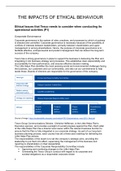
The Little Helps Plan identifies the most pressing social and environmental challenges facing
the business, our customers and our communities, and sets out our commitments to help
tackle these. Boards of directors are responsible for the governance of the company.
Source of image: https://sustainability.tescoplc.com/media/476312/governance_may-2019_final.pdf
Tesco Group Communications Director, Christine Heffernan, is the Little Helps Plan’s
Executive sponsor, and provides oversight of overall progress against the Plan. Each pillar
of the Little Helps Plan has a director level owner within the relevant business function to
ensure that the Plan is fully integrated in our corporate strategy. As part of our long term
business planning process, each country has set a three year roadmap for delivering the
Little Helps Plan actions.
The responsibilities of the board is to set the company’s strategic aims, providing the
leadership to put them into effect, supervising the management of the business and
reporting to shareholders on their stewardship.
The responsibilities of the Corporate Responsibility Committee include:
Approving and monitoring changes to the Little Helps Plan
Overseeing the Tesco Group’s conduct with regard to its corporate and
societal obligations as a responsible corporate citizen
1
, Overseeing the creation of appropriate policies and supporting measures
Identifying and monitoring those external developments that are likely to
have a significant influence on the Group’s reputation and/or its ability to
conduct its business appropriately as a good corporate citizen
Overseeing the Group’s engagement with external stakeholders and other
interested parties
By developing this governance framework, Tesco was able to avoid duplicating existing
effective governance arrangements. For example, tackling food waste has been a core
component of the UK business strategy since well before the launch of the Little Helps Plan,
and already has effective arrangements in place to track and monitor progress.
Therefore, corporate governance is about what the board of a company does and how it sets
the value of the company, and it is to be distinguished from the day to day operational
management of the company by full-time executives.
Corporate Social Responsibility (CSR)
Corporate social responsibility (CSR) is a self-regulating business model that helps a
company be socially accountable — to itself, its stakeholders, and the public. It refers to the
different activities that a business does and considers, which have an impact on the
environment and the world.
This involves:
Employment of staff
Human right issues
How the firm operates in communities
Business integrity and ethics
Product/Marketing responsibility
The environment
Tesco main purpose of corporate social responsibility is to create value for customers to
earn their lifetime loyalty. Corporate Responsibility has an important role to play in achieving
this.CR recognise they impacts on society, on the economy, and on the environment. They
focus their efforts on practical activities that make a difference: maximising the benefits we
bring and minimising any negative impacts. They aim to take responsibility for these impacts,
to measure and tackle their effects, to work with stakeholders on issues and ensure that CR
permeates all parts of the business. Corporate responsibility is not an additional burden or a
distraction from serving our customers; it is an essential part for Tesco of sustaining
themselves as a responsible company.
Environmental Sustainability
Environmental sustainability is the ability to cause little or no damage to the environment
and therefore allow it to continue for a long time. A sustainable business is a business that
participates in environmentally friendly or green activities to ensure that all processes,
products, and manufacturing activities adequately address current environmental concerns
while maintaining a profit.
These companies can achieve their sustainable needs by cutting emissions, lower energy
usage, sourcing products from fair-trade organizations, and by ensuring their physical
waste is disposed of properly and with as little carbon footprint as possible. Tesco aim to
make a big difference with their ‘Little Help’ Plan. The Plan is driving the business to create
a business where colleagues can get on, whatever their background; to help customers
2
Ethical Issues that Tesco needs to consider when conducting its
operational activities (P1)
Corporate Governance
Corporate governance is the system of rules, practices, and processes by which a business
is directed and controlled. Corporate governance is necessary because of the possibility of
conflicts of interests between stakeholders, primarily between shareholders and upper
management or among shareholders. Hence, the purpose of corporate governance is to
facilitate effective, entrepreneurial and prudent management that can deliver the long-term
success of the company.
Tesco has a strong governance in place to support the business in delivering the Plan and
integrating it into business strategy and processes. This establishes clear responsibility and
accountability for their performance, and ensures effective decision making.
The Little Helps Plan identifies the most pressing social and environmental challenges facing
the business, our customers and our communities, and sets out our commitments to help
tackle these. Boards of directors are responsible for the governance of the company.
Source of image: https://sustainability.tescoplc.com/media/476312/governance_may-2019_final.pdf
Tesco Group Communications Director, Christine Heffernan, is the Little Helps Plan’s
Executive sponsor, and provides oversight of overall progress against the Plan. Each pillar
of the Little Helps Plan has a director level owner within the relevant business function to
ensure that the Plan is fully integrated in our corporate strategy. As part of our long term
business planning process, each country has set a three year roadmap for delivering the
Little Helps Plan actions.
The responsibilities of the board is to set the company’s strategic aims, providing the
leadership to put them into effect, supervising the management of the business and
reporting to shareholders on their stewardship.
The responsibilities of the Corporate Responsibility Committee include:
Approving and monitoring changes to the Little Helps Plan
Overseeing the Tesco Group’s conduct with regard to its corporate and
societal obligations as a responsible corporate citizen
1
, Overseeing the creation of appropriate policies and supporting measures
Identifying and monitoring those external developments that are likely to
have a significant influence on the Group’s reputation and/or its ability to
conduct its business appropriately as a good corporate citizen
Overseeing the Group’s engagement with external stakeholders and other
interested parties
By developing this governance framework, Tesco was able to avoid duplicating existing
effective governance arrangements. For example, tackling food waste has been a core
component of the UK business strategy since well before the launch of the Little Helps Plan,
and already has effective arrangements in place to track and monitor progress.
Therefore, corporate governance is about what the board of a company does and how it sets
the value of the company, and it is to be distinguished from the day to day operational
management of the company by full-time executives.
Corporate Social Responsibility (CSR)
Corporate social responsibility (CSR) is a self-regulating business model that helps a
company be socially accountable — to itself, its stakeholders, and the public. It refers to the
different activities that a business does and considers, which have an impact on the
environment and the world.
This involves:
Employment of staff
Human right issues
How the firm operates in communities
Business integrity and ethics
Product/Marketing responsibility
The environment
Tesco main purpose of corporate social responsibility is to create value for customers to
earn their lifetime loyalty. Corporate Responsibility has an important role to play in achieving
this.CR recognise they impacts on society, on the economy, and on the environment. They
focus their efforts on practical activities that make a difference: maximising the benefits we
bring and minimising any negative impacts. They aim to take responsibility for these impacts,
to measure and tackle their effects, to work with stakeholders on issues and ensure that CR
permeates all parts of the business. Corporate responsibility is not an additional burden or a
distraction from serving our customers; it is an essential part for Tesco of sustaining
themselves as a responsible company.
Environmental Sustainability
Environmental sustainability is the ability to cause little or no damage to the environment
and therefore allow it to continue for a long time. A sustainable business is a business that
participates in environmentally friendly or green activities to ensure that all processes,
products, and manufacturing activities adequately address current environmental concerns
while maintaining a profit.
These companies can achieve their sustainable needs by cutting emissions, lower energy
usage, sourcing products from fair-trade organizations, and by ensuring their physical
waste is disposed of properly and with as little carbon footprint as possible. Tesco aim to
make a big difference with their ‘Little Help’ Plan. The Plan is driving the business to create
a business where colleagues can get on, whatever their background; to help customers
2