

4100 Exam-1 Study Guide
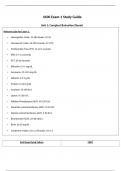
Unit 1: Complex Elimina9on (Renal)
Relevant Labs for Exam 1:
• Hemoglobin: Male: 14-18 Female: 12-16
• Hematocrit: Male: 42-52% Female: 37-47%
• Prothrombin Time (PT): 11-12.5 seconds
• INR: 0.9-1.2 seconds
• PTT: 20-30 seconds
• Bilirubin: 0.3-1 mg/dL
• Ammonia: 15-110 mcg/dL
• Albumin 3.5-5 g/dL
• Protein: 6.4-8.3 g/dL
• Amylase: 56-190 IU/L
• Lipase: 0-110 IU/L
• Alkaline Phosphatase (ALP): 30-120 IU/L
• Aspartate aminotransferase (AST): 0-35 IU/L
• Alanine aminotransferase (ALT): 4-36 IU/L
• Bicarbonate HCO3: 22-28 mEq/L
• BUN: 10-20 mg/dL
• CreaXnine: Males: 0.6-1.2 Females: 0.5-1.1
End Stage Renal Failure CRRT
, • Indicated in acute or chronic kidney disease for
ESR pa9ents: paXents who are too unstable for tradiXonal
• Permanent dialysis requirement hemodialysis
• Increase nitrogenous wastes → uremia and will • This is b/c their BP is already low, and
a[ect every system in the body and decrease hemodialysis can cause a large BP drop
funcXon • Mild hemodynamic e[ects
• Uremia is a syndrome with anorexia, metallic • All use hemojlter
taste in the mouth and metabolic abnormaliXes • CRRT in ICU; 1 to 1; 24 hr duraXon
• Uremia is a syndrome marked by elevated urea in • Focus is toxins not necessarily _uid so no drop
the blood associated w/ _uid, and metabolic really
abnormaliXes
• Can lead to peripheral neuropathy peripheral Con9nuous Venovenous HemoJltra9on (CVVH)
arterial disease
• VomiXng and diarrhea make uremic state worse • No dialysate
Kidney func9ons: • Removes larger volumes of _uid via convecXon
• RegulaXon of inorganic ions Replacement _uid added
• RegulaXon of water balance and osmolality
• ExcreXon of nitrogenous wastes • E[ecXve for removal of large molecules
• ExcreXon of foreign chemicals
• RegulaXon of pH and HCO3 Con9nuous Venovenous Hemodialysis (CVVHD)
• Glucogenesis
E9ology: • Dialysate
• Presence of HTN speeds progression ESRD (HTN
is #1 cause!) • Replacement _uid
• Nephrons are working overXme and aeer a
certain point the body cannot help and • Combines di[usion and convecXon for solute
uncontrolled HTN causes arteries around the removal
kidneys to narrow, weaken and harden →
damage (not able to deliver enough blood to the
kidney Xssue)
Signs and Symptoms:
• Metabolic acidosis
• azotemia/uremia
• Fluid and electrolyte abnormaliXes (K+, Na, Mg,
Phosphorus, Bicarb, Ca)
• Low Ca and High Phosphorus
• Osteodystrophy r/t Ca and Phosphorus
imbalance
• Burning feet and restless leg syndrome
• Anemia r/t decreased erythropoieXn producXon
shortened lifespan of RBS’s
• Neurologic: imbalance, altered mental status,
, seizures, tremors, slurred speech
• Integumentary: uremic frost, dry and _aky, itchy,
thin brille nails, bronze skin, edematous
• Cardiovascular: K will increase HTN, chest
Xghtness, pericardiXs, hypervolemic, distended
neck veins, periorbital edema, pimng edema,
pericardial tamponade, pericardiXs, imbalance
ion electrolyte.
• Pulmonary: atelectasis, increase for infecXon in
the lungs.
• GI: Metallic taste in mouth and ammonia odor of
the breath
• ReproducXve: imbalance hormones, irregular
periods, dinculty gemng pregnant, hormones
can a[ect sperm count and ability to have
children, erecXle dysfuncXon
• Musculoskeletal
Diagnosis:
• Decreased GFR - less than 15mL/min (normal is
90-120)
• Pt will have high potassium, always check paXent
jrst before acXng on lab result alone
• Low calcium and High phosphorus
Nursing Care:
• Fluid status: weigh every morning
• NutriXon, educaXon, dietary restricXons
• No sodium
• Teach about what kind of _uids to drink, ensure
the RN is speaking in language the paXent will
understand
• Do not have more than what you usually eat on
potassium foods
• Low potassium b/c paXent is at risk for
hyperkalemia. Don’t eat milk, bananas, and
cantaloupe (high in K+)
• CRRT
• EmoXonal support
• Pts cannot digest Mg well, so Pepcid is good for
indigesXon
• Maintain kidney funcXon and homeostasis
• Regulate protein consumpXon and do not need
as much (protein becomes nitrogenous waste in
, the body)
• Protein intake: 0.6-0.8 g/kg/day
• Fluid intake - how much u are having, and how
much are coming out
• High biological value proteins
• Complete proteins with amino acids (Ex: eggs,
non-high fat meats, certain dairy products)
• Dialysis
• Transplant
Common Meds:
• Ca and Phosphorus Binders - Ca acetate (monitor
for hypercalcemia)
• Inotropic Agents: Heart is wearing out from the
constant adjustment of renal issues so the
purpose of these meds to help the heart pump
stronger and harder
• Kayexalate (Remove potassium via the bowel)
• Cardiac glycosides (digoxin)
• Beta receptor agonist (dobutamine)
• AnXconvulsants - Benzodiazepine (diazepam) and
Hydantoin (phenytoin)
• ErythropoieXn (EpoeXn Alfa) doesn’t work right
away, overXme (2 to 6 weeks) (given IV or SubQ 3
Xmes a week)
Geriatric Considera9ons:
• DM, HTN, chronic glomerulonephriXs, intersXXal
nephriXs, and urinary tract obstrucXon can cause
ESRD S/S are oeen non-specijc and can be
masked by symptoms of other diseases (heart
failure, demenXa, etc.)
• Dialysis (HD and PD) is common treatment
• Transplant is less common due to comorbidiXes;
CAD, PVD, etc.
• PaXents aged 65 and up are not likely to be
placed on transplant list
Unit 1: Complex Elimina9on (Renal)
Relevant Labs for Exam 1:
• Hemoglobin: Male: 14-18 Female: 12-16
• Hematocrit: Male: 42-52% Female: 37-47%
• Prothrombin Time (PT): 11-12.5 seconds
• INR: 0.9-1.2 seconds
• PTT: 20-30 seconds
• Bilirubin: 0.3-1 mg/dL
• Ammonia: 15-110 mcg/dL
• Albumin 3.5-5 g/dL
• Protein: 6.4-8.3 g/dL
• Amylase: 56-190 IU/L
• Lipase: 0-110 IU/L
• Alkaline Phosphatase (ALP): 30-120 IU/L
• Aspartate aminotransferase (AST): 0-35 IU/L
• Alanine aminotransferase (ALT): 4-36 IU/L
• Bicarbonate HCO3: 22-28 mEq/L
• BUN: 10-20 mg/dL
• CreaXnine: Males: 0.6-1.2 Females: 0.5-1.1
End Stage Renal Failure CRRT
, • Indicated in acute or chronic kidney disease for
ESR pa9ents: paXents who are too unstable for tradiXonal
• Permanent dialysis requirement hemodialysis
• Increase nitrogenous wastes → uremia and will • This is b/c their BP is already low, and
a[ect every system in the body and decrease hemodialysis can cause a large BP drop
funcXon • Mild hemodynamic e[ects
• Uremia is a syndrome with anorexia, metallic • All use hemojlter
taste in the mouth and metabolic abnormaliXes • CRRT in ICU; 1 to 1; 24 hr duraXon
• Uremia is a syndrome marked by elevated urea in • Focus is toxins not necessarily _uid so no drop
the blood associated w/ _uid, and metabolic really
abnormaliXes
• Can lead to peripheral neuropathy peripheral Con9nuous Venovenous HemoJltra9on (CVVH)
arterial disease
• VomiXng and diarrhea make uremic state worse • No dialysate
Kidney func9ons: • Removes larger volumes of _uid via convecXon
• RegulaXon of inorganic ions Replacement _uid added
• RegulaXon of water balance and osmolality
• ExcreXon of nitrogenous wastes • E[ecXve for removal of large molecules
• ExcreXon of foreign chemicals
• RegulaXon of pH and HCO3 Con9nuous Venovenous Hemodialysis (CVVHD)
• Glucogenesis
E9ology: • Dialysate
• Presence of HTN speeds progression ESRD (HTN
is #1 cause!) • Replacement _uid
• Nephrons are working overXme and aeer a
certain point the body cannot help and • Combines di[usion and convecXon for solute
uncontrolled HTN causes arteries around the removal
kidneys to narrow, weaken and harden →
damage (not able to deliver enough blood to the
kidney Xssue)
Signs and Symptoms:
• Metabolic acidosis
• azotemia/uremia
• Fluid and electrolyte abnormaliXes (K+, Na, Mg,
Phosphorus, Bicarb, Ca)
• Low Ca and High Phosphorus
• Osteodystrophy r/t Ca and Phosphorus
imbalance
• Burning feet and restless leg syndrome
• Anemia r/t decreased erythropoieXn producXon
shortened lifespan of RBS’s
• Neurologic: imbalance, altered mental status,
, seizures, tremors, slurred speech
• Integumentary: uremic frost, dry and _aky, itchy,
thin brille nails, bronze skin, edematous
• Cardiovascular: K will increase HTN, chest
Xghtness, pericardiXs, hypervolemic, distended
neck veins, periorbital edema, pimng edema,
pericardial tamponade, pericardiXs, imbalance
ion electrolyte.
• Pulmonary: atelectasis, increase for infecXon in
the lungs.
• GI: Metallic taste in mouth and ammonia odor of
the breath
• ReproducXve: imbalance hormones, irregular
periods, dinculty gemng pregnant, hormones
can a[ect sperm count and ability to have
children, erecXle dysfuncXon
• Musculoskeletal
Diagnosis:
• Decreased GFR - less than 15mL/min (normal is
90-120)
• Pt will have high potassium, always check paXent
jrst before acXng on lab result alone
• Low calcium and High phosphorus
Nursing Care:
• Fluid status: weigh every morning
• NutriXon, educaXon, dietary restricXons
• No sodium
• Teach about what kind of _uids to drink, ensure
the RN is speaking in language the paXent will
understand
• Do not have more than what you usually eat on
potassium foods
• Low potassium b/c paXent is at risk for
hyperkalemia. Don’t eat milk, bananas, and
cantaloupe (high in K+)
• CRRT
• EmoXonal support
• Pts cannot digest Mg well, so Pepcid is good for
indigesXon
• Maintain kidney funcXon and homeostasis
• Regulate protein consumpXon and do not need
as much (protein becomes nitrogenous waste in
, the body)
• Protein intake: 0.6-0.8 g/kg/day
• Fluid intake - how much u are having, and how
much are coming out
• High biological value proteins
• Complete proteins with amino acids (Ex: eggs,
non-high fat meats, certain dairy products)
• Dialysis
• Transplant
Common Meds:
• Ca and Phosphorus Binders - Ca acetate (monitor
for hypercalcemia)
• Inotropic Agents: Heart is wearing out from the
constant adjustment of renal issues so the
purpose of these meds to help the heart pump
stronger and harder
• Kayexalate (Remove potassium via the bowel)
• Cardiac glycosides (digoxin)
• Beta receptor agonist (dobutamine)
• AnXconvulsants - Benzodiazepine (diazepam) and
Hydantoin (phenytoin)
• ErythropoieXn (EpoeXn Alfa) doesn’t work right
away, overXme (2 to 6 weeks) (given IV or SubQ 3
Xmes a week)
Geriatric Considera9ons:
• DM, HTN, chronic glomerulonephriXs, intersXXal
nephriXs, and urinary tract obstrucXon can cause
ESRD S/S are oeen non-specijc and can be
masked by symptoms of other diseases (heart
failure, demenXa, etc.)
• Dialysis (HD and PD) is common treatment
• Transplant is less common due to comorbidiXes;
CAD, PVD, etc.
• PaXents aged 65 and up are not likely to be
placed on transplant list


