
TESTBANK Il̀
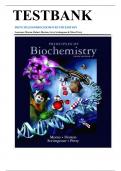
PRINCIPLES OFBIOCHEMISTRY5TH EDITION
Il` Il̀ Il̀ Il`
Laurence Moran, Robert Horton, Gray Scrimgeour & Marc Perry
Il` Il` Il` Il` Il` Il` Il` Il`
,Principles of Biochemistry, 5th Edition Test Bank By: Moran, Horton, Scrimgeour, Perry
Il` Il` Il` Il` Il` Il` Il` Il` Il` Il` Il`
Contents:
Chapter 1
Il` Introduction toBiochemistry Il` Il` 1
Chapter 2
Il` Water 10
Chapter 3
Il` Amino Acids and the Primary Structures of Proteins
Il` Il` Il` Il` Il` Il` Il` 27
Chapter 4
Il` Proteins: Three-Dimensional Structure and Function
Il` Il` Il` Il` 46
Chapter 5
Il` Properties of Enzymes Il` Il` 65
Chapter 6
Il` Mechanisms of Enzymes Il` Il` 85
Chapter 7
Il` Coenzymes and Vitamins Il` Il` 104
Chapter 8
Il` Carbohydrates 119
Chapter 9
Il` Lipids and Membranes
Il` Il` 137
Chapter 10
Il` Introduction to Metabolism Il` Il` 153
Chapter 11
Il` Glycolysis 169
Chapter 12
Il` Gluconeogenesis, The Pentose Phosphate Pathway, Il` Il` Il` Il`
and Glycogen Metabolism
Il` Il` 185
Chapter 13
Il` The Citric Acid Cycle
Il` Il` Il` 199
Chapter 14
Il` Electron Transport and Oxidative Phosphorylation
Il` Il` Il` Il` 213
Chapter 15
Il` Photosynthesis 227
Chapter 16
Il` Lipid Metabolism
Il` 241
Chapter 17
Il` Amino Acid Metabolism Il` Il` 256
Chapter 18
Il` Nucleotide Metabolism Il` 269
Chapter 19
Il` Nucleic Acids Il` 284
Chapter 20
Il` DNA Replication, Repair, and Recombination
Il` Il` Il` Il` 300
Chapter 21
Il` Transcription and RNA Processing Il` Il` Il` 315
Chapter 22
Il` Protein Synthesis Il` 330
Chapter 23
Il` Recombinant DNA Technology Il` Il` 348
,Chapter 1 Introduction to Biochemistry
Il` Il` Il`
1) Which elements account for more than 97% of the weight of most organisms?
Il` Il` Il` I l ` Il` I l` Il` Il` Il ` Il` Il` Il`
A) C, H, N, Mg, O, S Il` Il̀ Il` Il` Il`
B) C, H, N, O, P, S Il` Il` Il` Il ` Il`
C) C, H, N Il` Il̀
D) Fe, C, H, O, P Il` Il` Il` I l`
E) Ca2+, K+, Na+, Mg2+, Cl- Il` Il` Il` Il`
Answer: B I l `
Page Ref: Section 2
Il` Il` Il`
2) Proteins in biological membranes may be
Il` Il` I l` I l ` Il`
A) porous.
B) attached to the membrane surface. I l` Il` Il` Il`
C) span the membrane. Il ` I l`
D) All of the above Il` Il` Il`
E) B and C only Il` Il` Il`
Answer: D Il`
Page Ref: Section 3
Il` Il` Il`
3) Which statement about cellulose is false?
I l` I l` Il` Il` Il`
A) It is the most abundant polysaccharide in nature.
Il` Il` Il` Il` I l ` Il` Il`
B) Its monomers are joined by glycosidic bonds.
Il` Il` I l` I l` Il` Il`
C) It is present in the stems of flowering plants.
Il` Il` Il` Il` Il` Il` Il` Il`
D) The hydroxyl groups of neighboring cellulose molecules interact to form strong,
Il` I l ` I l ` Il` I l ` Il` Il` I l ` Il ` I l`
insolublefibers.
Il` Il̀
E) It is a branched polymer of glucose.
I l` Il` I l` Il` I l` Il`
Answer: E I l `
Page Ref: Section 3
Il` Il` Il`
1
, 4) When Keq of a reaction = 1, then
Il` I l ` Il` I l ` I l` Il` I l `
A) the forward reaction is faster than the reverse reaction.
Il` Il` I l` Il` I l` Il` Il` Il`
B) the reverse reaction is faster than the forward reaction.
Il` Il` Il` Il` Il` Il` Il` Il`
C) the forward and reverse reaction rate constants are equal.
Il` Il` Il` I l` Il` I l` I l` Il`
D) more products are formed than reactants.
Il` Il` Il` I l` Il`
E) fewer products are formed than reactants.
Il` I l` I l` Il` Il`
Answer: C Il`
Page Ref: Section 4
Il` Il` Il`
5) Which statement is true about a reaction with an equilibrium constant, Keq, equal to 1000?
Il` I l` Il` Il` Il` I l ` Il` Il` I l` Il` Il` Il` Il` Il`
A) The forward rate constant is 1000 times greater than the reverse rate constant.
Il` Il` Il` Il` Il` I l` Il` Il` I l` Il` Il` Il `
B) The forward rate constant is 3 times greater than reverse rate constant.
Il` Il` Il` Il` Il` I l` Il` I l` Il` I l` Il `
C) The forward rate constant is 1000 times smaller than the reverse rate constant.
Il` Il` I l` I l` Il` I l` Il` Il` Il` Il` I l` I l`
D) The forward rate constant is 3 times smaller than the reverse rate constant.
Il` Il` Il` Il` Il` I l` Il` Il` Il` Il` I l` Il`
E) There is not enough information given to compare the forward and reverse rate constants.
Il` Il` Il` I l ` Il` Il` Il` Il` Il` Il` Il` Il` I l`
Answer: A Il`
Page Ref: Section 4
Il` Il` Il`
6) The study of the energy changes during metabolic reactions is called
Il` Il` Il` I l` Il` I l ` I l ` Il` Il` Il` .
A) bioinformatics
B) metabodynamics
C) thermometrics
D) bioenergetics
E) biological heat dynamics Il` I l `
Answer: D Il`
Page Ref: Section 4
Il` Il` Il`
7) A spontaneous chemical reaction always has a
Il` I l` Il` Il` I l ` I l` change.
A) positive Gibbʹs free energy Il` Il` Il`
B) negative Gibbʹs free energy Il` Il ` I l `
C) positive enthalpy I l`
D) negative enthalpy I l`
E) positive entropy Il`
Answer: B I l `
Page Ref: Section 4
Il` Il` Il`
2
PRINCIPLES OFBIOCHEMISTRY5TH EDITION
Il` Il̀ Il̀ Il`
Laurence Moran, Robert Horton, Gray Scrimgeour & Marc Perry
Il` Il` Il` Il` Il` Il` Il` Il`
,Principles of Biochemistry, 5th Edition Test Bank By: Moran, Horton, Scrimgeour, Perry
Il` Il` Il` Il` Il` Il` Il` Il` Il` Il` Il`
Contents:
Chapter 1
Il` Introduction toBiochemistry Il` Il` 1
Chapter 2
Il` Water 10
Chapter 3
Il` Amino Acids and the Primary Structures of Proteins
Il` Il` Il` Il` Il` Il` Il` 27
Chapter 4
Il` Proteins: Three-Dimensional Structure and Function
Il` Il` Il` Il` 46
Chapter 5
Il` Properties of Enzymes Il` Il` 65
Chapter 6
Il` Mechanisms of Enzymes Il` Il` 85
Chapter 7
Il` Coenzymes and Vitamins Il` Il` 104
Chapter 8
Il` Carbohydrates 119
Chapter 9
Il` Lipids and Membranes
Il` Il` 137
Chapter 10
Il` Introduction to Metabolism Il` Il` 153
Chapter 11
Il` Glycolysis 169
Chapter 12
Il` Gluconeogenesis, The Pentose Phosphate Pathway, Il` Il` Il` Il`
and Glycogen Metabolism
Il` Il` 185
Chapter 13
Il` The Citric Acid Cycle
Il` Il` Il` 199
Chapter 14
Il` Electron Transport and Oxidative Phosphorylation
Il` Il` Il` Il` 213
Chapter 15
Il` Photosynthesis 227
Chapter 16
Il` Lipid Metabolism
Il` 241
Chapter 17
Il` Amino Acid Metabolism Il` Il` 256
Chapter 18
Il` Nucleotide Metabolism Il` 269
Chapter 19
Il` Nucleic Acids Il` 284
Chapter 20
Il` DNA Replication, Repair, and Recombination
Il` Il` Il` Il` 300
Chapter 21
Il` Transcription and RNA Processing Il` Il` Il` 315
Chapter 22
Il` Protein Synthesis Il` 330
Chapter 23
Il` Recombinant DNA Technology Il` Il` 348
,Chapter 1 Introduction to Biochemistry
Il` Il` Il`
1) Which elements account for more than 97% of the weight of most organisms?
Il` Il` Il` I l ` Il` I l` Il` Il` Il ` Il` Il` Il`
A) C, H, N, Mg, O, S Il` Il̀ Il` Il` Il`
B) C, H, N, O, P, S Il` Il` Il` Il ` Il`
C) C, H, N Il` Il̀
D) Fe, C, H, O, P Il` Il` Il` I l`
E) Ca2+, K+, Na+, Mg2+, Cl- Il` Il` Il` Il`
Answer: B I l `
Page Ref: Section 2
Il` Il` Il`
2) Proteins in biological membranes may be
Il` Il` I l` I l ` Il`
A) porous.
B) attached to the membrane surface. I l` Il` Il` Il`
C) span the membrane. Il ` I l`
D) All of the above Il` Il` Il`
E) B and C only Il` Il` Il`
Answer: D Il`
Page Ref: Section 3
Il` Il` Il`
3) Which statement about cellulose is false?
I l` I l` Il` Il` Il`
A) It is the most abundant polysaccharide in nature.
Il` Il` Il` Il` I l ` Il` Il`
B) Its monomers are joined by glycosidic bonds.
Il` Il` I l` I l` Il` Il`
C) It is present in the stems of flowering plants.
Il` Il` Il` Il` Il` Il` Il` Il`
D) The hydroxyl groups of neighboring cellulose molecules interact to form strong,
Il` I l ` I l ` Il` I l ` Il` Il` I l ` Il ` I l`
insolublefibers.
Il` Il̀
E) It is a branched polymer of glucose.
I l` Il` I l` Il` I l` Il`
Answer: E I l `
Page Ref: Section 3
Il` Il` Il`
1
, 4) When Keq of a reaction = 1, then
Il` I l ` Il` I l ` I l` Il` I l `
A) the forward reaction is faster than the reverse reaction.
Il` Il` I l` Il` I l` Il` Il` Il`
B) the reverse reaction is faster than the forward reaction.
Il` Il` Il` Il` Il` Il` Il` Il`
C) the forward and reverse reaction rate constants are equal.
Il` Il` Il` I l` Il` I l` I l` Il`
D) more products are formed than reactants.
Il` Il` Il` I l` Il`
E) fewer products are formed than reactants.
Il` I l` I l` Il` Il`
Answer: C Il`
Page Ref: Section 4
Il` Il` Il`
5) Which statement is true about a reaction with an equilibrium constant, Keq, equal to 1000?
Il` I l` Il` Il` Il` I l ` Il` Il` I l` Il` Il` Il` Il` Il`
A) The forward rate constant is 1000 times greater than the reverse rate constant.
Il` Il` Il` Il` Il` I l` Il` Il` I l` Il` Il` Il `
B) The forward rate constant is 3 times greater than reverse rate constant.
Il` Il` Il` Il` Il` I l` Il` I l` Il` I l` Il `
C) The forward rate constant is 1000 times smaller than the reverse rate constant.
Il` Il` I l` I l` Il` I l` Il` Il` Il` Il` I l` I l`
D) The forward rate constant is 3 times smaller than the reverse rate constant.
Il` Il` Il` Il` Il` I l` Il` Il` Il` Il` I l` Il`
E) There is not enough information given to compare the forward and reverse rate constants.
Il` Il` Il` I l ` Il` Il` Il` Il` Il` Il` Il` Il` I l`
Answer: A Il`
Page Ref: Section 4
Il` Il` Il`
6) The study of the energy changes during metabolic reactions is called
Il` Il` Il` I l` Il` I l ` I l ` Il` Il` Il` .
A) bioinformatics
B) metabodynamics
C) thermometrics
D) bioenergetics
E) biological heat dynamics Il` I l `
Answer: D Il`
Page Ref: Section 4
Il` Il` Il`
7) A spontaneous chemical reaction always has a
Il` I l` Il` Il` I l ` I l` change.
A) positive Gibbʹs free energy Il` Il` Il`
B) negative Gibbʹs free energy Il` Il ` I l `
C) positive enthalpy I l`
D) negative enthalpy I l`
E) positive entropy Il`
Answer: B I l `
Page Ref: Section 4
Il` Il` Il`
2


