Norms and Conformity – Chapter 9
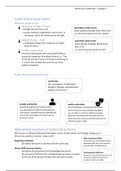
Conformity to Social Norms
What are social norms
Movement of light – Sherif
descriptive social norms
- the light did not move at all
what a group of people think, feel, or do
→ group members established a social norm, or e.g. idea that people do love their children
consensus, about the movement of the light
Length of lines – Asch injunctive social norms
→ individuals change their responses to match what a group of people should think,
those of others feel, or do
Further experiments e.g. idea that people should love their
children
Uncertain participants were particularly likely to
accept the responses of multiple others (i.e., “Yes,
he hit the ALT key!”) even if it meant confessing to
a “crime” that initially they were all sure they
hadn’t committed
Public versus private conformity
conformity
the convergence of individuals’
thoughts, feelings, and behaviour
toward a social norm
private conformity public conformity
private acceptance of social norms overt behaviour consistent with social
e.g. participants in Sherif’s study adopted norms that are not privately accepted
their group’s standard opinion regarding the e.g. in order to not seem ridiculous people
movement of the light, even there was no pretend to go along with the group norm in
pressure to do so what they say or do, but privately they do not
think the group is right.
Motivational Functions of Conformity to Norms
Why are we so influenced by these descriptive norms of what others are thinking, feeling, etc.?
Why do we conform to others’ views at all?
false consensus effect
Expecting consensus the tendency to overestimate other’s
- we expect everyone to see the world the same way agreement with one’s own opinions,
characteristics, and behaviours
Norms fulfil mastery motives
- we believe the group has more knowledge than we do
informational influence
- the amount of influence the confederate group exerts increases the process by which group norms are
as the size of the group increases, but only up to a point privately accepted to achieve or
maintain mastery of reality
Conformity to Social Norms
What are social norms
Movement of light – Sherif
descriptive social norms
- the light did not move at all
what a group of people think, feel, or do
→ group members established a social norm, or e.g. idea that people do love their children
consensus, about the movement of the light
Length of lines – Asch injunctive social norms
→ individuals change their responses to match what a group of people should think,
those of others feel, or do
Further experiments e.g. idea that people should love their
children
Uncertain participants were particularly likely to
accept the responses of multiple others (i.e., “Yes,
he hit the ALT key!”) even if it meant confessing to
a “crime” that initially they were all sure they
hadn’t committed
Public versus private conformity
conformity
the convergence of individuals’
thoughts, feelings, and behaviour
toward a social norm
private conformity public conformity
private acceptance of social norms overt behaviour consistent with social
e.g. participants in Sherif’s study adopted norms that are not privately accepted
their group’s standard opinion regarding the e.g. in order to not seem ridiculous people
movement of the light, even there was no pretend to go along with the group norm in
pressure to do so what they say or do, but privately they do not
think the group is right.
Motivational Functions of Conformity to Norms
Why are we so influenced by these descriptive norms of what others are thinking, feeling, etc.?
Why do we conform to others’ views at all?
false consensus effect
Expecting consensus the tendency to overestimate other’s
- we expect everyone to see the world the same way agreement with one’s own opinions,
characteristics, and behaviours
Norms fulfil mastery motives
- we believe the group has more knowledge than we do
informational influence
- the amount of influence the confederate group exerts increases the process by which group norms are
as the size of the group increases, but only up to a point privately accepted to achieve or
maintain mastery of reality