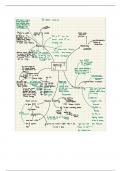
Liver Anatomy
Liver
● Largest internal organ in the body
● Clean the blood coming from the digestive tract before
passing it to the rest of the body
○ Prevent any toxins goes to blood & other organs
○ Occurs through the portal system
The portal system
● Vein system including hepatic portal vein
● Drain the nutrition and food from the digestive tract and waste products from the
spleen
● When all these veins meet , they become the portal vein
○ The portal vein goes through the liver
Blood supply
● Liver receives ~25% of cardiac output from hepatic artery
○ 75% from the gut via the portal vein (nutrient rich & deoxygenated)
○ 25% via the hepatic artery (oxygenated blood)
Hepatic lobules
● Liver is composed of smaller structures called lobules
● Lobule is surrounded by branches of the hepatic artery (oxygen), portal vein
(nutrients) and bile duct
● At the centre of each lobule is a branch of the hepatic vein
● 80% of the liver mass is made of specialised epithelial cells called hepatocytes –
carry out most of the liver’s functions
● Hepatocytes are arranged in plates and are separated by blood-filled channels
called sinusoids
Sinusoids
● Similar function to capillaries (material exchange)
● But increased permeability, allowing larger molecules to cross (e.g., proteins)
○ Incomplete surrounding diaphragm (basement membrane)
○ The endothelial layer contains large intercellular gaps
, Nutrients
● Converts these nutrients into forms that can be stored or used
● Mediates their transport to tissues
● Store some nutrients
○ Glycogen (excess glucose stored as glycogen)
■ Pancreatic hormones – insulin and glucagon
○ Fat
○ Iron
○ Vitamin A
● Liver send bile to gallbladder, which secretes it into duodenum –dissolve the fats
● Easy digestion by intestinal enzymes into fatty acids and glycerol for easier
absorption into the body
Fat (lipid) metabolism
● LDL is considered "bad" cholesterol because it raises blood cholesterol levels
● HDL is considered "good" cholesterol because it helps lower cholesterol levels
Detoxification
● The liver is a detoxification organ
● Liver convert that fat soluble toxins or compound into water soluble and then
excreted to the urine or faeces. -> Detoxification
Production of plasma proteins
● all are produced in liver (made by hepatocytes)
○ except immunoglobulins (produced in immune cells)
● Albumins (regulate osmotic pressure of the blood) and clotting factors
● Globulins
● Fibrinogens
Production of bile
● Bile produced in liver (500 mL/day)
● Stored in gall bladder
● Secreted into small intestine
○ Purpose = Neutralisation & Emulsification
Liver
● Largest internal organ in the body
● Clean the blood coming from the digestive tract before
passing it to the rest of the body
○ Prevent any toxins goes to blood & other organs
○ Occurs through the portal system
The portal system
● Vein system including hepatic portal vein
● Drain the nutrition and food from the digestive tract and waste products from the
spleen
● When all these veins meet , they become the portal vein
○ The portal vein goes through the liver
Blood supply
● Liver receives ~25% of cardiac output from hepatic artery
○ 75% from the gut via the portal vein (nutrient rich & deoxygenated)
○ 25% via the hepatic artery (oxygenated blood)
Hepatic lobules
● Liver is composed of smaller structures called lobules
● Lobule is surrounded by branches of the hepatic artery (oxygen), portal vein
(nutrients) and bile duct
● At the centre of each lobule is a branch of the hepatic vein
● 80% of the liver mass is made of specialised epithelial cells called hepatocytes –
carry out most of the liver’s functions
● Hepatocytes are arranged in plates and are separated by blood-filled channels
called sinusoids
Sinusoids
● Similar function to capillaries (material exchange)
● But increased permeability, allowing larger molecules to cross (e.g., proteins)
○ Incomplete surrounding diaphragm (basement membrane)
○ The endothelial layer contains large intercellular gaps
, Nutrients
● Converts these nutrients into forms that can be stored or used
● Mediates their transport to tissues
● Store some nutrients
○ Glycogen (excess glucose stored as glycogen)
■ Pancreatic hormones – insulin and glucagon
○ Fat
○ Iron
○ Vitamin A
● Liver send bile to gallbladder, which secretes it into duodenum –dissolve the fats
● Easy digestion by intestinal enzymes into fatty acids and glycerol for easier
absorption into the body
Fat (lipid) metabolism
● LDL is considered "bad" cholesterol because it raises blood cholesterol levels
● HDL is considered "good" cholesterol because it helps lower cholesterol levels
Detoxification
● The liver is a detoxification organ
● Liver convert that fat soluble toxins or compound into water soluble and then
excreted to the urine or faeces. -> Detoxification
Production of plasma proteins
● all are produced in liver (made by hepatocytes)
○ except immunoglobulins (produced in immune cells)
● Albumins (regulate osmotic pressure of the blood) and clotting factors
● Globulins
● Fibrinogens
Production of bile
● Bile produced in liver (500 mL/day)
● Stored in gall bladder
● Secreted into small intestine
○ Purpose = Neutralisation & Emulsification