Patho IV Exam
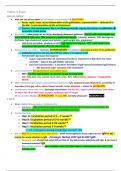
GALLBLADDER:
• what can you tell me about ACUTE/CHRONIC CHOLELITHIASIS ? → GALLSTONES
o Acute: rapid, onset, acute inflammation of the gallbladder, supersaturation – cholesterol in
the bile - (supersaturation of bile w/cholesterol)
o Chronic: slow development, bile is not flowing normally, staying there/stays in gallbladder ➔
formation of bile stones
• GALLSTONES – what groups are at risk for developing cholesterol gallstones: obesity with rapid weight loss,
more WOMEN than men, TPN, pregnancy, spinal cord injuries - (obesity, women, TPN, diet high in
fat/lipids, high cholesterol, spinal cord injuries, rapid weight loss, pregnancy)
o Gall stone formation → whose at risk? High spinal cord injuries, TPN, rapid weight lose,
pregnancy, BMI greater than 30, HX of diabetes
• FORMATION OF GALLSTONES – hormone, somatostatin is involved in decreasing function of the gallbladder
o Gallbladder function: not only store bile but release it in response to fat
o Somatostatin decreases that response
▪ Cause: supersaturation of cholesterol (acute) or movement of bile does not move
normally – stays in the gall bladder (chronic)
▪ Excessive Somatostatin = it increases formation of gall stones (Cholesterol gall stones)
• Bile becomes super saturated with cholesterol
• ACUTE CHOLECYSTITIS ( INFLAMMATION OF GALLBLADDER WALL ) :
o DIET: low fats, high protein, no alcohol, no gas forming foods
o S/S: RUQ pain, clay colored stool, dark urine, N/V, inflammatory response – leukocytosis,
FEVER
• ERCP, ENDOSCOPIC RETROGRADE CHOLANGIOPANCREATOGRAPHY S/S: abdominal pain/distention, possibility of
aspiration from gag reflux, absent bowel sounds, temp. elevation – assess for peritonitis
• LAPAROSCOPIC CHOLECYSTECTOMY , discharge instructions: low fat diet, report complications, Steri strips –
let them fall off on their own, increase walking to get rid of gas
• DX GALLBLADDER disease: ULTRASOUND, CT scan, MRI, normally ultrasound – NO BIOPSY for it
LIVER
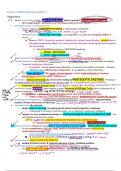
• What is NASH: NON-ALCOHOLIC STEATOHEPATITIS
o Risk factor: high cholesterol (hypercholesterolemia), lots of fat content; occurs BMI >30,
obesity, fatty liver, Diabetes Type I + II (Diabetes mellitus)
• INCUBATION PERIOD
o Hep. A: Incubation period of 2 – 7 weeks**
o Hep B: Incubation period of 2-6 months**
o Hep C: Incubation period 2-26 weeks**
o Hep E: Incubation period 2-9 weeks**
▪ Pt. contagious during incubation period? YES
• HEP. A (RNA VIRUS SPREAD BY FECAL -ORAL ROUTE ) – which immunoglobulin do you expect to see? IgM or IgG –
mainly for acute infection is IgM – (Serologic Testing (HAV IgG & HAV IgM)
o Fecal-oral route→ which lab values tell you that pt. has had previous infections with Hep. A, but now is
immune/recovered? IgG
o RISK FACTORS FOR HEP. A: poor sanitation, fecal oral, hand hygiene, contaminated water-lack of safe
drinking water
, ▪ Traveling instructions: drink bottled water, don’t eat raw fruits/veggies, avoid shellfish
– Crustaceans, get a vaccine before traveling
• HEP. B: Testing for a surface antigen, what does this mean: presence of a surface antigen? Its an ACTIVE infection
o Hep. B → surface ANTIGEN, means acute infection. Transmitted via sex/blood.
▪ What test will tell you they have an ACTIVE infection? SURFACE ANTIGEN – HBsAg
• HBsAb → they have formed SURFACE ANTIBODIES
(Screening panel: (surface antigen HBsAg) (surface antibody HBsAb)
o
o NO surface antigen for Hep. C – test used for C is the ANTIBODY – usually DX during chronic stage
▪ Lab value for Hep. C: positive anti- HAbC – NO surface antigen tests. Do not DX in acute
state. Screenings Panels (HCV-RNA, Anti-HCV**).
• ACUTE HEP. C / CHRONIC HEP. C
o Acute manifestations: asymptomatic. Transmitted via sex or blood
o Chronic manifestations: changes related to damage been done, by cirrhosis. Ascites, edema, build up of
ammonia, changes in mental status
• Don’t DX HEP. C until it becomes a chronic state. It starts as asymptomatic then severe.
o S/S of severe: Portal HTN by peripheral EDEMA, ascites, change in mental status → advanced liver
disease (Chronic Hep. C is cirrhosis)
• ALCOHOLIC HEPATITIS: severe/damage occurs to liver → necrosis of the hepatocytes
o inflammation of central lobular region (regions of liver)
o & killing/causing necrosis of liver cells (hepatocytes). Progresses quickly.
o What causes so much damage at the cell level? Not just inflammation (centrilobular region) – cells in
there are being destroyed (hepatocytes/necrosis)
• COMPLICATION OF ADVANCED LIVER DISEASE (CIRRHOSIS): PORTAL HTN, result in esophageal bleeding: bad,
bleed profusely, esophageal varices caused by build up of ammonia
o S/S of ascites + esophageal varices → except to have PORTAL HTN
THYROID
• GRAVE’S DISEASE : HYPERTHYROIDISM , autoimmune disorder
o Lab studies: LOW TSH, HIGH T3/T4, problem with pituitary gland
▪ HIGH TSH auto-antibodies will be circulating = which brings down the
levels of TSH
o What happens to the eyes: bulge (exophthalmia)
▪ What do we advise the patient to do: wear sunglasses – sensitive to sunlight; avoid
sunlight/artificial light because it causes pain/HA
o HYPERTHYROIDISM manifestations: weight loss, (Graves disease related) – exophthalmia→ HA caused by
sunlight, pain with sunlight/artificial light
• What is Hashimoto?– Primary HYPOTHYROIDISM , autoimmune, gland itself is the problem
o Injury to pituitary gland = results in secondary hypothyroidism
o What is happening, pathological process? Gradual destruction, starts off as thyroid hiatus –
hyperthyroidism, then gradual progression destruction of thyroid gland then becomes hypothyroidism
▪ Thyroid molecular cell destruction from the release of T3/T4
o HIGH LEVELS of T3/T4 → then no more T3/T4 → hypothyroidism
o Thyroid glands destroyed = no more stored T3/T4 to be released causing hypothyroidism
o HYPOTHYROIDISM manifestations: fatigue, depression, menstrual periods are absent (Amenorrhea)?
• THYROID FUNCTION: besides T3/T4, it also secretes CALCITONIN → good for pushing calcium out of
blood into the bone
o Rule of Calcitonin: pushes calcium out of the blood into the bones.
▪ Abnormal calcitonin levels = cells within thyroid are absorbing calcitonin = abnormal levels
▪ Want normal levels to push calcitonin back in to the bone
GALLBLADDER:
• what can you tell me about ACUTE/CHRONIC CHOLELITHIASIS ? → GALLSTONES
o Acute: rapid, onset, acute inflammation of the gallbladder, supersaturation – cholesterol in
the bile - (supersaturation of bile w/cholesterol)
o Chronic: slow development, bile is not flowing normally, staying there/stays in gallbladder ➔
formation of bile stones
• GALLSTONES – what groups are at risk for developing cholesterol gallstones: obesity with rapid weight loss,
more WOMEN than men, TPN, pregnancy, spinal cord injuries - (obesity, women, TPN, diet high in
fat/lipids, high cholesterol, spinal cord injuries, rapid weight loss, pregnancy)
o Gall stone formation → whose at risk? High spinal cord injuries, TPN, rapid weight lose,
pregnancy, BMI greater than 30, HX of diabetes
• FORMATION OF GALLSTONES – hormone, somatostatin is involved in decreasing function of the gallbladder
o Gallbladder function: not only store bile but release it in response to fat
o Somatostatin decreases that response
▪ Cause: supersaturation of cholesterol (acute) or movement of bile does not move
normally – stays in the gall bladder (chronic)
▪ Excessive Somatostatin = it increases formation of gall stones (Cholesterol gall stones)
• Bile becomes super saturated with cholesterol
• ACUTE CHOLECYSTITIS ( INFLAMMATION OF GALLBLADDER WALL ) :
o DIET: low fats, high protein, no alcohol, no gas forming foods
o S/S: RUQ pain, clay colored stool, dark urine, N/V, inflammatory response – leukocytosis,
FEVER
• ERCP, ENDOSCOPIC RETROGRADE CHOLANGIOPANCREATOGRAPHY S/S: abdominal pain/distention, possibility of
aspiration from gag reflux, absent bowel sounds, temp. elevation – assess for peritonitis
• LAPAROSCOPIC CHOLECYSTECTOMY , discharge instructions: low fat diet, report complications, Steri strips –
let them fall off on their own, increase walking to get rid of gas
• DX GALLBLADDER disease: ULTRASOUND, CT scan, MRI, normally ultrasound – NO BIOPSY for it
LIVER
• What is NASH: NON-ALCOHOLIC STEATOHEPATITIS
o Risk factor: high cholesterol (hypercholesterolemia), lots of fat content; occurs BMI >30,
obesity, fatty liver, Diabetes Type I + II (Diabetes mellitus)
• INCUBATION PERIOD
o Hep. A: Incubation period of 2 – 7 weeks**
o Hep B: Incubation period of 2-6 months**
o Hep C: Incubation period 2-26 weeks**
o Hep E: Incubation period 2-9 weeks**
▪ Pt. contagious during incubation period? YES
• HEP. A (RNA VIRUS SPREAD BY FECAL -ORAL ROUTE ) – which immunoglobulin do you expect to see? IgM or IgG –
mainly for acute infection is IgM – (Serologic Testing (HAV IgG & HAV IgM)
o Fecal-oral route→ which lab values tell you that pt. has had previous infections with Hep. A, but now is
immune/recovered? IgG
o RISK FACTORS FOR HEP. A: poor sanitation, fecal oral, hand hygiene, contaminated water-lack of safe
drinking water
, ▪ Traveling instructions: drink bottled water, don’t eat raw fruits/veggies, avoid shellfish
– Crustaceans, get a vaccine before traveling
• HEP. B: Testing for a surface antigen, what does this mean: presence of a surface antigen? Its an ACTIVE infection
o Hep. B → surface ANTIGEN, means acute infection. Transmitted via sex/blood.
▪ What test will tell you they have an ACTIVE infection? SURFACE ANTIGEN – HBsAg
• HBsAb → they have formed SURFACE ANTIBODIES
(Screening panel: (surface antigen HBsAg) (surface antibody HBsAb)
o
o NO surface antigen for Hep. C – test used for C is the ANTIBODY – usually DX during chronic stage
▪ Lab value for Hep. C: positive anti- HAbC – NO surface antigen tests. Do not DX in acute
state. Screenings Panels (HCV-RNA, Anti-HCV**).
• ACUTE HEP. C / CHRONIC HEP. C
o Acute manifestations: asymptomatic. Transmitted via sex or blood
o Chronic manifestations: changes related to damage been done, by cirrhosis. Ascites, edema, build up of
ammonia, changes in mental status
• Don’t DX HEP. C until it becomes a chronic state. It starts as asymptomatic then severe.
o S/S of severe: Portal HTN by peripheral EDEMA, ascites, change in mental status → advanced liver
disease (Chronic Hep. C is cirrhosis)
• ALCOHOLIC HEPATITIS: severe/damage occurs to liver → necrosis of the hepatocytes
o inflammation of central lobular region (regions of liver)
o & killing/causing necrosis of liver cells (hepatocytes). Progresses quickly.
o What causes so much damage at the cell level? Not just inflammation (centrilobular region) – cells in
there are being destroyed (hepatocytes/necrosis)
• COMPLICATION OF ADVANCED LIVER DISEASE (CIRRHOSIS): PORTAL HTN, result in esophageal bleeding: bad,
bleed profusely, esophageal varices caused by build up of ammonia
o S/S of ascites + esophageal varices → except to have PORTAL HTN
THYROID
• GRAVE’S DISEASE : HYPERTHYROIDISM , autoimmune disorder
o Lab studies: LOW TSH, HIGH T3/T4, problem with pituitary gland
▪ HIGH TSH auto-antibodies will be circulating = which brings down the
levels of TSH
o What happens to the eyes: bulge (exophthalmia)
▪ What do we advise the patient to do: wear sunglasses – sensitive to sunlight; avoid
sunlight/artificial light because it causes pain/HA
o HYPERTHYROIDISM manifestations: weight loss, (Graves disease related) – exophthalmia→ HA caused by
sunlight, pain with sunlight/artificial light
• What is Hashimoto?– Primary HYPOTHYROIDISM , autoimmune, gland itself is the problem
o Injury to pituitary gland = results in secondary hypothyroidism
o What is happening, pathological process? Gradual destruction, starts off as thyroid hiatus –
hyperthyroidism, then gradual progression destruction of thyroid gland then becomes hypothyroidism
▪ Thyroid molecular cell destruction from the release of T3/T4
o HIGH LEVELS of T3/T4 → then no more T3/T4 → hypothyroidism
o Thyroid glands destroyed = no more stored T3/T4 to be released causing hypothyroidism
o HYPOTHYROIDISM manifestations: fatigue, depression, menstrual periods are absent (Amenorrhea)?
• THYROID FUNCTION: besides T3/T4, it also secretes CALCITONIN → good for pushing calcium out of
blood into the bone
o Rule of Calcitonin: pushes calcium out of the blood into the bones.
▪ Abnormal calcitonin levels = cells within thyroid are absorbing calcitonin = abnormal levels
▪ Want normal levels to push calcitonin back in to the bone