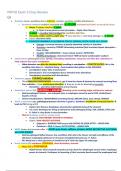
PATHO Exam 3 Class Review
GI
DIARRHEA causes: exuda ve due to infec on, osmo c, secretory, mo lity disturbances
o EXUDATIVE DIARRHEA condi on associated w/it: H. PYLORI associated w/Crohn’s or any of the ulcers
Ulcers always check for H. pylori
H. Pylori is a key factor in ulcer forma on – Pep c Ulcer Disease
H. pylori is causa ve factor/an gen for exuda ve diarrhea
Ulcera ve coli s, Crohn’s, pep c ulcer have diarrhea = most likely pathogen is: H. PYLORI
Cause: ulcera ve coli s
EXUDATIVE DIARRHEA ULCERATIVE COLITIS, CROHN’S, PEPTIC ULCER H. PYLORI
Osmo c: increased amounts of poorly absorbed solutes in intes ne
Secretory: caused by TOXINS s mula ng intes nal fluid secre on/impair absorp on –
loose 1L/day
Exudate: INFLAMMATION – mucus, blood, protein- INFECTION
Mo lity disturbances: decreased transit TIME of chyme w/absorp ve surfaces
CONSTIPATION, pathological cause: opioids, immobility, dehydra on, strictures, low fiber diet, altera ons in
body systems that cause cons pa on
o What disorders can alter the intes nal tract resul ng in cons pa on = DIVERTICULOSIS (this is the
condi on that alters it – intes nal lining – fecal material that gathers in the POUCHES)
Cons pa on: fewer than 3 stools/week
Diver culosis: S/S is Cons pa on due to intes nal tract altera ons
Cons pa on associated with diver culosis.
STOMATITIS causes: CHEMO/radia on
o Think IMMUNOCOMPROMISED individuals, get it from the chemo & destroy the natural occurring flora
from radia on – think autoimmune disorders they are at risk for developing stoma s
Stoma s = ulcera ve inflamma on of oral mucosa
ESOPHAGEAL VARICES S/S: BLEEDING + ANEMIA (Bleeding can be vomi ng bright red blood or melena)
o Gastroesophageal Varices – are enlarged veins in esophagus caused by portal HTN, alcohol/post-
hepa c cirrhosis
o Clinical manifesta ons: HEMATEMESIS (vomi ng blood), MELENA (dark, tarry stools), ANEMIA
PEPTIC ULCER DISEASE pt., pathological process interiorly in gastric / duodenal: breakdown of mucosal barrier
leads to PUD along w/S/S
Pep c Ulcer Disease: Breakdown of protec ve epithelial lining of the stomach
It’s a Sore developed on lining of stomach by acids damaging lining: ASA, NSAIDS, ETOH, bile
H. Pylori is a key factor in ulcer forma on
o PAIN of DUODENAL ULCER VS . GASTRIC ULCER
Duodenal: PAIN PRESENT ON EMPTY STOMACH
Gastric: PAIN PRESENT W/EATING
Epigastric = BURNING PAIN occurs with EATING OR SOON AFTER – UPPER PAIN
Duodenal = PAIN 2-3 hours AFTER EATING – LOWER PAIN
GERD: factors that increase reflex AVOID spicy foods, caffeine, alcohol, AVOID RESTRICTIVE CLOTHING,
and LOSE WEIGHT:
o Gastroesophageal Reflux Disease: Any condi ons that altars the closure strength and efficacy of the
LES (lower esophageal sphincter) or increases intraabdominal pressure. H. Pylori.
o DX: Blood test or stool specimen or breath test of H. Pylori by Upper GI endoscopy
HIATAL HERNIA S/S: heartburn, DYSPHAGIA, chest discomfort, anorexic
o Major S/S is DYSPHAGIA
Hiatal Hernia: when stomach protrudes up into chest thru diaphragm muscle where esophagus
passes to stomach; Predispose to loosening of their muscular band around the esophageal and
, diaphragma c junc on; Caused by intraabdominal pressure: ascites, pregnancy, obesity,
chronic straining/coughing.
C/M: Predisposed to GERD, heartburn, chest pain, DYSPHAGIA, ulcera ons of stomach
CELIAC DISEASE sta s cs: more in FEMALES & allergies to GLUTEN; gluten intolerance
o Hair-fiber projec ons in the intes ne they ATROPHY (shrink) – this will happen long-term
Celiac Disease: Familial intolerance of gluten-containing foods (wheat & grain proteins
found in wheat); Common in FEMALES & European ancestry; Triggered by GLIADIN
Leads to inflamma on and ATROPHY of the intes nal villi
ULCERATIVE COLITIS is at risk for developing = COLON CANCER
o Where does UC begin: BOTTOM UP
what is happening that results in inflamma on: at the base of the Lieberkühn leading to
forma on of abscesses in epithelial lining
o Ulcera ve coli s complica on: megacolon
Ulcera ve Coli s: inflamma on of innermost lining of LARGE intes ne – risk for developing
COLON CX.
Begins at inflamma on at the base of crypts of Lieberkühn lead to forma on of abscesses in
the epithelium of the crypts****
Pain in LOWER abdomen
STARTS AT RECTUM & MOVES UPWARDS | HIGHER RISK FOR COLON CANCER
GASTRITIS, OR GASTRIC PEPTIC ULCER = GASTRIC CANCER
o Gastri s: inflamma on of stomach lining by irritants (alcohol, aspirin, NSAIDS, H. Pylori)
GASTROENTERITIS S/S: diarrhea, fever, abdominal pain/discomfort, malaise
o Gastroenteri s: inflamma on of the stomach & small intes ne by imbalance of GI flora by food
poisoning, an bio cs
o C/M: DIARRHEA, ABDOMINAL DISCOMFORT, PAIN, N/V, elevated temp – from infec on, MALAISE
IRRITABLE BOWEL SYNDROME cause = UNKNOWN – what is iden fied? = nothing, no pathological process
associated with IBS – don’t know cause & can’t see what’s going on in there, everything comes back normal
o S/S: cons pa on, diarrhea or both
IBS: alterna ng diarrhea/cons pa on w/abdominal cramping pain w/ NO iden fiable
pathologic process in GI tract
E ology: unclear but slow wave ac vity of bowel is increased
C/M: cons pa on/diarrhea, cramping abdominal pain, nausea, mucus in stool
ANTIBIOTIC ASSOCIATED COLITIS cause: TOXIN, large intes ne is exposed to bacterial toxin that results in mucosal
necrosis
o Most common cause is an bio cs because they destroy the good bacteria
o major manifesta ons: DIARRHEA w/ C. diff (bacterial toxin)
PSEUDOMEMBRANOUS COLITIS causes: C. DIFF
o Lab findings: elevated WBC’s = Leukocytosis
Pseudomembranous Coli s: inflamma on & necrosis of large intes ne caused by
Clostridium difficile by ANTIBIOTICS mediated by bacterial toxins
C/M: perfuse watery foul-smelling diarrhea, abdominal pain, fever, LEUKOCYTOSIS,
perfora on
DUMPING SYNDROME : bariatric surgery, gastric surgery
o What happens pathologically? What happens immediately a er ea ng w/in 20 – 30 minutes? You
have dumping that is hyperosmolar solu on or food, high concentra on like carbohydrates, have
movement of fluid into the intes nal walls.
Manifesta ons: LOW BP from hypovolemia due to shi of fluids from blood to the intes ne
Hyperglycemia – then rebound hypoglycemia 1 – 3 hrs. later
o Dumping Syndrome: RAPID emptying (dumping) of gastric contents in to small
intes ne because of impaired gastric emptying
GI
DIARRHEA causes: exuda ve due to infec on, osmo c, secretory, mo lity disturbances
o EXUDATIVE DIARRHEA condi on associated w/it: H. PYLORI associated w/Crohn’s or any of the ulcers
Ulcers always check for H. pylori
H. Pylori is a key factor in ulcer forma on – Pep c Ulcer Disease
H. pylori is causa ve factor/an gen for exuda ve diarrhea
Ulcera ve coli s, Crohn’s, pep c ulcer have diarrhea = most likely pathogen is: H. PYLORI
Cause: ulcera ve coli s
EXUDATIVE DIARRHEA ULCERATIVE COLITIS, CROHN’S, PEPTIC ULCER H. PYLORI
Osmo c: increased amounts of poorly absorbed solutes in intes ne
Secretory: caused by TOXINS s mula ng intes nal fluid secre on/impair absorp on –
loose 1L/day
Exudate: INFLAMMATION – mucus, blood, protein- INFECTION
Mo lity disturbances: decreased transit TIME of chyme w/absorp ve surfaces
CONSTIPATION, pathological cause: opioids, immobility, dehydra on, strictures, low fiber diet, altera ons in
body systems that cause cons pa on
o What disorders can alter the intes nal tract resul ng in cons pa on = DIVERTICULOSIS (this is the
condi on that alters it – intes nal lining – fecal material that gathers in the POUCHES)
Cons pa on: fewer than 3 stools/week
Diver culosis: S/S is Cons pa on due to intes nal tract altera ons
Cons pa on associated with diver culosis.
STOMATITIS causes: CHEMO/radia on
o Think IMMUNOCOMPROMISED individuals, get it from the chemo & destroy the natural occurring flora
from radia on – think autoimmune disorders they are at risk for developing stoma s
Stoma s = ulcera ve inflamma on of oral mucosa
ESOPHAGEAL VARICES S/S: BLEEDING + ANEMIA (Bleeding can be vomi ng bright red blood or melena)
o Gastroesophageal Varices – are enlarged veins in esophagus caused by portal HTN, alcohol/post-
hepa c cirrhosis
o Clinical manifesta ons: HEMATEMESIS (vomi ng blood), MELENA (dark, tarry stools), ANEMIA
PEPTIC ULCER DISEASE pt., pathological process interiorly in gastric / duodenal: breakdown of mucosal barrier
leads to PUD along w/S/S
Pep c Ulcer Disease: Breakdown of protec ve epithelial lining of the stomach
It’s a Sore developed on lining of stomach by acids damaging lining: ASA, NSAIDS, ETOH, bile
H. Pylori is a key factor in ulcer forma on
o PAIN of DUODENAL ULCER VS . GASTRIC ULCER
Duodenal: PAIN PRESENT ON EMPTY STOMACH
Gastric: PAIN PRESENT W/EATING
Epigastric = BURNING PAIN occurs with EATING OR SOON AFTER – UPPER PAIN
Duodenal = PAIN 2-3 hours AFTER EATING – LOWER PAIN
GERD: factors that increase reflex AVOID spicy foods, caffeine, alcohol, AVOID RESTRICTIVE CLOTHING,
and LOSE WEIGHT:
o Gastroesophageal Reflux Disease: Any condi ons that altars the closure strength and efficacy of the
LES (lower esophageal sphincter) or increases intraabdominal pressure. H. Pylori.
o DX: Blood test or stool specimen or breath test of H. Pylori by Upper GI endoscopy
HIATAL HERNIA S/S: heartburn, DYSPHAGIA, chest discomfort, anorexic
o Major S/S is DYSPHAGIA
Hiatal Hernia: when stomach protrudes up into chest thru diaphragm muscle where esophagus
passes to stomach; Predispose to loosening of their muscular band around the esophageal and
, diaphragma c junc on; Caused by intraabdominal pressure: ascites, pregnancy, obesity,
chronic straining/coughing.
C/M: Predisposed to GERD, heartburn, chest pain, DYSPHAGIA, ulcera ons of stomach
CELIAC DISEASE sta s cs: more in FEMALES & allergies to GLUTEN; gluten intolerance
o Hair-fiber projec ons in the intes ne they ATROPHY (shrink) – this will happen long-term
Celiac Disease: Familial intolerance of gluten-containing foods (wheat & grain proteins
found in wheat); Common in FEMALES & European ancestry; Triggered by GLIADIN
Leads to inflamma on and ATROPHY of the intes nal villi
ULCERATIVE COLITIS is at risk for developing = COLON CANCER
o Where does UC begin: BOTTOM UP
what is happening that results in inflamma on: at the base of the Lieberkühn leading to
forma on of abscesses in epithelial lining
o Ulcera ve coli s complica on: megacolon
Ulcera ve Coli s: inflamma on of innermost lining of LARGE intes ne – risk for developing
COLON CX.
Begins at inflamma on at the base of crypts of Lieberkühn lead to forma on of abscesses in
the epithelium of the crypts****
Pain in LOWER abdomen
STARTS AT RECTUM & MOVES UPWARDS | HIGHER RISK FOR COLON CANCER
GASTRITIS, OR GASTRIC PEPTIC ULCER = GASTRIC CANCER
o Gastri s: inflamma on of stomach lining by irritants (alcohol, aspirin, NSAIDS, H. Pylori)
GASTROENTERITIS S/S: diarrhea, fever, abdominal pain/discomfort, malaise
o Gastroenteri s: inflamma on of the stomach & small intes ne by imbalance of GI flora by food
poisoning, an bio cs
o C/M: DIARRHEA, ABDOMINAL DISCOMFORT, PAIN, N/V, elevated temp – from infec on, MALAISE
IRRITABLE BOWEL SYNDROME cause = UNKNOWN – what is iden fied? = nothing, no pathological process
associated with IBS – don’t know cause & can’t see what’s going on in there, everything comes back normal
o S/S: cons pa on, diarrhea or both
IBS: alterna ng diarrhea/cons pa on w/abdominal cramping pain w/ NO iden fiable
pathologic process in GI tract
E ology: unclear but slow wave ac vity of bowel is increased
C/M: cons pa on/diarrhea, cramping abdominal pain, nausea, mucus in stool
ANTIBIOTIC ASSOCIATED COLITIS cause: TOXIN, large intes ne is exposed to bacterial toxin that results in mucosal
necrosis
o Most common cause is an bio cs because they destroy the good bacteria
o major manifesta ons: DIARRHEA w/ C. diff (bacterial toxin)
PSEUDOMEMBRANOUS COLITIS causes: C. DIFF
o Lab findings: elevated WBC’s = Leukocytosis
Pseudomembranous Coli s: inflamma on & necrosis of large intes ne caused by
Clostridium difficile by ANTIBIOTICS mediated by bacterial toxins
C/M: perfuse watery foul-smelling diarrhea, abdominal pain, fever, LEUKOCYTOSIS,
perfora on
DUMPING SYNDROME : bariatric surgery, gastric surgery
o What happens pathologically? What happens immediately a er ea ng w/in 20 – 30 minutes? You
have dumping that is hyperosmolar solu on or food, high concentra on like carbohydrates, have
movement of fluid into the intes nal walls.
Manifesta ons: LOW BP from hypovolemia due to shi of fluids from blood to the intes ne
Hyperglycemia – then rebound hypoglycemia 1 – 3 hrs. later
o Dumping Syndrome: RAPID emptying (dumping) of gastric contents in to small
intes ne because of impaired gastric emptying