Summary Books Leading supply chain
management
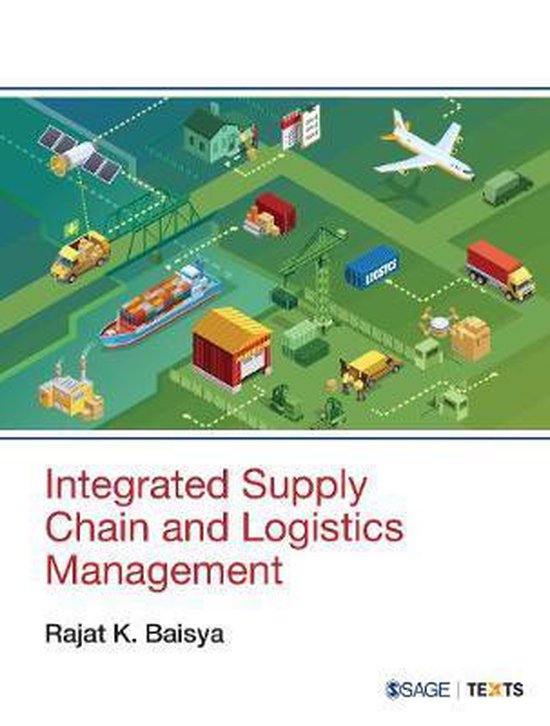
Integrated supply chain and logistics management - Rajat K. Baisya
Inhoudsopgave
Integrated supply chain and logistics management - Rajat K. Baisya ............................................................................ 1
Chapter 1: Understanding the supply chain: The core concepts .................................................................................... 2
Chapter 2: evolution of integrated supply chain and logistics management ................................................................ 3
Chapter 5: Managing inventory for satisfying customer demand ................................................................................. 9
Chapter 7: Total logistics cost management for competitive advantage .................................................................... 17
Chapter 8: global logistics value chain management .................................................................................................. 22
Chapter 9: supply chain performance management .................................................................................................... 29
,Integrated supply chain and logistics management - Rajat K. Baisya
Chapter 1: Understanding the supply chain: The core concepts
Supply chain management = covers a wide range of functions in business, starting from
procurement to productions and operations, and warehousing to distribution.
Supply chain function need to be efficient and effective, otherwise the business will not remain
competitive in the marketplace, and even survival of the business will be threatened.
Procurement functions:
- E-auction
- Vendor managed inventory (VMI)
- Just-in-time inventory (JIT)
Today’s supply chain involves all parties, directly or indirectly working together in fulfilling the
customer expectations.
- SCM requires ability to work together with people and organization both within and outside
the business
Stages of fast-moving consumer goods:
- Customers
- Retailers
- Wholesalers and distributors
- Manufacturers
- Raw material, packaging material and other input material suppliers
SCM involves multiple management functions, therefore, it is an interdisciplinary subject requiring
knowledge of many other functions.
Components of an integrated supply chain, separate stream:
- Sourcing and procurement and supply chain
, - Materials management
- Logistics and distribution management
Procurement function: occupied a predominant position in the supply chain because, it impacts
both cash flow and profitability of the business and requires to be managed efficiently.
Materials management function includes:
- Demand forecasting
- Inventory management
- Warehousing
- Stock keeping and scheduling
- Production planning and control
Logistics management function: that part of the SCM process that plans, implements and controls
efficient and effective forward and backward flow and storage of goods and services as well as
information form the point of origin to the point of consumption to meet the customers’
requirement.
Distribution function: that sense comes under logistics and is very important to be managed
effectively to deliver the overall performance of the SCM functions.
Inbound logistics = bringing the input materials inside
Outbound logistics = taking the finished products out for sales and distribution
Key challenges
- Sustainability
- Security concerns
- Transportation costs
- Creating competitive advantage
Chapter 2: evolution of integrated supply chain and logistics management
SCM: covers procurement, warehousing, transport and logistics, inventory management,
production, demand management, distribution and customer services.
SCM = the integration of key business processes across the end-to-end supply chain for the purpose
of creating value for customers and other stakeholders.
- It optimizes the organizational resources to ensure the ideal level of servicing the customer
demand or requirement at all times
Three main streams of integrated SCM:
- Sourcing, procurement and supply management
- Materials management and demand management
- Logistics and distribution management
Five major movements initiatives
1. Creation era: offering same or more benefits at a lower cost. The competitive forces of
businesses changes a logical imperative.
, 2. Integration era: cash on the various initiatives the businesses have been seen to be
undertaking in order to absorb the benefits of those initiatives in the business as a whole or
the organization itself. Introduction of enterprise resource planning (ERP). ERP did not
reduce manpower in the organization, but definitely brought in a new view of the business
performance and helped businesses to take an integrated view of many interconnected
functions which were earlier viewed and managed in silos.
3. Globalization era: manufacturing was shifting to the countries where it was most economical
to produce. Attention given to global systems of supplier relationships and the expansion of
supply chains over national boundaries and into other continents. Raw materials and input
materials were sourced from the countries where best quality and reliability were ensured
at least cost, and final production was carried out in yet another country where cost of
production was the least to be shipped to the world market as per customer requirements.
4. Specialization era I: Outsourced manufacturing and distribution: everything in business was
seen as a way to provide better service to the customer, and organizations were seen to be
totally focused on customer retention by providing better service and satisfaction in relation
to its own competition. Focus on core competences.
5. Specialization era II: SCM as a means of providing service: the logistics function gained
tremendous importance, as it was realized that logistics is the next largest cost after
procurement that businesses are incurring, and the performance of logistics greatly
influences the SCM performance.
Supply chain value = customer value – supply chain cost
Customer value = the price a potential customer is willing to pay for the product offering, which
depends not only on the product type, quality and benefits that it offers to the target customers but
also on how the product has been positioned in the customers’ mind and how it is promoted and
marketed.
Key objectives performance SCM:
- Reducing total cost
- Increasing customer service level
- Reducing the impact of bullwhip effect
- Utilizing the organizational resources in a better way
- Effectively and proactively responding to changes in the marketplace
Key strategic drivers:
- Supply chain strategies: push, pull and push-pull systems
- Demand-driven strategies
- Effective distribution strategies
Pull strategy: the demand is managed from the point of view of the real-term demand of the
customers and it is the task of the marketeers to create the customer demand by effectively
executing demand pull marketing strategies and promotion including advertisement.
Push strategy: manufacturers and marketers driven, often leads to artificial demand, raising the
level of the trade stock which in turn can cause other problems such as increase in expiry stock and
stock return and high debtors.
management
Integrated supply chain and logistics management - Rajat K. Baisya
Inhoudsopgave
Integrated supply chain and logistics management - Rajat K. Baisya ............................................................................ 1
Chapter 1: Understanding the supply chain: The core concepts .................................................................................... 2
Chapter 2: evolution of integrated supply chain and logistics management ................................................................ 3
Chapter 5: Managing inventory for satisfying customer demand ................................................................................. 9
Chapter 7: Total logistics cost management for competitive advantage .................................................................... 17
Chapter 8: global logistics value chain management .................................................................................................. 22
Chapter 9: supply chain performance management .................................................................................................... 29
,Integrated supply chain and logistics management - Rajat K. Baisya
Chapter 1: Understanding the supply chain: The core concepts
Supply chain management = covers a wide range of functions in business, starting from
procurement to productions and operations, and warehousing to distribution.
Supply chain function need to be efficient and effective, otherwise the business will not remain
competitive in the marketplace, and even survival of the business will be threatened.
Procurement functions:
- E-auction
- Vendor managed inventory (VMI)
- Just-in-time inventory (JIT)
Today’s supply chain involves all parties, directly or indirectly working together in fulfilling the
customer expectations.
- SCM requires ability to work together with people and organization both within and outside
the business
Stages of fast-moving consumer goods:
- Customers
- Retailers
- Wholesalers and distributors
- Manufacturers
- Raw material, packaging material and other input material suppliers
SCM involves multiple management functions, therefore, it is an interdisciplinary subject requiring
knowledge of many other functions.
Components of an integrated supply chain, separate stream:
- Sourcing and procurement and supply chain
, - Materials management
- Logistics and distribution management
Procurement function: occupied a predominant position in the supply chain because, it impacts
both cash flow and profitability of the business and requires to be managed efficiently.
Materials management function includes:
- Demand forecasting
- Inventory management
- Warehousing
- Stock keeping and scheduling
- Production planning and control
Logistics management function: that part of the SCM process that plans, implements and controls
efficient and effective forward and backward flow and storage of goods and services as well as
information form the point of origin to the point of consumption to meet the customers’
requirement.
Distribution function: that sense comes under logistics and is very important to be managed
effectively to deliver the overall performance of the SCM functions.
Inbound logistics = bringing the input materials inside
Outbound logistics = taking the finished products out for sales and distribution
Key challenges
- Sustainability
- Security concerns
- Transportation costs
- Creating competitive advantage
Chapter 2: evolution of integrated supply chain and logistics management
SCM: covers procurement, warehousing, transport and logistics, inventory management,
production, demand management, distribution and customer services.
SCM = the integration of key business processes across the end-to-end supply chain for the purpose
of creating value for customers and other stakeholders.
- It optimizes the organizational resources to ensure the ideal level of servicing the customer
demand or requirement at all times
Three main streams of integrated SCM:
- Sourcing, procurement and supply management
- Materials management and demand management
- Logistics and distribution management
Five major movements initiatives
1. Creation era: offering same or more benefits at a lower cost. The competitive forces of
businesses changes a logical imperative.
, 2. Integration era: cash on the various initiatives the businesses have been seen to be
undertaking in order to absorb the benefits of those initiatives in the business as a whole or
the organization itself. Introduction of enterprise resource planning (ERP). ERP did not
reduce manpower in the organization, but definitely brought in a new view of the business
performance and helped businesses to take an integrated view of many interconnected
functions which were earlier viewed and managed in silos.
3. Globalization era: manufacturing was shifting to the countries where it was most economical
to produce. Attention given to global systems of supplier relationships and the expansion of
supply chains over national boundaries and into other continents. Raw materials and input
materials were sourced from the countries where best quality and reliability were ensured
at least cost, and final production was carried out in yet another country where cost of
production was the least to be shipped to the world market as per customer requirements.
4. Specialization era I: Outsourced manufacturing and distribution: everything in business was
seen as a way to provide better service to the customer, and organizations were seen to be
totally focused on customer retention by providing better service and satisfaction in relation
to its own competition. Focus on core competences.
5. Specialization era II: SCM as a means of providing service: the logistics function gained
tremendous importance, as it was realized that logistics is the next largest cost after
procurement that businesses are incurring, and the performance of logistics greatly
influences the SCM performance.
Supply chain value = customer value – supply chain cost
Customer value = the price a potential customer is willing to pay for the product offering, which
depends not only on the product type, quality and benefits that it offers to the target customers but
also on how the product has been positioned in the customers’ mind and how it is promoted and
marketed.
Key objectives performance SCM:
- Reducing total cost
- Increasing customer service level
- Reducing the impact of bullwhip effect
- Utilizing the organizational resources in a better way
- Effectively and proactively responding to changes in the marketplace
Key strategic drivers:
- Supply chain strategies: push, pull and push-pull systems
- Demand-driven strategies
- Effective distribution strategies
Pull strategy: the demand is managed from the point of view of the real-term demand of the
customers and it is the task of the marketeers to create the customer demand by effectively
executing demand pull marketing strategies and promotion including advertisement.
Push strategy: manufacturers and marketers driven, often leads to artificial demand, raising the
level of the trade stock which in turn can cause other problems such as increase in expiry stock and
stock return and high debtors.