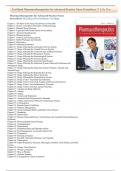
Test Bank Pharmacotherapeutics for Advanced Practice Nurse Prescribers 5th E By Woo
Pharmacotherapeutics for Advanced Practice Nurse
Prescribers 5th Edition Woo Robinson Test Bank
Chapter 1. The Role of the Nurse Practitioner as Prescriber
Chapter 2. Review of the Basic Principles of Pharmacology
Chapter 3. Rational Drug Selection
Chapter 4. Legal and Professional Issues in Prescribing
Chapter 5. Adverse Drug Reactions
Chapter 6. Pharmacogenetics
Chapter 7. Nutrition and Neutraceuticals
Chapter 8. Herbal Therapies and Cannabis
Chapter 9. Informatics
Chapter 10. Pharmacoeconomics
Chapter 11. Drugs Affecting the Autonomic Nervous System
Chapter 12. Drugs Affecting the Central Nervous System
Chapter 13. Drugs Affecting the Cardiovascular and Renal Systems
Chapter 14. Drugs Affecting the Respiratory System
Chapter 15. Drugs Affecting the Hematological System
Chapter 16. Drugs Affecting the Immune System
Chapter 17. Drugs Affecting the Gastrointestinal System
Chapter 18. Drugs Affecting the Endocrine System: Pancreatic Hormones and
Antidiabetic Drugs
Chapter 19. Drugs Affecting the Endocrine System: Pituitary, Thyroid, and
Adrenal Drugs
Chapter 20. Drugs Affecting the Reproductive System
Chapter 21. Drugs Affecting the Bones and Joints
Chapter 22. Drugs Affecting the Integumentary System
Chapter 23. Drugs Used to Treat Bacterial Infections
Chapter 24. Drugs Used to Treat Viral, Fungal, and Protozoal Infections
Chapter 25. Drugs Used to Treat Inflammatory Processes
Chapter 26. Drugs Used to Treat Eye and Ear Disorders
Chapter 27. Alcohol and Drug Addiction
Chapter 28. Anemia
Chapter 29. Angina
Chapter 30. Anxiety and Depression
Chapter 31. Attention Deficit Hyperactivity Disorder
Chapter 32. Asthma and Chronic Obstructive Pulmonary Disease
Chapter 33. Contraception
Chapter 34. Dermatological Conditions
Chapter 35. Diabetes Management
Chapter 36. Gastroesophageal Reflux and Peptic Ulcer Disease
Chapter 37. Headaches
Chapter 38. Heart Failure
Chapter 39. Human Immunodeficiency Virus Disease and Acquired Immunodeficiency
Syndrome
Chapter 40. Hormone Replacement Therapy
Chapter 41. Hyperlipidemia
Chapter 42. Hypertension
Chapter 43. Hyperthyroidism and Hypothyroidism
Chapter 44. Pain Management: Acute and Chronic Pain
Chapter 45. Pneumonia
Chapter 46. Smoking Cessation
Chapter 47. Sexually Transmitted Diseases and Vaginitis
Chapter 48. Tuberculosis
Chapter 49. Upper Respiratory Infection, Pharyngitis, Sinusitis, Otitis Media, and Otitis
Externa
Chapter 50. Urinary Tract Infection
Chapter 51. Women as Patients
Chapter 52. Men as Patients
Chapter 53. Pediatric Patients
Chapter 54. Transgendered Clients as Patients
,Chapter 55. Geriatric Patients
Chapter 1. The Role of the Nurse Practitioner
Multiple Choice
Identify the choice that best completes the statement or answers the question.
1. Nurse practitioner prescriptive authority is regulated by:
1. The National Council of State Boards of Nursing
2. The U.S. Drug Enforcement Administration
3. The State Board of Nursing for each state
4. The State Board of Pharmacy
2. The benefits to the patient of having an Advanced Practice Registered Nurse (APRN) prescriber
include:
1. Nurses know more about Pharmacology than other prescribers because they take it
both in their basic nursing program and in their APRN program.
2. Nurses care for the patient from a holistic approach and include the patient in
decision making regarding their care.
3. APRNs are less likely to prescribe narcotics and other controlled substances.
4. APRNs are able to prescribe independently in all states, whereas a physician’s
assistant needs to have a physician supervising their practice.
3. Clinical judgment in prescribing includes:
1. Factoring in the cost to the patient of the medication prescribed
2. Always prescribing the newest medication available for the disease process
3. Handing out drug samples to poor patients
4. Prescribing all generic medications to cut costs
4. Criteria for choosing an effective drug for a disorder include:
1. Asking the patient what drug they think would work best for them
2. Consulting nationally recognized guidelines for disease management
3. Prescribing medications that are available as samples before writing a prescription
4. Following U.S. Drug Enforcement Administration guidelines for prescribing
5. Nurse practitioner practice may thrive under health-care reform because of:
1. The demonstrated ability of nurse practitioners to control costs and improve patient
outcomes
2. The fact that nurse practitioners will be able to practice independently
3. The fact that nurse practitioners will have full reimbursement under health-care
reform
4. The ability to shift accountability for Medicaid to the state level
,Chapter 1. The Role of the Nurse Practitioner
Answer Section
MULTIPLE CHOICE
1. ANS: 3 PTS: 1
2. ANS: 2 PTS: 1
3. ANS: 1 PTS: 1
4. ANS: 2 PTS: 1
5. ANS: 1 PTS: 1
Chapter 2. Review of Basic Principles of Pharmacology
Multiple Choice
Identify the choice that best completes the statement or answers the question.
1. A patient’s nutritional intake and laboratory results reflect hypoalbuminemia. This is critical to
prescribing because:
1. Distribution of drugs to target tissue may be affected.
2. The solubility of the drug will not match the site of absorption.
3. There will be less free drug available to generate an effect.
4. Drugs bound to albumin are readily excreted by the kidneys.
2. Drugs that have a significant first-pass effect:
1. Must be given by the enteral (oral) route only
2. Bypass the hepatic circulation
3. Are rapidly metabolized by the liver and may have little if any desired action
4. Are converted by the liver to more active and fat-soluble forms
3. The route of excretion of a volatile drug will likely be the:
1. Kidneys
2. Lungs
3. Bile and feces
4. Skin
4. Medroxyprogesterone (Depo Provera) is prescribed intramuscularly (IM) to create a storage
reservoir of the drug. Storage reservoirs:
1. Assure that the drug will reach its intended target tissue
2. Are the reason for giving loading doses
3. Increase the length of time a drug is available and active
4. Are most common in collagen tissues
5. The NP chooses to give cephalexin every 8 hours based on knowledge of the drug’s:
1. Propensity to go to the target receptor
2. Biological half-life
3. Pharmacodynamics
4. Safety and side effects
, 6. Azithromycin dosing requires that the first day’s dosage be twice those of the other 4 days of the
prescription. This is considered a loading dose. A loading dose:
1. Rapidly achieves drug levels in the therapeutic range
2. Requires four- to five-half-lives to attain
3. Is influenced by renal function
4. Is directly related to the drug circulating to the target tissues
7. The point in time on the drug concentration curve that indicates the first sign of a therapeutic effect
is the:
1. Minimum adverse effect level
2. Peak of action
3. Onset of action
4. Therapeutic range
8. Phenytoin requires that a trough level be drawn. Peak and trough levels are done:
1. When the drug has a wide therapeutic range
2. When the drug will be administered for a short time only
3. When there is a high correlation between the dose and saturation of receptor sites
4. To determine if a drug is in the therapeutic range
9. A laboratory result indicates that the peak level for a drug is above the minimum toxic concentration.
This means that the:
1. Concentration will produce therapeutic effects
2. Concentration will produce an adverse response
3. Time between doses must be shortened
4. Duration of action of the drug is too long
10. Drugs that are receptor agonists may demonstrate what property?
1. Irreversible binding to the drug receptor site
2. Upregulation with chronic use
3. Desensitization or downregulation with continuous use
4. Inverse relationship between drug concentration and drug action
11. Drugs that are receptor antagonists, such as beta blockers, may cause:
1. Downregulation of the drug receptor
2. An exaggerated response if abruptly discontinued
3. Partial blockade of the effects of agonist drugs
4. An exaggerated response to competitive drug agonists
12. Factors that affect gastric drug absorption include:
1. Liver enzyme activity
2. Protein-binding properties of the drug molecule
3. Lipid solubility of the drug
4. Ability to chew and swallow
13. Drugs administered via IV:
1. Need to be lipid soluble in order to be easily absorbed
2. Begin distribution into the body immediately
3. Are easily absorbed if they are nonionized
4. May use pinocytosis to be absorbed
14. When a medication is added to a regimen for a synergistic effect, the combined effect of the drugs is:
1. The sum of the effects of each drug individually
Pharmacotherapeutics for Advanced Practice Nurse
Prescribers 5th Edition Woo Robinson Test Bank
Chapter 1. The Role of the Nurse Practitioner as Prescriber
Chapter 2. Review of the Basic Principles of Pharmacology
Chapter 3. Rational Drug Selection
Chapter 4. Legal and Professional Issues in Prescribing
Chapter 5. Adverse Drug Reactions
Chapter 6. Pharmacogenetics
Chapter 7. Nutrition and Neutraceuticals
Chapter 8. Herbal Therapies and Cannabis
Chapter 9. Informatics
Chapter 10. Pharmacoeconomics
Chapter 11. Drugs Affecting the Autonomic Nervous System
Chapter 12. Drugs Affecting the Central Nervous System
Chapter 13. Drugs Affecting the Cardiovascular and Renal Systems
Chapter 14. Drugs Affecting the Respiratory System
Chapter 15. Drugs Affecting the Hematological System
Chapter 16. Drugs Affecting the Immune System
Chapter 17. Drugs Affecting the Gastrointestinal System
Chapter 18. Drugs Affecting the Endocrine System: Pancreatic Hormones and
Antidiabetic Drugs
Chapter 19. Drugs Affecting the Endocrine System: Pituitary, Thyroid, and
Adrenal Drugs
Chapter 20. Drugs Affecting the Reproductive System
Chapter 21. Drugs Affecting the Bones and Joints
Chapter 22. Drugs Affecting the Integumentary System
Chapter 23. Drugs Used to Treat Bacterial Infections
Chapter 24. Drugs Used to Treat Viral, Fungal, and Protozoal Infections
Chapter 25. Drugs Used to Treat Inflammatory Processes
Chapter 26. Drugs Used to Treat Eye and Ear Disorders
Chapter 27. Alcohol and Drug Addiction
Chapter 28. Anemia
Chapter 29. Angina
Chapter 30. Anxiety and Depression
Chapter 31. Attention Deficit Hyperactivity Disorder
Chapter 32. Asthma and Chronic Obstructive Pulmonary Disease
Chapter 33. Contraception
Chapter 34. Dermatological Conditions
Chapter 35. Diabetes Management
Chapter 36. Gastroesophageal Reflux and Peptic Ulcer Disease
Chapter 37. Headaches
Chapter 38. Heart Failure
Chapter 39. Human Immunodeficiency Virus Disease and Acquired Immunodeficiency
Syndrome
Chapter 40. Hormone Replacement Therapy
Chapter 41. Hyperlipidemia
Chapter 42. Hypertension
Chapter 43. Hyperthyroidism and Hypothyroidism
Chapter 44. Pain Management: Acute and Chronic Pain
Chapter 45. Pneumonia
Chapter 46. Smoking Cessation
Chapter 47. Sexually Transmitted Diseases and Vaginitis
Chapter 48. Tuberculosis
Chapter 49. Upper Respiratory Infection, Pharyngitis, Sinusitis, Otitis Media, and Otitis
Externa
Chapter 50. Urinary Tract Infection
Chapter 51. Women as Patients
Chapter 52. Men as Patients
Chapter 53. Pediatric Patients
Chapter 54. Transgendered Clients as Patients
,Chapter 55. Geriatric Patients
Chapter 1. The Role of the Nurse Practitioner
Multiple Choice
Identify the choice that best completes the statement or answers the question.
1. Nurse practitioner prescriptive authority is regulated by:
1. The National Council of State Boards of Nursing
2. The U.S. Drug Enforcement Administration
3. The State Board of Nursing for each state
4. The State Board of Pharmacy
2. The benefits to the patient of having an Advanced Practice Registered Nurse (APRN) prescriber
include:
1. Nurses know more about Pharmacology than other prescribers because they take it
both in their basic nursing program and in their APRN program.
2. Nurses care for the patient from a holistic approach and include the patient in
decision making regarding their care.
3. APRNs are less likely to prescribe narcotics and other controlled substances.
4. APRNs are able to prescribe independently in all states, whereas a physician’s
assistant needs to have a physician supervising their practice.
3. Clinical judgment in prescribing includes:
1. Factoring in the cost to the patient of the medication prescribed
2. Always prescribing the newest medication available for the disease process
3. Handing out drug samples to poor patients
4. Prescribing all generic medications to cut costs
4. Criteria for choosing an effective drug for a disorder include:
1. Asking the patient what drug they think would work best for them
2. Consulting nationally recognized guidelines for disease management
3. Prescribing medications that are available as samples before writing a prescription
4. Following U.S. Drug Enforcement Administration guidelines for prescribing
5. Nurse practitioner practice may thrive under health-care reform because of:
1. The demonstrated ability of nurse practitioners to control costs and improve patient
outcomes
2. The fact that nurse practitioners will be able to practice independently
3. The fact that nurse practitioners will have full reimbursement under health-care
reform
4. The ability to shift accountability for Medicaid to the state level
,Chapter 1. The Role of the Nurse Practitioner
Answer Section
MULTIPLE CHOICE
1. ANS: 3 PTS: 1
2. ANS: 2 PTS: 1
3. ANS: 1 PTS: 1
4. ANS: 2 PTS: 1
5. ANS: 1 PTS: 1
Chapter 2. Review of Basic Principles of Pharmacology
Multiple Choice
Identify the choice that best completes the statement or answers the question.
1. A patient’s nutritional intake and laboratory results reflect hypoalbuminemia. This is critical to
prescribing because:
1. Distribution of drugs to target tissue may be affected.
2. The solubility of the drug will not match the site of absorption.
3. There will be less free drug available to generate an effect.
4. Drugs bound to albumin are readily excreted by the kidneys.
2. Drugs that have a significant first-pass effect:
1. Must be given by the enteral (oral) route only
2. Bypass the hepatic circulation
3. Are rapidly metabolized by the liver and may have little if any desired action
4. Are converted by the liver to more active and fat-soluble forms
3. The route of excretion of a volatile drug will likely be the:
1. Kidneys
2. Lungs
3. Bile and feces
4. Skin
4. Medroxyprogesterone (Depo Provera) is prescribed intramuscularly (IM) to create a storage
reservoir of the drug. Storage reservoirs:
1. Assure that the drug will reach its intended target tissue
2. Are the reason for giving loading doses
3. Increase the length of time a drug is available and active
4. Are most common in collagen tissues
5. The NP chooses to give cephalexin every 8 hours based on knowledge of the drug’s:
1. Propensity to go to the target receptor
2. Biological half-life
3. Pharmacodynamics
4. Safety and side effects
, 6. Azithromycin dosing requires that the first day’s dosage be twice those of the other 4 days of the
prescription. This is considered a loading dose. A loading dose:
1. Rapidly achieves drug levels in the therapeutic range
2. Requires four- to five-half-lives to attain
3. Is influenced by renal function
4. Is directly related to the drug circulating to the target tissues
7. The point in time on the drug concentration curve that indicates the first sign of a therapeutic effect
is the:
1. Minimum adverse effect level
2. Peak of action
3. Onset of action
4. Therapeutic range
8. Phenytoin requires that a trough level be drawn. Peak and trough levels are done:
1. When the drug has a wide therapeutic range
2. When the drug will be administered for a short time only
3. When there is a high correlation between the dose and saturation of receptor sites
4. To determine if a drug is in the therapeutic range
9. A laboratory result indicates that the peak level for a drug is above the minimum toxic concentration.
This means that the:
1. Concentration will produce therapeutic effects
2. Concentration will produce an adverse response
3. Time between doses must be shortened
4. Duration of action of the drug is too long
10. Drugs that are receptor agonists may demonstrate what property?
1. Irreversible binding to the drug receptor site
2. Upregulation with chronic use
3. Desensitization or downregulation with continuous use
4. Inverse relationship between drug concentration and drug action
11. Drugs that are receptor antagonists, such as beta blockers, may cause:
1. Downregulation of the drug receptor
2. An exaggerated response if abruptly discontinued
3. Partial blockade of the effects of agonist drugs
4. An exaggerated response to competitive drug agonists
12. Factors that affect gastric drug absorption include:
1. Liver enzyme activity
2. Protein-binding properties of the drug molecule
3. Lipid solubility of the drug
4. Ability to chew and swallow
13. Drugs administered via IV:
1. Need to be lipid soluble in order to be easily absorbed
2. Begin distribution into the body immediately
3. Are easily absorbed if they are nonionized
4. May use pinocytosis to be absorbed
14. When a medication is added to a regimen for a synergistic effect, the combined effect of the drugs is:
1. The sum of the effects of each drug individually