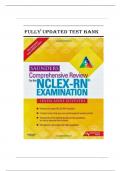
, Silvestri: Saunders Comprehensive Review for the NCLEX-RN® Examination, 5th
f f f f f f f f
Edition
f
Pharmacology
fTest Bank
f
MULTIPLE CHOICE f
1. The nurse is caring for a client in labor. The nurse reviews the physician’s prescriptions and notes that the
f f f f f f f f f f f f f f f f f f
client has a prescription for butorphanol tartrate (Stadol). The nurse understands that this medication is
f f f f f f f f f f f f f f f
prescribed for:
f f
1. Pain relief f
2. Increasing uterine contractions f f
3. Decreasing uterine contractions f f
4. Promoting fetal lung maturity f f f
ANS: 1 f f
Rationale: The client in labor may be given parenteral analgesia during the first stage of labor, up to 2 to 3
f f f f f f f f f f f f f f f f f f f f
hours before the anticipated delivery. Butorphanol tartrate is a medication that may be prescribed for pain
f f f f f f f f f f f f f f f f
relief. “Increasing uterine contractions,” “decreasing uterine contractions,” and “promoting fetal lung
f f f f f f f f f f f
maturity” are not actions of this medication.
f f f f f f f
Test-Taking Strategy: Knowledge of the action of butorphanol tartrate is required to answer this question.
f f f f f f f f f f f f f f
Remember that this medication is used for pain relief. Review the action of this medication if you had
f f f f f f f f f f f f f f f f f f
difficulty with this question and are unfamiliar with this medication.
f f f f f f f f f f
PTS: 1
DIF: Level of Cognitive Ability: Understanding
f f f f
REF: Lehne, R. (2010). Pharmacology for nursing care (7th ed.). St. Louis: Saunders.
f f f f f f f f f f f
OBJ:
f Client Needs: Physiological Integrity f f f
TOP: Content Area: Pharmacology f f
MSC: f Integrated Process: Nursing Process—Planning f f f
2. The postpartum nurse is caring for a client with an epidural catheter in place for opioid analgesic
f f f f f f f f f f f f f f f f
administration following cesarean birth. If the client develops respiratory depression and requires
f f f f f f f f f f f f
naloxone (Narcan) as an antidote, the client may complain of which of the following?
f f f f f f f f f f f f f f
1. Increase in her pain level f f f f
2. Decrease in her pain level f f f f
3. Increase in the amount of itching from the opioid used in the epidural
f f f f f f f f f f f f
4. Decrease in the amount of itching from the opioid used in the epidural
f f f f f f f f f f f f
, ANS: 1 f f
Rationale: Remember that opioids are used for epidural analgesia. Naloxone is an opioid antagonist,
f f f f f f f f f f f f f
which reverses the effects of opioids. If it is given, the client may complain of an increase in her pain level.
f f f f f f f f f f f f f f f f f f f f f
Therefore “decrease in her pain level,” “increase in the amount of itching from the opioid used in the
f f f f f f f f f f f f f f f f f f
epidural,” and “decrease in the amount of itching from the opioid used in the epidural” are incorrect.
f f f f f f f f f f f f f f f f f
Test-Taking Strategy: To answer this question accurately, you must know that opioid analgesics are the
f f f f f f f f f f f f f f
medications used with epidural analgesia to relieve pain. Therefore if naloxone is administered as an
f f f f f f f f f f f f f f f
antidote for an opioid analgesic, the client’s pain will increase. Review the effects of naloxone if this
f f f f f f f f f f f f f f f f f
question was difficult.
f f f
PTS: 1
DIF: Level of Cognitive Ability: Understanding
f f f f
REF: Lehne, R. (2010). Pharmacology for nursing care (7th ed.). St. Louis: Saunders.
f f f f f f f f f f f
OBJ:
f Client Needs: Physiological Integrity f f f
TOP: Content Area: Pharmacology f f
MSC: f Integrated Process: Nursing Process—Assessment f f f
3. A client experiencing preterm labor at the twenty-ninth week of gestation has been admitted to the
f f f f f f f f f f f f f f f
hospital. The client has a prescription to receive betamethasone (Celestone). The nurse understands that
f f f f f f f f f f f f f f
the medication will do which of the following?
f f f f f f f f
1. Prevent spontaneous delivery. f f
2. Stop the uterine contractions.
f f f
3. Promote maturation of the fetal lungs. f f f f f
4. Accelerate the growth rate of the fetus. f f f f f f
ANS: 3 f f
Rationale: Betamethasone (Celestone) is classified as an anti-inflammatory and corticosteroid. It
f f f f f f f f f f
increases the surfactant level and lung maturity in the fetus, which reduces the incidence of respiratory
f f f f f f f f f f f f f f f f
distress syndrome. Delivery must be delayed for at least 48 hours after administration of betamethasone to
f f f f f f f f f f f f f f f f
allow time for the lungs of the fetus to mature.
f f f f f f f f f f
Test-Taking Strategy: Options that are comparable or alike are not likely to be correct. With this in mind,
f f f f f f f f f f f f f f f f f
eliminate “prevent spontaneous delivery” and “stop the uterine contractions.” Note the strategic words
f f f f f f f f f f f f f
“twenty-ninth week of gestation.” Specific knowledge about the medication and knowledge of the
f f f f f f f f f f f f f
problems encountered by premature infants will assist in answering this question. Review the action of
f f f f f f f f f f f f f f f
this medication if this question was difficult.
f f f f f f f
PTS: 1
DIF: Level of Cognitive Ability: Understanding f f f f
REF: McKinney, E., James, S., Murray, S., & Ashwill, J. (2009). Maternal-child nursing (3rd ed.). St. f f f f f f f f f f f f f f
Louis: Saunders.
f OBJ: Client Needs: Physiological Integrity
f f f f
, TOP: Content Area: Pharmacology f f
MSC: Integrated Process: Nursing Process—Planning
f f f f
4. A client with preeclampsia is receiving magnesium sulfate. The nurse assesses the client closely for
f f f f f f f f f f f f f f
which sign of magnesium toxicity?
f f f f f
1. Proteinuria
2. Hyperactive deep tendon reflexes f f f
3. Respiratory rate of 10 breaths/min f f f f
4. Serum magnesium level of 5 mEq/L f f f f f
ANS: 3 f f
Rationale: Magnesium toxicity is a risk associated with magnesium sulfate therapy. Signs of magnesium
f f f f f f f f f f f f f
toxicity relate to central nervous system (CNS) depression and include respiratory depression, loss of deep
f f f f f f f f f f f f f f f
tendon reflexes, and sudden drop in fetal heart rate and/or maternal heart rate and blood pressure.
f f f f f f f f f f f f f f f f
Magnesium is excreted through the kidneys. If renal impairment is present, magnesium toxicity can
f f f f f f f f f f f f f
develop very quickly. Therapeutic serum levels of magnesium are 4 to 7 mEq/L.
f f f f f f f f f f f f f
Test-Taking Strategy: To answer this question accurately, you must recall that magnesium sulfate is a
f f f f f f f f f f f f f f
CNS depressant. Begin to answer this question by eliminating “proteinuria” and “hyperactive deep tendon
f f f f f f f f f f f f f f
reflexes,” which are signs of preeclampsia. Select between the last two options using medication
f f f f f f f f f f f f f f
knowledge and recalling that the therapeutic serum levels of magnesium are 4 to 7 mEq/L. Review this
f f f f f f f f f f f f f f f f f
medication and the normal magnesium level if this question was difficult.
f f f f f f f f f f f
PTS: 1
DIF: Level of Cognitive Ability: Analyzing f f f f
REF: Lowdermilk, D., Perry, S., & Cashion, K. (2010). Maternity nursing (8th ed.). St. Louis: Mosby. f f f f f f f f f f f f f f
OBJ: Client Needs: Physiological Integrity f f f
TOP: Content Area: Pharmacology
f f f
MSC: Integrated Process: Nursing Process—Assessment
f f f f
5. A pregnant client who has human immunodeficiency virus (HIV) infection is being seen in the antenatal
f f f f f f f f f f f f f f f
clinic. The nurse recalls that zidovudine (AZT) therapy will be initiated when the fetus has reached how
f f f f f f f f f f f f f f f f f
many weeks of gestation?
f f f f
1. 4
2. 14
3. 24
4. 34
ANS: 2 f f
Rationale: The pregnant women with HIV infection will be prescribed oral AZT in the fourteenth week of
f f f f f f f f f f f f f f f f
gestation. Before this time, the fetus is at risk because of the teratogenic effects of the medication. In
f f f f f f f f f f f f f f f f f f
f f f f f f f f
Edition
f
Pharmacology
fTest Bank
f
MULTIPLE CHOICE f
1. The nurse is caring for a client in labor. The nurse reviews the physician’s prescriptions and notes that the
f f f f f f f f f f f f f f f f f f
client has a prescription for butorphanol tartrate (Stadol). The nurse understands that this medication is
f f f f f f f f f f f f f f f
prescribed for:
f f
1. Pain relief f
2. Increasing uterine contractions f f
3. Decreasing uterine contractions f f
4. Promoting fetal lung maturity f f f
ANS: 1 f f
Rationale: The client in labor may be given parenteral analgesia during the first stage of labor, up to 2 to 3
f f f f f f f f f f f f f f f f f f f f
hours before the anticipated delivery. Butorphanol tartrate is a medication that may be prescribed for pain
f f f f f f f f f f f f f f f f
relief. “Increasing uterine contractions,” “decreasing uterine contractions,” and “promoting fetal lung
f f f f f f f f f f f
maturity” are not actions of this medication.
f f f f f f f
Test-Taking Strategy: Knowledge of the action of butorphanol tartrate is required to answer this question.
f f f f f f f f f f f f f f
Remember that this medication is used for pain relief. Review the action of this medication if you had
f f f f f f f f f f f f f f f f f f
difficulty with this question and are unfamiliar with this medication.
f f f f f f f f f f
PTS: 1
DIF: Level of Cognitive Ability: Understanding
f f f f
REF: Lehne, R. (2010). Pharmacology for nursing care (7th ed.). St. Louis: Saunders.
f f f f f f f f f f f
OBJ:
f Client Needs: Physiological Integrity f f f
TOP: Content Area: Pharmacology f f
MSC: f Integrated Process: Nursing Process—Planning f f f
2. The postpartum nurse is caring for a client with an epidural catheter in place for opioid analgesic
f f f f f f f f f f f f f f f f
administration following cesarean birth. If the client develops respiratory depression and requires
f f f f f f f f f f f f
naloxone (Narcan) as an antidote, the client may complain of which of the following?
f f f f f f f f f f f f f f
1. Increase in her pain level f f f f
2. Decrease in her pain level f f f f
3. Increase in the amount of itching from the opioid used in the epidural
f f f f f f f f f f f f
4. Decrease in the amount of itching from the opioid used in the epidural
f f f f f f f f f f f f
, ANS: 1 f f
Rationale: Remember that opioids are used for epidural analgesia. Naloxone is an opioid antagonist,
f f f f f f f f f f f f f
which reverses the effects of opioids. If it is given, the client may complain of an increase in her pain level.
f f f f f f f f f f f f f f f f f f f f f
Therefore “decrease in her pain level,” “increase in the amount of itching from the opioid used in the
f f f f f f f f f f f f f f f f f f
epidural,” and “decrease in the amount of itching from the opioid used in the epidural” are incorrect.
f f f f f f f f f f f f f f f f f
Test-Taking Strategy: To answer this question accurately, you must know that opioid analgesics are the
f f f f f f f f f f f f f f
medications used with epidural analgesia to relieve pain. Therefore if naloxone is administered as an
f f f f f f f f f f f f f f f
antidote for an opioid analgesic, the client’s pain will increase. Review the effects of naloxone if this
f f f f f f f f f f f f f f f f f
question was difficult.
f f f
PTS: 1
DIF: Level of Cognitive Ability: Understanding
f f f f
REF: Lehne, R. (2010). Pharmacology for nursing care (7th ed.). St. Louis: Saunders.
f f f f f f f f f f f
OBJ:
f Client Needs: Physiological Integrity f f f
TOP: Content Area: Pharmacology f f
MSC: f Integrated Process: Nursing Process—Assessment f f f
3. A client experiencing preterm labor at the twenty-ninth week of gestation has been admitted to the
f f f f f f f f f f f f f f f
hospital. The client has a prescription to receive betamethasone (Celestone). The nurse understands that
f f f f f f f f f f f f f f
the medication will do which of the following?
f f f f f f f f
1. Prevent spontaneous delivery. f f
2. Stop the uterine contractions.
f f f
3. Promote maturation of the fetal lungs. f f f f f
4. Accelerate the growth rate of the fetus. f f f f f f
ANS: 3 f f
Rationale: Betamethasone (Celestone) is classified as an anti-inflammatory and corticosteroid. It
f f f f f f f f f f
increases the surfactant level and lung maturity in the fetus, which reduces the incidence of respiratory
f f f f f f f f f f f f f f f f
distress syndrome. Delivery must be delayed for at least 48 hours after administration of betamethasone to
f f f f f f f f f f f f f f f f
allow time for the lungs of the fetus to mature.
f f f f f f f f f f
Test-Taking Strategy: Options that are comparable or alike are not likely to be correct. With this in mind,
f f f f f f f f f f f f f f f f f
eliminate “prevent spontaneous delivery” and “stop the uterine contractions.” Note the strategic words
f f f f f f f f f f f f f
“twenty-ninth week of gestation.” Specific knowledge about the medication and knowledge of the
f f f f f f f f f f f f f
problems encountered by premature infants will assist in answering this question. Review the action of
f f f f f f f f f f f f f f f
this medication if this question was difficult.
f f f f f f f
PTS: 1
DIF: Level of Cognitive Ability: Understanding f f f f
REF: McKinney, E., James, S., Murray, S., & Ashwill, J. (2009). Maternal-child nursing (3rd ed.). St. f f f f f f f f f f f f f f
Louis: Saunders.
f OBJ: Client Needs: Physiological Integrity
f f f f
, TOP: Content Area: Pharmacology f f
MSC: Integrated Process: Nursing Process—Planning
f f f f
4. A client with preeclampsia is receiving magnesium sulfate. The nurse assesses the client closely for
f f f f f f f f f f f f f f
which sign of magnesium toxicity?
f f f f f
1. Proteinuria
2. Hyperactive deep tendon reflexes f f f
3. Respiratory rate of 10 breaths/min f f f f
4. Serum magnesium level of 5 mEq/L f f f f f
ANS: 3 f f
Rationale: Magnesium toxicity is a risk associated with magnesium sulfate therapy. Signs of magnesium
f f f f f f f f f f f f f
toxicity relate to central nervous system (CNS) depression and include respiratory depression, loss of deep
f f f f f f f f f f f f f f f
tendon reflexes, and sudden drop in fetal heart rate and/or maternal heart rate and blood pressure.
f f f f f f f f f f f f f f f f
Magnesium is excreted through the kidneys. If renal impairment is present, magnesium toxicity can
f f f f f f f f f f f f f
develop very quickly. Therapeutic serum levels of magnesium are 4 to 7 mEq/L.
f f f f f f f f f f f f f
Test-Taking Strategy: To answer this question accurately, you must recall that magnesium sulfate is a
f f f f f f f f f f f f f f
CNS depressant. Begin to answer this question by eliminating “proteinuria” and “hyperactive deep tendon
f f f f f f f f f f f f f f
reflexes,” which are signs of preeclampsia. Select between the last two options using medication
f f f f f f f f f f f f f f
knowledge and recalling that the therapeutic serum levels of magnesium are 4 to 7 mEq/L. Review this
f f f f f f f f f f f f f f f f f
medication and the normal magnesium level if this question was difficult.
f f f f f f f f f f f
PTS: 1
DIF: Level of Cognitive Ability: Analyzing f f f f
REF: Lowdermilk, D., Perry, S., & Cashion, K. (2010). Maternity nursing (8th ed.). St. Louis: Mosby. f f f f f f f f f f f f f f
OBJ: Client Needs: Physiological Integrity f f f
TOP: Content Area: Pharmacology
f f f
MSC: Integrated Process: Nursing Process—Assessment
f f f f
5. A pregnant client who has human immunodeficiency virus (HIV) infection is being seen in the antenatal
f f f f f f f f f f f f f f f
clinic. The nurse recalls that zidovudine (AZT) therapy will be initiated when the fetus has reached how
f f f f f f f f f f f f f f f f f
many weeks of gestation?
f f f f
1. 4
2. 14
3. 24
4. 34
ANS: 2 f f
Rationale: The pregnant women with HIV infection will be prescribed oral AZT in the fourteenth week of
f f f f f f f f f f f f f f f f
gestation. Before this time, the fetus is at risk because of the teratogenic effects of the medication. In
f f f f f f f f f f f f f f f f f f