Übung Arbeit
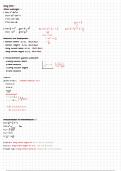
Höhere
Ableitungen
*
1 . f(x) = X
-
8x3 + X
f(x) = 4x3 -
24x2 + 1
f"(x) = 12x2 -
48X
f (x) =
24X -
48
ab = a
.
b
!
x
2
x . E T .
E * & E
*
2 f(x) 2x
g(x) Bsp +(x) 4
s(x) x
= = = = = = = = = = =
.
.
f(x) = -
2x S'(x) =
1x = 4X
=
- 1
2
f(x) = -
1 -
4x
-2
Monotonie und Extrempunkte =
- 4x =
-
4 .
1 . Monoton fallend X, -X f(x , ) f(Xz) =-
I
Monoton
Steigend X , X2 f(x , ) = f(x)
streng Monoton fallend X 11 X2 f(x , (f(x)
f(x , ( f(x2)
streng monoton
Steigend X, x2
2 Monotonieverhalten untersuchen
.
Graphisch
a) fallend
streng monoton
↓
allf y-Achse : X =
=
X
b) keine Monotonie XI Xz auf X-Achse : Xi >
X ,
monoton
↳
deswegen : ~
steisend
c) streng monoton
steigend 7
d) keine Monotonie
S 124104.
a) f(x) = X2 -
5x + 1 Nullstellen berechnen yon f'
f(x) = 2x -
5
0 =
2x -
5
5
*
!
Testeinsetzungen
-
!
f' (1 , 5) = -
20
~XGraph sit
t
'
+ (3 , 5) =
250
↳ für X-2 , 5 ist f(x) < 1
für X32 , 5 ist f(x) < I
Monotonieverhalten mit Monotoniekriterium
f(x) =
(x3 yx + + 4
f'(x) = x2 +
X 149
X , 2
= -=
X
1, 2
= -
z= t
E X0
f'(-2) für X-1 -für X-1 ist f(x) 0
= 2 >0
Streng Monoton
Steigend
f' (l) für für XO ist +(x) > 0
= 250
Streng Monoton
Steigend X0 -
f'(-0 5) = , -0 , 25 10
streng Monoton fallend für -
1x0 -für-1x0 ist f(x) 0
, Extrempunkte
f(x) = =x Ex +
1. Schritt : Ableiten
f(x) = x2 + X
f"(x) = 2x + 1
2
. Schritt : Notw Kriterium . +' (x) = 0
x2 + x = 0 Nullstellen best .
X(X +
1) = 0
&
*= X +
1 = 0
X2 =
. Schritt : hinreichendes Kriterium f" (x) 0
3
Nullstellen in f" eins.
f" (0) = 130 TP
f" ( 1) = -
-
1 -
0 HP
.
4 Schritt :
Y-Koordinaten berechnen
Nullstellen in feins.
0 20 2
f (0) =
7 .
+ = - TP(0(0)
13 2
+ ( 1) =
5 ( +
( x =
E -> HP( 1(5)
. -
- -
. -
Vorzeichenwechsel-Kriterium
f(x) =
-
-x* - +
1. Schritt : Ableiten
f(x) = - x3 Ex +
f"(x) = -
2x Ex +
. Schritt
2 :
f'(x) = 0
- x3 Ex + =
0 oder - x3 Ex + =
0 1 : x
x ( Ex + ) = 0 -
Ex Ex +
1 : ( -)
↓
*
0 Ex E + = 0 X2 -
4X 1 pq
-
Ex - =
1 :
(5) =
2 12
X
=
Xe , z
x 1x =
=
. Schritt
3 : in f" eins. .
f"(0) = 0 = 0 Keine
Aussage !
f"(4) = -
3 .
42 + 4
f"(4) = 9,6
3240HP
+
-
6, 4 = -
4
. Schritt : Vorzeichenwechsel-Kriterium 5. Schritt : Y-Koordinaten berechnen
5
f!
Testeinsetzungen bei x: I und X = -1 bei in feins .
+ ( 1) -
= -
5 .
( 13
-
+
z.( -
1) + (0)
= Sattelpunkt bei 1010)
Ochpunkt
20
3
f) 1) -
=
bei (414 28)
,
5 1. 1 Keinzeichenwechsel !
2
t'(l) 13 f (4)
1128
.
= - + =
↳ SP
f'(1) = 70
Höhere
Ableitungen
*
1 . f(x) = X
-
8x3 + X
f(x) = 4x3 -
24x2 + 1
f"(x) = 12x2 -
48X
f (x) =
24X -
48
ab = a
.
b
!
x
2
x . E T .
E * & E
*
2 f(x) 2x
g(x) Bsp +(x) 4
s(x) x
= = = = = = = = = = =
.
.
f(x) = -
2x S'(x) =
1x = 4X
=
- 1
2
f(x) = -
1 -
4x
-2
Monotonie und Extrempunkte =
- 4x =
-
4 .
1 . Monoton fallend X, -X f(x , ) f(Xz) =-
I
Monoton
Steigend X , X2 f(x , ) = f(x)
streng Monoton fallend X 11 X2 f(x , (f(x)
f(x , ( f(x2)
streng monoton
Steigend X, x2
2 Monotonieverhalten untersuchen
.
Graphisch
a) fallend
streng monoton
↓
allf y-Achse : X =
=
X
b) keine Monotonie XI Xz auf X-Achse : Xi >
X ,
monoton
↳
deswegen : ~
steisend
c) streng monoton
steigend 7
d) keine Monotonie
S 124104.
a) f(x) = X2 -
5x + 1 Nullstellen berechnen yon f'
f(x) = 2x -
5
0 =
2x -
5
5
*
!
Testeinsetzungen
-
!
f' (1 , 5) = -
20
~XGraph sit
t
'
+ (3 , 5) =
250
↳ für X-2 , 5 ist f(x) < 1
für X32 , 5 ist f(x) < I
Monotonieverhalten mit Monotoniekriterium
f(x) =
(x3 yx + + 4
f'(x) = x2 +
X 149
X , 2
= -=
X
1, 2
= -
z= t
E X0
f'(-2) für X-1 -für X-1 ist f(x) 0
= 2 >0
Streng Monoton
Steigend
f' (l) für für XO ist +(x) > 0
= 250
Streng Monoton
Steigend X0 -
f'(-0 5) = , -0 , 25 10
streng Monoton fallend für -
1x0 -für-1x0 ist f(x) 0
, Extrempunkte
f(x) = =x Ex +
1. Schritt : Ableiten
f(x) = x2 + X
f"(x) = 2x + 1
2
. Schritt : Notw Kriterium . +' (x) = 0
x2 + x = 0 Nullstellen best .
X(X +
1) = 0
&
*= X +
1 = 0
X2 =
. Schritt : hinreichendes Kriterium f" (x) 0
3
Nullstellen in f" eins.
f" (0) = 130 TP
f" ( 1) = -
-
1 -
0 HP
.
4 Schritt :
Y-Koordinaten berechnen
Nullstellen in feins.
0 20 2
f (0) =
7 .
+ = - TP(0(0)
13 2
+ ( 1) =
5 ( +
( x =
E -> HP( 1(5)
. -
- -
. -
Vorzeichenwechsel-Kriterium
f(x) =
-
-x* - +
1. Schritt : Ableiten
f(x) = - x3 Ex +
f"(x) = -
2x Ex +
. Schritt
2 :
f'(x) = 0
- x3 Ex + =
0 oder - x3 Ex + =
0 1 : x
x ( Ex + ) = 0 -
Ex Ex +
1 : ( -)
↓
*
0 Ex E + = 0 X2 -
4X 1 pq
-
Ex - =
1 :
(5) =
2 12
X
=
Xe , z
x 1x =
=
. Schritt
3 : in f" eins. .
f"(0) = 0 = 0 Keine
Aussage !
f"(4) = -
3 .
42 + 4
f"(4) = 9,6
3240HP
+
-
6, 4 = -
4
. Schritt : Vorzeichenwechsel-Kriterium 5. Schritt : Y-Koordinaten berechnen
5
f!
Testeinsetzungen bei x: I und X = -1 bei in feins .
+ ( 1) -
= -
5 .
( 13
-
+
z.( -
1) + (0)
= Sattelpunkt bei 1010)
Ochpunkt
20
3
f) 1) -
=
bei (414 28)
,
5 1. 1 Keinzeichenwechsel !
2
t'(l) 13 f (4)
1128
.
= - + =
↳ SP
f'(1) = 70