

Psychology notes – PSY1004F
Introduction to psychology
Psychology [generally] is a system of belief about people, our behaviour & what makes us
who we are
It is different from other belief systems because psychologists are concerned not
only with WHAT we know about people but HOW we came to know these things
PSYCHOLOGY [specifically] IS A SCIENTIFIC & APPLIED DISCIPLINE THAT STUDIES
HUMAN BEHAVIOUR, COGNITION & EMOTIONS
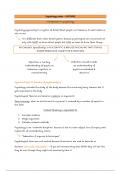
Definition is limiting
1 Definition should include
understanding of psyche as an understanding of
behaviour, cognition or psyche as embodied &
neurochemistry discursive
Sigmund Freud → founder of psychoanalysis
Psychology includes the study of the body because the mind may burry trauma, but it
gets imprinted in the body
Psychological theories are based on evidence or arguments
Peer reviewing: when an article sent to a journal is reviewed by a number of experts in
the field
Critical thinking is important to
1. Consider evidence
2. Weigh arguments
3. Evaluate research methods
Psychology is an “umbrella discipline” because it has no clear subject line of inquiry and
makes lots of contradictory claims.
“Federation if inquiries & techniques”
Psychological terms are not neutral because these terms are used to describe us
Humans “act under description” – if you tell someone they have ADHD they will act like
they do even though they might not necessarily have it
, Language in psychology is complex – do we call people subjects, respondents or
participants?
There are two major objections to the term ‘subject’ because the term gives the
impression that research is being ‘done to them’ which implies coercion or force and the
use of power by psychologists. It makes us think of the person as being studied as a
passive recipient of research and not a person actively living and making sense of the
environment.
‘Respondents’ gives the sense that we are interested in people who are responding to
questions that psychologists pose
‘Participants’ emphasises the active role people play when taking part in psychological
research
Competence
Justice & integrity Conduct the work only
for which one is trained Non-maleficence
Develop a social
conscience and commit to Cause no harm
the truth
ETHICS IN PSYCHOLOGY
Autonomy Beneficence
Respect the rights of the Act in the best interest of
individual Fidelity the client
Behave in a trustworthy
manner
psychology → the subject matter
Psychology → the architecture of the field/discipline
psychology – reflection on the mind goes far back
• Greeks (5000 BC)
• Chinese (4000 BC)
• Egypt (1550 BC)
• Islamic world (11th century)
• European middle-ages (5th – 16th centuries)
• European enlightenment (18th century)
Introduction to psychology
Psychology [generally] is a system of belief about people, our behaviour & what makes us
who we are
It is different from other belief systems because psychologists are concerned not
only with WHAT we know about people but HOW we came to know these things
PSYCHOLOGY [specifically] IS A SCIENTIFIC & APPLIED DISCIPLINE THAT STUDIES
HUMAN BEHAVIOUR, COGNITION & EMOTIONS
Definition is limiting
1 Definition should include
understanding of psyche as an understanding of
behaviour, cognition or psyche as embodied &
neurochemistry discursive
Sigmund Freud → founder of psychoanalysis
Psychology includes the study of the body because the mind may burry trauma, but it
gets imprinted in the body
Psychological theories are based on evidence or arguments
Peer reviewing: when an article sent to a journal is reviewed by a number of experts in
the field
Critical thinking is important to
1. Consider evidence
2. Weigh arguments
3. Evaluate research methods
Psychology is an “umbrella discipline” because it has no clear subject line of inquiry and
makes lots of contradictory claims.
“Federation if inquiries & techniques”
Psychological terms are not neutral because these terms are used to describe us
Humans “act under description” – if you tell someone they have ADHD they will act like
they do even though they might not necessarily have it
, Language in psychology is complex – do we call people subjects, respondents or
participants?
There are two major objections to the term ‘subject’ because the term gives the
impression that research is being ‘done to them’ which implies coercion or force and the
use of power by psychologists. It makes us think of the person as being studied as a
passive recipient of research and not a person actively living and making sense of the
environment.
‘Respondents’ gives the sense that we are interested in people who are responding to
questions that psychologists pose
‘Participants’ emphasises the active role people play when taking part in psychological
research
Competence
Justice & integrity Conduct the work only
for which one is trained Non-maleficence
Develop a social
conscience and commit to Cause no harm
the truth
ETHICS IN PSYCHOLOGY
Autonomy Beneficence
Respect the rights of the Act in the best interest of
individual Fidelity the client
Behave in a trustworthy
manner
psychology → the subject matter
Psychology → the architecture of the field/discipline
psychology – reflection on the mind goes far back
• Greeks (5000 BC)
• Chinese (4000 BC)
• Egypt (1550 BC)
• Islamic world (11th century)
• European middle-ages (5th – 16th centuries)
• European enlightenment (18th century)


