

Psychology notes – PSY1004F
Psychopathology
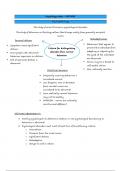
The study of mind illnesses or psychological disorders
The study of behaviour or thinking pattens that diverge widely from generally accepted
norms
Maladaptiveness
Personal distress
▪ Behaviours that appear to
▪ Symptoms cause significant
Criteria for distinguishing prevent the individual from
distress
disorders from normal adapting or adjusting for
▪ Some people with abnormal
behaviour the good of the individual
behaviour experience no distress
are abnormal
▪ Not all personal distress is
▪ Person may be a threat to
abnormal
self and/or others
Statistical deviance: ▪ Also, culturally sensitive
▪ Frequently occurring behaviour is
considered normal
▪ Less frequent, rare or deviation
from societal norms are
considered to be abnormal
▪ Some statically normal behaviour
may not be healthy
▪ PROBLEM – norms are culturally
sensitive and different
DEFINING ABNORMALITY:
➢ Used by psychologists to determine whether or not psychological functioning or
behaviour is abnormal
➢ Psychological disorders must meet at least two of the following criteria:
o Unusualness
o Deviance from the social norms
o Significant distress
o Maladaptive
o Danger to self or others
, The scientific era
The early era
The asylum era
A BRIEF HISTORY OF
MENTAL ILLNESS
The ancient era
The Renaissance era
The Middle Ages
THE EARLY ERA – 3000BC:
➢ Dominant understanding of mental illness during this period was informed by a
belief that individuals who became psychologically disturbed were possessed by
evil, supernatural forces → DEMONIC POSSESSION
➢ They thought that by boring a hole in the patient’s skull (TREPHINATION) the
evil spirits causing the mental disturbance could be driven out
➢ Treatment method – EXORCISM – religious or spiritual practice of evicting
demons from a person believed to be possessed
➢ People with psychological disorders were believed to be witches – WITCHCRAFT –
massive persecution, mostly women
THE ANCIENT ERA – 460-377BC:
➢ Work of Hippocrates
o He believed that psychological disorders were the result of imbalances in
four essential fluids or humours in the body
1. Phlegm
2. Yellow bile
3. Black bile
4. Blood
➢ His findings marked the beginning of the biomedical approach to understanding
psychopathology
THE MIDDLE AGES:
➢ Religion dominated all explanations
➢ Mental illness was seen as a form of punishment for sin
THE RENAISSANCE ERA – 1400-1600:
➢ Patients were treated more humanely
➢ Ideas related to witchcraft were more openly challenged
Psychopathology
The study of mind illnesses or psychological disorders
The study of behaviour or thinking pattens that diverge widely from generally accepted
norms
Maladaptiveness
Personal distress
▪ Behaviours that appear to
▪ Symptoms cause significant
Criteria for distinguishing prevent the individual from
distress
disorders from normal adapting or adjusting for
▪ Some people with abnormal
behaviour the good of the individual
behaviour experience no distress
are abnormal
▪ Not all personal distress is
▪ Person may be a threat to
abnormal
self and/or others
Statistical deviance: ▪ Also, culturally sensitive
▪ Frequently occurring behaviour is
considered normal
▪ Less frequent, rare or deviation
from societal norms are
considered to be abnormal
▪ Some statically normal behaviour
may not be healthy
▪ PROBLEM – norms are culturally
sensitive and different
DEFINING ABNORMALITY:
➢ Used by psychologists to determine whether or not psychological functioning or
behaviour is abnormal
➢ Psychological disorders must meet at least two of the following criteria:
o Unusualness
o Deviance from the social norms
o Significant distress
o Maladaptive
o Danger to self or others
, The scientific era
The early era
The asylum era
A BRIEF HISTORY OF
MENTAL ILLNESS
The ancient era
The Renaissance era
The Middle Ages
THE EARLY ERA – 3000BC:
➢ Dominant understanding of mental illness during this period was informed by a
belief that individuals who became psychologically disturbed were possessed by
evil, supernatural forces → DEMONIC POSSESSION
➢ They thought that by boring a hole in the patient’s skull (TREPHINATION) the
evil spirits causing the mental disturbance could be driven out
➢ Treatment method – EXORCISM – religious or spiritual practice of evicting
demons from a person believed to be possessed
➢ People with psychological disorders were believed to be witches – WITCHCRAFT –
massive persecution, mostly women
THE ANCIENT ERA – 460-377BC:
➢ Work of Hippocrates
o He believed that psychological disorders were the result of imbalances in
four essential fluids or humours in the body
1. Phlegm
2. Yellow bile
3. Black bile
4. Blood
➢ His findings marked the beginning of the biomedical approach to understanding
psychopathology
THE MIDDLE AGES:
➢ Religion dominated all explanations
➢ Mental illness was seen as a form of punishment for sin
THE RENAISSANCE ERA – 1400-1600:
➢ Patients were treated more humanely
➢ Ideas related to witchcraft were more openly challenged


