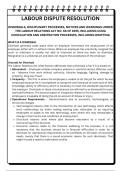
LABOUR DISPUTE RESOLUTION
DISMISSALS, DISCIPLINARY PROCESSES, NOTICES AND WARNINGS UNDER
THE LABOUR RELATIONS ACT NO. 66 OF 1995, INCLUDING CCMA
CONCILIATION AND ARBITRATION PROCESSES, INCLUDING DRAFTING
WHAT IS A DISMISSAL
Dismissal generally takes place when an employer terminates the employment of an
employee, either with or without notice. Where an employee has voluntarily resigned the
court or arbitrator is usually not able to intervene as there has been no dismissal.
Resignation is a unilateral act and does not require the acceptance of the employer.
Grounds for Dismissal
The Labour Relations Act (LRA) Section 188 states that a dismissal is fair if it is based on:
1. Misconduct – Employee violates company policies or commits serious offences. such
as - Absence from work without authority, Abusive language, fighting, damage to
property, drug use, fraud...
2. Incapacity – The first is where the employee is unable to do the job for which he was
employed because he is incompetent at doing the work because of some lack of skill,
knowledge, ability or efficiency which is necessary to meet the standards required by
the employer. Dismissals in these circumstances are referred to as dismissals for poor
work performance. The second aspect of incapacity relates to the situation where the
employee is incapable of doing the job on account of illness or injury.
3. Operational Requirements – Retrenchments due to economic, technological, or
structural changes.
Technological reasons refer to the introduction of new technology which affects
work relationships by either making existing jobs redundant or by requiring
employees to adapt to the new technology, even where this may necessitate a
change in their terms and conditions of employment.
Structural reasons arise where jobs become redundant as a result of a
restructuring of the business.
Economic reasons relate to the financial wellbeing of the business. It is not
necessary that the business should be in financial difficulties in order for a
dismissal for operational requirements to be justifiable on the basis of economic
needs, merely that there is a sound economic reason for such dismissals. That
might include a need to make better profits.
, Constructive dismissal
A constructive dismissal takes place where an employee terminates the employment but
this termination was prompted or caused by the conduct of the employer. The fact that
the employee terminated his employment because of the employer's actions means that
the termination was at the initiative or behest of the employer. In terms of section 192 of
the LRA, the onus is nevertheless on the employee to establish, on a balance of
probabilities, that there was a constructive dismissal rather than a conventional
resignation.
Failure to Renew a Fixed Contract
The failure by an employer to renew a fixed term employment contract might under
certain circumstances also be a dismissal. In the past a few employers used fixed term
employment contracts to avoid taking on permanent employees.
The Employee’s Employment is Terminated Before it Begins
Where an employer offers employment to a prospective employee, who accepts such
offer, but the employer then "withdraws" the offer before employment has actually
commenced, a dismissal has occurred.
Disciplinary Processes and Warnings
1. Investigation
An employer must first investigate the misconduct or poor performance before
taking disciplinary action.
Employees must be given a chance to explain their conduct.
2. Progressive Discipline (Warnings)
Verbal Warning – Minor infractions.
Written Warning – More serious offenses or repeated misconduct.
Final Written Warning – Given before dismissal for serious misconduct.
Summary Dismissal – For gross misconduct (e.g., theft, fraud, assault).
3. Disciplinary Hearings
Formal hearing must be held before dismissal.
Employee has the right to:
Receive notice of charges.
Be represented by a union representative or co-worker.
State their case and present evidence.
Outcome: If found guilty, sanctions may include warnings, suspension, demotion,
or dismissal.
Notice of Termination
The employer must give proper notice based on the employee’s length of service
(Basic Conditions of Employment Act rules apply).
1 week - more than 6 months, 2 weeks, more than 6 months & less than 1 year.
No notice required in cases of summary dismissal for gross misconduct.
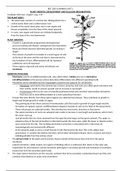
DISMISSALS, DISCIPLINARY PROCESSES, NOTICES AND WARNINGS UNDER
THE LABOUR RELATIONS ACT NO. 66 OF 1995, INCLUDING CCMA
CONCILIATION AND ARBITRATION PROCESSES, INCLUDING DRAFTING
WHAT IS A DISMISSAL
Dismissal generally takes place when an employer terminates the employment of an
employee, either with or without notice. Where an employee has voluntarily resigned the
court or arbitrator is usually not able to intervene as there has been no dismissal.
Resignation is a unilateral act and does not require the acceptance of the employer.
Grounds for Dismissal
The Labour Relations Act (LRA) Section 188 states that a dismissal is fair if it is based on:
1. Misconduct – Employee violates company policies or commits serious offences. such
as - Absence from work without authority, Abusive language, fighting, damage to
property, drug use, fraud...
2. Incapacity – The first is where the employee is unable to do the job for which he was
employed because he is incompetent at doing the work because of some lack of skill,
knowledge, ability or efficiency which is necessary to meet the standards required by
the employer. Dismissals in these circumstances are referred to as dismissals for poor
work performance. The second aspect of incapacity relates to the situation where the
employee is incapable of doing the job on account of illness or injury.
3. Operational Requirements – Retrenchments due to economic, technological, or
structural changes.
Technological reasons refer to the introduction of new technology which affects
work relationships by either making existing jobs redundant or by requiring
employees to adapt to the new technology, even where this may necessitate a
change in their terms and conditions of employment.
Structural reasons arise where jobs become redundant as a result of a
restructuring of the business.
Economic reasons relate to the financial wellbeing of the business. It is not
necessary that the business should be in financial difficulties in order for a
dismissal for operational requirements to be justifiable on the basis of economic
needs, merely that there is a sound economic reason for such dismissals. That
might include a need to make better profits.
, Constructive dismissal
A constructive dismissal takes place where an employee terminates the employment but
this termination was prompted or caused by the conduct of the employer. The fact that
the employee terminated his employment because of the employer's actions means that
the termination was at the initiative or behest of the employer. In terms of section 192 of
the LRA, the onus is nevertheless on the employee to establish, on a balance of
probabilities, that there was a constructive dismissal rather than a conventional
resignation.
Failure to Renew a Fixed Contract
The failure by an employer to renew a fixed term employment contract might under
certain circumstances also be a dismissal. In the past a few employers used fixed term
employment contracts to avoid taking on permanent employees.
The Employee’s Employment is Terminated Before it Begins
Where an employer offers employment to a prospective employee, who accepts such
offer, but the employer then "withdraws" the offer before employment has actually
commenced, a dismissal has occurred.
Disciplinary Processes and Warnings
1. Investigation
An employer must first investigate the misconduct or poor performance before
taking disciplinary action.
Employees must be given a chance to explain their conduct.
2. Progressive Discipline (Warnings)
Verbal Warning – Minor infractions.
Written Warning – More serious offenses or repeated misconduct.
Final Written Warning – Given before dismissal for serious misconduct.
Summary Dismissal – For gross misconduct (e.g., theft, fraud, assault).
3. Disciplinary Hearings
Formal hearing must be held before dismissal.
Employee has the right to:
Receive notice of charges.
Be represented by a union representative or co-worker.
State their case and present evidence.
Outcome: If found guilty, sanctions may include warnings, suspension, demotion,
or dismissal.
Notice of Termination
The employer must give proper notice based on the employee’s length of service
(Basic Conditions of Employment Act rules apply).
1 week - more than 6 months, 2 weeks, more than 6 months & less than 1 year.
No notice required in cases of summary dismissal for gross misconduct.