ENT theory
Week 1
What is customer centricity and why is it important?
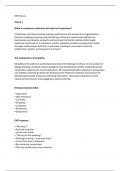
“Customer centricity involves putting customers at the center of an organization's
decision-making processes. By prioritizing customers' needs and preferences,
businesses can develop products and services that better address their target
audience's pain points. A customer-centric approach enables companies to build
stronger relationships with their customers, leading to increased customer
satisfaction, loyalty, and long-term success.”
The importance of empathy
Empathy is the ability to understand and share the feelings of others. In the context of
design thinking, empathy allows designers and developers to better understand their
customers' experiences and perspectives. By empathizing with customers, businesses
can identify underlying needs and develop more effective solutions. Techniques for
developing empathy include conducting interviews, observing customers in their
natural environments, and engaging in active listening.
Entrepreneurial skills:
• Openness
• Risk tolerance
• Curiosity
• Empathy
• Creativity
• Resilience
• Endurance
ENT mantras
• “But why?”
• Fail safe and fast
• Learn even faster
• “Get out of the building!”
• Sharing is caring – Lone wolf myth
• Learn from your customers
• Be customer-passionate
• Grit and resilience trump certainty
,Week 2
Why startups fail
“Tackling problems that are interesting to solve rather than those that serve a market
need was cited as the No. 2 reason for failure, noted in 35% of cases.”
Number 1 is run out of cash.
Value proposition canvas right side
Customer Jobs (Jobs to be Done)? - Describe what customers are trying
to get done
Gains? - Describe the outcomes customers want to achieve or the concrete benefits
they are seeking
Pains? - Describe bad outcomes, risks and obstacles related to customer jobs
Customer persona
“A customer persona is a semi-fictional representation of an organization's ideal
customer, created using data and insights gathered from actual customers.
Personas help businesses better understand their target audience by outlining key
attributes, motivations, and pain points. A well-crafted customer persona includes
demographic information, psychographic characteristics, goals, challenges, and
preferred communication channels. By developing and utilizing customer personas,
businesses can tailor their product development, marketing strategies, and overall
customer experience to better resonate with their target audience. Creating
personas encourage empathy and a customer-centric mindset, ensuring that
organizations remain focused on addressing the needs and preferences of them
customers.”
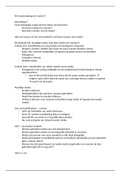
Tips for interviewing (potential) customers
➢ Always have a beginner’s mindset.
➢ Ask open questions
➢ Ask more and deeper questions related to the same topic
➢ Listen more than talk
➢ Suspend your judgments. You are not the judge!
➢Get facts (ask about the past)
➢Be fully present. Be truly there
, ➢ Record or make notes during the interview
Business model canvas
The Business Model Canvas (BMC) is a simple but powerful tool that helps you visualize,
design, and explain your business model on a single page.
1. Customer Segments – Who are your customers? Who are you solving a problem
for?
2. Value Propositions – What makes your product or service valuable to those
customers? Why should they care?
3. Channels – How do you reach your customers? (Online, retail, social media, etc.)
4. Customer Relationships – How do you build and maintain a relationship with
your customers?
5. Revenue Streams – How does your business make money?
6. Key Resources – What do you need to run your business? (people, tech,
materials, etc.)
7. Key Activities – What are the most important things your business must do?
8. Key Partnerships – Who do you work with to succeed? (suppliers,
manufacturers, distributors)
9. Cost Structure – What are your biggest costs? Where does your money go?
Week 3
Value proposition canvas left side
Products and services
- A list of what you (would like to) offer
- Helps your customers complete either functional, social, or emotional jobs or
helps them satisfy basic needs.
- Important: Not all products and services have the same relevance to your
customers. Some are essential in your value proposition; others, just a nice to
have.
Pain relievers
- How you intend to eliminate or reduce some of the things that annoy your customer
before, during, or after they are trying to complete a job, or that prevent them
from doing so.
- You don’t need to come up with a pain reliever for every pain you’ve identified in the
customer profile.
Gain creators
Week 1
What is customer centricity and why is it important?
“Customer centricity involves putting customers at the center of an organization's
decision-making processes. By prioritizing customers' needs and preferences,
businesses can develop products and services that better address their target
audience's pain points. A customer-centric approach enables companies to build
stronger relationships with their customers, leading to increased customer
satisfaction, loyalty, and long-term success.”
The importance of empathy
Empathy is the ability to understand and share the feelings of others. In the context of
design thinking, empathy allows designers and developers to better understand their
customers' experiences and perspectives. By empathizing with customers, businesses
can identify underlying needs and develop more effective solutions. Techniques for
developing empathy include conducting interviews, observing customers in their
natural environments, and engaging in active listening.
Entrepreneurial skills:
• Openness
• Risk tolerance
• Curiosity
• Empathy
• Creativity
• Resilience
• Endurance
ENT mantras
• “But why?”
• Fail safe and fast
• Learn even faster
• “Get out of the building!”
• Sharing is caring – Lone wolf myth
• Learn from your customers
• Be customer-passionate
• Grit and resilience trump certainty
,Week 2
Why startups fail
“Tackling problems that are interesting to solve rather than those that serve a market
need was cited as the No. 2 reason for failure, noted in 35% of cases.”
Number 1 is run out of cash.
Value proposition canvas right side
Customer Jobs (Jobs to be Done)? - Describe what customers are trying
to get done
Gains? - Describe the outcomes customers want to achieve or the concrete benefits
they are seeking
Pains? - Describe bad outcomes, risks and obstacles related to customer jobs
Customer persona
“A customer persona is a semi-fictional representation of an organization's ideal
customer, created using data and insights gathered from actual customers.
Personas help businesses better understand their target audience by outlining key
attributes, motivations, and pain points. A well-crafted customer persona includes
demographic information, psychographic characteristics, goals, challenges, and
preferred communication channels. By developing and utilizing customer personas,
businesses can tailor their product development, marketing strategies, and overall
customer experience to better resonate with their target audience. Creating
personas encourage empathy and a customer-centric mindset, ensuring that
organizations remain focused on addressing the needs and preferences of them
customers.”
Tips for interviewing (potential) customers
➢ Always have a beginner’s mindset.
➢ Ask open questions
➢ Ask more and deeper questions related to the same topic
➢ Listen more than talk
➢ Suspend your judgments. You are not the judge!
➢Get facts (ask about the past)
➢Be fully present. Be truly there
, ➢ Record or make notes during the interview
Business model canvas
The Business Model Canvas (BMC) is a simple but powerful tool that helps you visualize,
design, and explain your business model on a single page.
1. Customer Segments – Who are your customers? Who are you solving a problem
for?
2. Value Propositions – What makes your product or service valuable to those
customers? Why should they care?
3. Channels – How do you reach your customers? (Online, retail, social media, etc.)
4. Customer Relationships – How do you build and maintain a relationship with
your customers?
5. Revenue Streams – How does your business make money?
6. Key Resources – What do you need to run your business? (people, tech,
materials, etc.)
7. Key Activities – What are the most important things your business must do?
8. Key Partnerships – Who do you work with to succeed? (suppliers,
manufacturers, distributors)
9. Cost Structure – What are your biggest costs? Where does your money go?
Week 3
Value proposition canvas left side
Products and services
- A list of what you (would like to) offer
- Helps your customers complete either functional, social, or emotional jobs or
helps them satisfy basic needs.
- Important: Not all products and services have the same relevance to your
customers. Some are essential in your value proposition; others, just a nice to
have.
Pain relievers
- How you intend to eliminate or reduce some of the things that annoy your customer
before, during, or after they are trying to complete a job, or that prevent them
from doing so.
- You don’t need to come up with a pain reliever for every pain you’ve identified in the
customer profile.
Gain creators