Clinical sensory science:
Lecture 2:
Can explain how eating behaviour shapes dietary intake:
Infants self-select diet, detecting nutrients?, satiety, palatability
Can describe how food sensory properties affect food intake:
Palatability, sensory specific satiety: within a meal or between meals> boredom
1. Visual cues: volume, variety, familiarity
a. Unit bias: want to finish unit given
b. Utensil size/design
c. Portion size effect
2. Smell: food choice, sensory specific appetite
3. Taste: quality and intensity>onset of satiation and guide calorie
expectations
4. Texture: onset of satiation, oral-metering of energy and nutrient intake,
eating rate
Can discuss different factors that play a role in the satiety cascade:
Meal quality, meal quantity, nutrient status and energy balance
Lecture 3:
Can describe the difference in processing sensory cues between individuals with
ASD and typically developing individuals:
Impairment in modulation, typical behaviour to lower or increase arousal, hyper-
and hyposensitivity to stimuli, hyperreactive: negative reactions to sensory
stimuli, hyporeactive: nonresponsive to sensory stimuli, increased neural
response to food cues> different parts of the brain are activated.
Taste identification may be impaired, impaired olfactory function, texture
sensitivity, oral sensory sensitive, taste and texture processing is different in the
brain> insula involved?> difference in how brain areas connect.
Can explain how differences in sensory processing between with ASD and
typically developing individuals may lead to eating behaviour problems:
Rituals regarding preparation and presentation, picky eating, preference for
carbs, dislike fruits and vegetables, stress for the parent, food neophobia
Can discuss the pros and cons of different methods to help individuals with ASD
to eat healthy (in line with dietary guidelines):
1. Sensory integration therapy
2. Sensory based intervention
3. BUFFET: building up food flexibility and exposure treatment. Does work but
takes a very long time
Lecture 4:
Knows the terminology and definitions for smell and taste disorders:
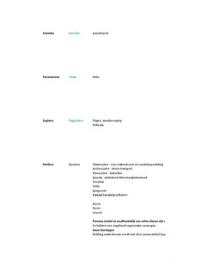
, Chemosensations: smell, taste and trigeminal sensations
Dyosmia Altered sense of
smell/taste
Quantitative disorders Hyposmia Decreased sense
Anosmia No sense
Qualitative disorders Parosmia Distorted sense
Cacosmia Unpleasant distorted
sense
Phantosmia Hallucinations
Knows that different modalities of chemosensory function can be differentially
affected by disease:
Smell loss impacts health and well-being, poor smell> poor health?
Taste declines with age, sweet and bitter are more preserved
Can describe the potential for olfactory dysfunction to serve as an early marker
and differential diagnostics for a number of neurodegenerative diseases:
Parkinson’s and Alzheimer’s: olfactory function one of the first symptoms
Demonstrates an understanding of different parts of the brain that show
pathology due to a number of neurodegenerative diseases, and where those
areas overlap regions involved in processing olfactory information:
Pathology of PD and AD shows overlap with olfactory brain area
Understands how COVID-19 can be involved in chemosensory alterations:
Covid is associated with severe impairment of smell, taste and chemesthesis,
smell loss was not associated with nasal obstruction
Can describe the varying impact of COVID-19 on chemosensation:
Smell and taste loss, parosmia
Can explain how chemosensory impairment may impact various stages of eating
behaviour:
Loss of appetite, reduced food enjoyment, weight changes
Understand the intricacies of determining causality in the relation between
chemosensory impairment and eating behaviour:
Difficult in establishing causality, bidirectionality
Lecture 5:
Describe why individuals with an illness often experience reduced appetite:
Sick person syndrome: lethargy, restlessness, drowsiness, lowered pain
threshold, decreased appetite< neuroinflammation (hypothalamus: responsible
for hunger) caused by peripheral inflammation which can be obesity, tumour, etc.
Lecture 2:
Can explain how eating behaviour shapes dietary intake:
Infants self-select diet, detecting nutrients?, satiety, palatability
Can describe how food sensory properties affect food intake:
Palatability, sensory specific satiety: within a meal or between meals> boredom
1. Visual cues: volume, variety, familiarity
a. Unit bias: want to finish unit given
b. Utensil size/design
c. Portion size effect
2. Smell: food choice, sensory specific appetite
3. Taste: quality and intensity>onset of satiation and guide calorie
expectations
4. Texture: onset of satiation, oral-metering of energy and nutrient intake,
eating rate
Can discuss different factors that play a role in the satiety cascade:
Meal quality, meal quantity, nutrient status and energy balance
Lecture 3:
Can describe the difference in processing sensory cues between individuals with
ASD and typically developing individuals:
Impairment in modulation, typical behaviour to lower or increase arousal, hyper-
and hyposensitivity to stimuli, hyperreactive: negative reactions to sensory
stimuli, hyporeactive: nonresponsive to sensory stimuli, increased neural
response to food cues> different parts of the brain are activated.
Taste identification may be impaired, impaired olfactory function, texture
sensitivity, oral sensory sensitive, taste and texture processing is different in the
brain> insula involved?> difference in how brain areas connect.
Can explain how differences in sensory processing between with ASD and
typically developing individuals may lead to eating behaviour problems:
Rituals regarding preparation and presentation, picky eating, preference for
carbs, dislike fruits and vegetables, stress for the parent, food neophobia
Can discuss the pros and cons of different methods to help individuals with ASD
to eat healthy (in line with dietary guidelines):
1. Sensory integration therapy
2. Sensory based intervention
3. BUFFET: building up food flexibility and exposure treatment. Does work but
takes a very long time
Lecture 4:
Knows the terminology and definitions for smell and taste disorders:
, Chemosensations: smell, taste and trigeminal sensations
Dyosmia Altered sense of
smell/taste
Quantitative disorders Hyposmia Decreased sense
Anosmia No sense
Qualitative disorders Parosmia Distorted sense
Cacosmia Unpleasant distorted
sense
Phantosmia Hallucinations
Knows that different modalities of chemosensory function can be differentially
affected by disease:
Smell loss impacts health and well-being, poor smell> poor health?
Taste declines with age, sweet and bitter are more preserved
Can describe the potential for olfactory dysfunction to serve as an early marker
and differential diagnostics for a number of neurodegenerative diseases:
Parkinson’s and Alzheimer’s: olfactory function one of the first symptoms
Demonstrates an understanding of different parts of the brain that show
pathology due to a number of neurodegenerative diseases, and where those
areas overlap regions involved in processing olfactory information:
Pathology of PD and AD shows overlap with olfactory brain area
Understands how COVID-19 can be involved in chemosensory alterations:
Covid is associated with severe impairment of smell, taste and chemesthesis,
smell loss was not associated with nasal obstruction
Can describe the varying impact of COVID-19 on chemosensation:
Smell and taste loss, parosmia
Can explain how chemosensory impairment may impact various stages of eating
behaviour:
Loss of appetite, reduced food enjoyment, weight changes
Understand the intricacies of determining causality in the relation between
chemosensory impairment and eating behaviour:
Difficult in establishing causality, bidirectionality
Lecture 5:
Describe why individuals with an illness often experience reduced appetite:
Sick person syndrome: lethargy, restlessness, drowsiness, lowered pain
threshold, decreased appetite< neuroinflammation (hypothalamus: responsible
for hunger) caused by peripheral inflammation which can be obesity, tumour, etc.