LEERDOELEN GENOMICA DEELTOETS-1
H13 – MEIOSE
▪ Distinguish the roles of the soma and the germ line in the life cycle of a typical multicellular organism.
& Explain why mammalian gametes are haploid and somatic cells are diploid.
--> somatische cellen: diploid (2), mitotische deling is volledige set chromosomen behouden vanaf bevruchting
--> gameten: haploïd (n), meiose tot halve set chromosomen voor genetische overdracht bij voortplanting
▪ Describe the difference between sister chromatids and homologous chromosomes.
--> homologe chromosomen: vormen samen diploïde set (1 maternale & 1 paternale chromosoom) met zelfde genen
--> zusterchromatiden: na DNA-duplicatie, van chromosomen 2 kopieën met dezelfde allelen
- verbonden dmv. centromeer met cohesine eiwitten
▪ Diagram the process of homologous recombination during meiosis and explain how it can lead to new
combinations of linked alleles.
--> homologe recombinatie: uitwisseling van genetische informatie tussen homologe chromosomen
--> crossing over: recombinatie tussen niet-zusterchromatiden
- nieuwe combinaties in genen en gelinkte genen mogelijk wanneer dicht opeen op zelfde chromosoom
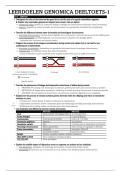
1) twee uitgelijnde homologe 2) chiasma 3) recombinatie
chromosomen met elk 2 chromatiden
Centromeer
Cohesine eiwitten
▪ Describe the phenomena of linkage and independent assortment of alleles during meiosis.
1. PROFASE → crossing over: (homologe) recombinatie, gelinkte genen dicht opeen dus kans klein op scheiden
2. METAFASE → independent assortment: willekeurige oriëntatie homologe chromosomen of zusterchromatiden
3. ANAFASE → microtubuli aan kinetochoren of centromeer (cohesines afgebroken) voor segregatie
▪ Explain how the process of meiosis increases genetic diversity within the offspring and why it is essential for
evolution to occur.
- Crossing over: nieuwe genen of allelen combinatie op chromosoom
2n - Independent assortment: nieuwe combinatie genen uit willekeurige scheiding homologe chromosomen
2n*2n - Willekeurige bevruchting: unieke combinatie genen door fusie gameten
▪ List similarities and differences between mitosis and meiosis.
MITOSE MEIOSE
Doel Groei, herstel, vervanging cellen Vorming gameten
Aantal delingen 1 2 opeenvolgende
Dochtercellen 2 elk met 2n & X-DNA 2 elk n & ½ X-DNA
Genetische gelijkheid Identiek Verschillend
Genetische variatie Nee Crossing over & independent assortment
Homologe chromosomen Blijven gescheiden Paarvorming en segregatie in MeioseI
Zuster-chromatiden segregatie Segregatie MeioseII
- [somatische cellen] [geslachtscellen]
FASEN Profase, metafase, anafase, telofase, cytokinese
DNA-REPLICATIE Voor celdeling in interfase (S-fase)
CELDELING Door spoelfiguur
▪ Explain the possible impact of disjunction errors on a gamete, an embryo and an individual.
--> non-disjunction: segregatie van homologe chromosome of zusterchromatiden onjuist
--> aneuploïdie (monosomie 2n-1 of trisomie 2n+1) in embryo met afwijkend aantal chromosomen
, H14 – FENOTYPE & GENOTYPE
▪ Define genetic terms including trait, homozygous, heterozygous, gene, allele, locus, genotype and phenotype.
- Eigenschap: kenmerk van een organisme beïnvloed door genen
- Homozygoot: 2 dezelfde allelen voor gen [AA of aa]
- Heterozygoot: 2 verschillende allelen voor gen [Aa]
- Gen: erfelijke informatie (DNA-sequentie) coderend voor erfelijke eigenschap dmv. eiwit productie
- Allel: alternatieve varianten van genen
- Locus: locatie van gen op chromosoom
- Genotype: genetische samenstelling
- Fenotype: zichtbare kenmerken
▪ Describe how a dominant or recessive phenotype is generated using gene products and mutations.
> genproduct = eiwit
1. dominant: levert Meestal werkend eiwit in juiste hoeveelheid, 1 kopie genoeg om fenotype te bepalen
2. recessief: vaak gemuteeerde variant die geen, minder of niet werkend eiwit levert
▪ Describe why and how the phenotype of a heterozygote would differ in the case of complete dominance,
incomplete dominance, and co-dominance.
- Complete dominantie: fenotype hetero- en homozygoot niet te onderscheiden → dominante tot uiting
- Incomplete dominantie: fenotype tussen twee uiterste van ouder generatie in → intermediair
- Co-dominantie: beide allelen volledig tot uiting op verschillende en te onderscheidde wijze
▪ Explain what is meant by the Law of Segregation using a monohybrid cross.
= splitsingswet, 2 allelen scheiden bij gameet formatie (MeioseI: scheiding van homologe chromosomen)
▪ Explain the Law of Independent assortment using a dihybrid cross as an example.
= onafhankelijkheidswet, 2 genen erven onafhankelijk over wanneer op aparte chromosomen (metafase)
▪ Describe when and how to perform a test cross and define what a true-bred is.
>toepassing: genotype bepalen van individu die dominante eigenschap vertoont → homo- of heterozygoot?
>methode: individu met true-bred (recessief homozygoot) kruisen waarna fenotypen observeren
1. homozygoot? AA*aa = 100% Aa
2. heterozygoot? Aa*aa = 50% Aa en 50% aa
▪ Calculate the probability of a particular gamete being produced from an individual, assuming independent
segregation.
- Rr: Pr[R]=50% en Pr[r]=50%
- RrYy: Pr[RY]= 25% en Pr[ry]= 25% en Pr[Ry]=25% en Pr[rY]=25%
▪ Calculate the probability of a particular genotype, given independent segregation and random union of
gametes between two individuals.
1. Rr*Rr > Pr[RR}=Pr[R]*Pr[R]= ½ * ½ = ¼
2. Rr*Rr > Pr[Rr]= Pr[r}*Pr[r] + Pr[r]*Pr[R]= 2 ( ½ * ½ ) = ½
3. RrYy*RrYy > Pr[RRYY]= Pr[RR]*Pr[YY]= ¼ * ¼ = 1/16
4. RrYy*RrYy > Pr[RrYy]= Pr[Rr]*Pr[Yy]= ½ * ½ = ¼
▪ Contrast the mechanisms of inheritance of nuclear and organellar genetic information
--> nucleair DNA: lineair, van beide ouders helft volgens mendeliaanse overerving & recombinatie
--> organellair DNA: circulair, van mitochondriën van moeder overgeërfd
▪ Predict offspring frequencies for two trait crosses using a Punnett square & Predict genotypic and phenotypic
results of single trait crosses using Punnett squares.
▪ Describe the cell biology of epistasis and its application.
H13 – MEIOSE
▪ Distinguish the roles of the soma and the germ line in the life cycle of a typical multicellular organism.
& Explain why mammalian gametes are haploid and somatic cells are diploid.
--> somatische cellen: diploid (2), mitotische deling is volledige set chromosomen behouden vanaf bevruchting
--> gameten: haploïd (n), meiose tot halve set chromosomen voor genetische overdracht bij voortplanting
▪ Describe the difference between sister chromatids and homologous chromosomes.
--> homologe chromosomen: vormen samen diploïde set (1 maternale & 1 paternale chromosoom) met zelfde genen
--> zusterchromatiden: na DNA-duplicatie, van chromosomen 2 kopieën met dezelfde allelen
- verbonden dmv. centromeer met cohesine eiwitten
▪ Diagram the process of homologous recombination during meiosis and explain how it can lead to new
combinations of linked alleles.
--> homologe recombinatie: uitwisseling van genetische informatie tussen homologe chromosomen
--> crossing over: recombinatie tussen niet-zusterchromatiden
- nieuwe combinaties in genen en gelinkte genen mogelijk wanneer dicht opeen op zelfde chromosoom
1) twee uitgelijnde homologe 2) chiasma 3) recombinatie
chromosomen met elk 2 chromatiden
Centromeer
Cohesine eiwitten
▪ Describe the phenomena of linkage and independent assortment of alleles during meiosis.
1. PROFASE → crossing over: (homologe) recombinatie, gelinkte genen dicht opeen dus kans klein op scheiden
2. METAFASE → independent assortment: willekeurige oriëntatie homologe chromosomen of zusterchromatiden
3. ANAFASE → microtubuli aan kinetochoren of centromeer (cohesines afgebroken) voor segregatie
▪ Explain how the process of meiosis increases genetic diversity within the offspring and why it is essential for
evolution to occur.
- Crossing over: nieuwe genen of allelen combinatie op chromosoom
2n - Independent assortment: nieuwe combinatie genen uit willekeurige scheiding homologe chromosomen
2n*2n - Willekeurige bevruchting: unieke combinatie genen door fusie gameten
▪ List similarities and differences between mitosis and meiosis.
MITOSE MEIOSE
Doel Groei, herstel, vervanging cellen Vorming gameten
Aantal delingen 1 2 opeenvolgende
Dochtercellen 2 elk met 2n & X-DNA 2 elk n & ½ X-DNA
Genetische gelijkheid Identiek Verschillend
Genetische variatie Nee Crossing over & independent assortment
Homologe chromosomen Blijven gescheiden Paarvorming en segregatie in MeioseI
Zuster-chromatiden segregatie Segregatie MeioseII
- [somatische cellen] [geslachtscellen]
FASEN Profase, metafase, anafase, telofase, cytokinese
DNA-REPLICATIE Voor celdeling in interfase (S-fase)
CELDELING Door spoelfiguur
▪ Explain the possible impact of disjunction errors on a gamete, an embryo and an individual.
--> non-disjunction: segregatie van homologe chromosome of zusterchromatiden onjuist
--> aneuploïdie (monosomie 2n-1 of trisomie 2n+1) in embryo met afwijkend aantal chromosomen
, H14 – FENOTYPE & GENOTYPE
▪ Define genetic terms including trait, homozygous, heterozygous, gene, allele, locus, genotype and phenotype.
- Eigenschap: kenmerk van een organisme beïnvloed door genen
- Homozygoot: 2 dezelfde allelen voor gen [AA of aa]
- Heterozygoot: 2 verschillende allelen voor gen [Aa]
- Gen: erfelijke informatie (DNA-sequentie) coderend voor erfelijke eigenschap dmv. eiwit productie
- Allel: alternatieve varianten van genen
- Locus: locatie van gen op chromosoom
- Genotype: genetische samenstelling
- Fenotype: zichtbare kenmerken
▪ Describe how a dominant or recessive phenotype is generated using gene products and mutations.
> genproduct = eiwit
1. dominant: levert Meestal werkend eiwit in juiste hoeveelheid, 1 kopie genoeg om fenotype te bepalen
2. recessief: vaak gemuteeerde variant die geen, minder of niet werkend eiwit levert
▪ Describe why and how the phenotype of a heterozygote would differ in the case of complete dominance,
incomplete dominance, and co-dominance.
- Complete dominantie: fenotype hetero- en homozygoot niet te onderscheiden → dominante tot uiting
- Incomplete dominantie: fenotype tussen twee uiterste van ouder generatie in → intermediair
- Co-dominantie: beide allelen volledig tot uiting op verschillende en te onderscheidde wijze
▪ Explain what is meant by the Law of Segregation using a monohybrid cross.
= splitsingswet, 2 allelen scheiden bij gameet formatie (MeioseI: scheiding van homologe chromosomen)
▪ Explain the Law of Independent assortment using a dihybrid cross as an example.
= onafhankelijkheidswet, 2 genen erven onafhankelijk over wanneer op aparte chromosomen (metafase)
▪ Describe when and how to perform a test cross and define what a true-bred is.
>toepassing: genotype bepalen van individu die dominante eigenschap vertoont → homo- of heterozygoot?
>methode: individu met true-bred (recessief homozygoot) kruisen waarna fenotypen observeren
1. homozygoot? AA*aa = 100% Aa
2. heterozygoot? Aa*aa = 50% Aa en 50% aa
▪ Calculate the probability of a particular gamete being produced from an individual, assuming independent
segregation.
- Rr: Pr[R]=50% en Pr[r]=50%
- RrYy: Pr[RY]= 25% en Pr[ry]= 25% en Pr[Ry]=25% en Pr[rY]=25%
▪ Calculate the probability of a particular genotype, given independent segregation and random union of
gametes between two individuals.
1. Rr*Rr > Pr[RR}=Pr[R]*Pr[R]= ½ * ½ = ¼
2. Rr*Rr > Pr[Rr]= Pr[r}*Pr[r] + Pr[r]*Pr[R]= 2 ( ½ * ½ ) = ½
3. RrYy*RrYy > Pr[RRYY]= Pr[RR]*Pr[YY]= ¼ * ¼ = 1/16
4. RrYy*RrYy > Pr[RrYy]= Pr[Rr]*Pr[Yy]= ½ * ½ = ¼
▪ Contrast the mechanisms of inheritance of nuclear and organellar genetic information
--> nucleair DNA: lineair, van beide ouders helft volgens mendeliaanse overerving & recombinatie
--> organellair DNA: circulair, van mitochondriën van moeder overgeërfd
▪ Predict offspring frequencies for two trait crosses using a Punnett square & Predict genotypic and phenotypic
results of single trait crosses using Punnett squares.
▪ Describe the cell biology of epistasis and its application.