
NR 667 VISE Assignment
Study online at https://quizlet.com/_blzmry
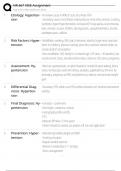
1. Etiology: Hyperten- -No known cause in 90% of cases of primary HTN
sion -Secondary causes: renal failure, kidney disease, renal artery stenosis, Cushing
syndrome, hyper/hypo thyroidism, increased ICP, sleep apnea, oral contracep-
tives, steroids, cocaine, NSAIDs, decongestants, sympathomimetics, alcohol,
antidepressants, caffeine
2. Risk Factors: Hyper- -Modifiable: smoking, DM, high cholesterol, obesity (single most important
tension factor in children), physical inactivity, poor diet, excessive sodium intake, ex-
cessive alcohol consumption
-Non-modifiable: CKD, family hx, increased age (>55 men, > 65 women), low
socioeconomic status, low educational status, male sex, OSA, stress, pregnancy
3. Assessment: Hy- -Most are asymptomatic; occipital headache, headache upon waking, blurry
pertension vision, fundoscopic exam (AV nicking, exudates, papilledema), left vent. hy-
pertrophy, pregnancy w/HTN and proteinuria, edema, and excessive weight
gain
4. Differential Diag- -Secondary HTN, white coat HTN (artificial elevation d/t medical environment
nosis: Hyperten- anxiety)
sion
5. Final Diagnosis: Hy- -Urinalysis = proteinuria
pertension -Electrolytes, creatinine, calcium
-Fasting lipid profile and BS
-ECG
-Measure BP twice, 5 mins apart
-Patient should be seated; use proper cuff size and application
6. Prevention: Hyper- -Maintaining healthy weight and BMI
tension -Smoking cessation
-Regular aerobic exercise
-Alcohol in moderation (< 1 oz/day)
-Stress management
, NR 667 VISE Assignment
Study online at https://quizlet.com/_blzmry
-Medication compliance
-Assess for and treat OSA
7. Non-pharm man- -Stage 1: Risk score < 10% =lifestyle modification
agement: Hyper- -Stage 2: lifestyle + medication
tension -DASH eating plan: high fruit, veggies, grains; low fat dairy, fish, poultry, beans,
nuts
-Reduce dietary sodium to 2,300mg/day, increase K+
-Reduce sat. fat intake
-Body weight reduction; 1kg of weight reduction = 1 mm/hg bp reduction
-150 mins of aerobic exercise and/or 3 sessions of isometric resistance per
week
-Treat other underlying diseases
-Check bp 2x/week during pregnancy
8. Pharmacological -Start medication for primary prevention of CVD if pt. has ASCVD risk e10% and
management: stage 1 HTN or if ASCVD is < 10% with bp >140/90
Hypertension -Stage 2: start 2 bp-lowering medications
-African Americans: 2+ medications recommended; thiazide and CCBs are the
most effective
*DO NOT use ACE and ARB concurrently
-Beta blockers are NOT first line
-Thiazides, CCBs, ACEIs, and ARBs can be used alone or in combo
9. Pregnancy consid- -Can use beta blockers (labetalol), methyldopa, CCBs (nifedipine)
erations: Hyperten- -AVOID ARBs and ACEIs
sion
10. Follow-up: Hyper- -Inquire about adherence and any side effects
tension -Reassess monthly until patient reaches goal, then every 3-6 months as needed
11. Expected course:
Hypertension
, NR 667 VISE Assignment
Study online at https://quizlet.com/_blzmry
-Only 54% of treated patients are at goal treatment; expect complications if
under treated
-Most patients require more than one medication to reach goal bp
12. Possible Complica- -Stroke, CAD, MI, renal failure, heart failure, eclampsia (seizures), pulmonary
tions: Hypertension edema, hypertensive crisis, hypertensive retinopathy, ED
13. Etiology: Hyperlipi- -Inherited disorder, high dietary intake, obesity, sedentary lifestyle, DM, hy-
demia pothyroidism, anabolic steroid use, hepatitis, cirrhosis, uremia, nephrotic syn-
drome, stress, drug-induced (thiazide diuretics, beta blockers, cyclosporine),
alcohol, caffeine, metabolic syndrome
14. Risk factors: Hyper- -Family history, physical inactivity, smoking, age (men > 45, women > 55 or
lipidemia premature menopause without estrogen replacement), obesity, diet high in
sat. fat, DM
15. Assessment find- -Few physical findings; xanthomata (fat deposits in the skin), xanthelasma
ings: Hyperlipi- (yellow plaques on the eyelid), corneal arcus prior to age 50 (arc of cholesterol
demia around the iris), bruits, angina pectoris, MI, stroke
16. Differential diagno- -Secondary causes: hypothyroidism, pregnancy, DM, non-fasting state
sis: Hyperlipidemia
17. Final diagnosis: Hy- -Fasting lipid profile: 9-12 hours
perlipidemia -Glucose level
-Urinalysis, creatinine (for detection of nephrotic syndrome which can induce
dyslipidemia)
-Baseline transaminases
-TSH for detection of hypothyroidism (which can cause secondary dyslipi-
demia)
-Calculate ASCVD 10-year risk
18.
, NR 667 VISE Assignment
Study online at https://quizlet.com/_blzmry
Prevention: Hyper- -Healthy lifestyle reduces ASCVD in all age groups
lipidemia -Dietary interventions: encourage mediterranean and DASH diet; limit saturat-
ed and trans fats; limit sodium intake; increase fiber, vegetables, fruits, and
other whole grains; eat lean meats (poultry, fish); eggs, beans, nuts, low-fat
dairy, avoid red meat, limit sugary drinks and sweets
-Mod to vigorous exercise of at least 40 mins 3-4x/week (sustained aerobic
activity increases HDL, decreases total cholesterol)
-Avoid tobacco
-Appropriately manage systemic diseases (DM, hypothyroidism, HTN)
19. Non-pharm man- -Nutrition, weight reduction, increased physical activity, patient education
agement: Hyper- about risk factors
lipidemia
20. Pharmacological -Assign to a statin treatment group using ASCVD 10-year risk calculator
management: -Primary lipid target it LDL
Hyperlipidemia -Statins are 1st-line therapy
-Combo of statin and non-statin in some patients
-Consider adding non-statin if unable to achieve LDL < 70mg/dl, but VERIFY
adherence to statins and lifestyle changes
-Non-statins: ezetimibe (1st), bile acid sequestrant, vibrate, PCSK9 inhibitor
21. Pregnancy/lacta- -Cholesterol is usually elevated during pregnancy; measurement is not recom-
tion consideration: mended and treatment is contraindicated
Hyperlipidemia
22. Follow-up: Hyper- -Check fasting lipid panel 4-12 weeks after starting or adjusting a statin or
lipidemia non-statin
-Monitor for medication compliance and lifestyle modification, especially if LDL
drop is less than expected
23. Expected course: -Depends on etiology and severity of disease
Hyperlipidemia -1% decrease in LDL value decreases CHD risk by 2%
Study online at https://quizlet.com/_blzmry
1. Etiology: Hyperten- -No known cause in 90% of cases of primary HTN
sion -Secondary causes: renal failure, kidney disease, renal artery stenosis, Cushing
syndrome, hyper/hypo thyroidism, increased ICP, sleep apnea, oral contracep-
tives, steroids, cocaine, NSAIDs, decongestants, sympathomimetics, alcohol,
antidepressants, caffeine
2. Risk Factors: Hyper- -Modifiable: smoking, DM, high cholesterol, obesity (single most important
tension factor in children), physical inactivity, poor diet, excessive sodium intake, ex-
cessive alcohol consumption
-Non-modifiable: CKD, family hx, increased age (>55 men, > 65 women), low
socioeconomic status, low educational status, male sex, OSA, stress, pregnancy
3. Assessment: Hy- -Most are asymptomatic; occipital headache, headache upon waking, blurry
pertension vision, fundoscopic exam (AV nicking, exudates, papilledema), left vent. hy-
pertrophy, pregnancy w/HTN and proteinuria, edema, and excessive weight
gain
4. Differential Diag- -Secondary HTN, white coat HTN (artificial elevation d/t medical environment
nosis: Hyperten- anxiety)
sion
5. Final Diagnosis: Hy- -Urinalysis = proteinuria
pertension -Electrolytes, creatinine, calcium
-Fasting lipid profile and BS
-ECG
-Measure BP twice, 5 mins apart
-Patient should be seated; use proper cuff size and application
6. Prevention: Hyper- -Maintaining healthy weight and BMI
tension -Smoking cessation
-Regular aerobic exercise
-Alcohol in moderation (< 1 oz/day)
-Stress management
, NR 667 VISE Assignment
Study online at https://quizlet.com/_blzmry
-Medication compliance
-Assess for and treat OSA
7. Non-pharm man- -Stage 1: Risk score < 10% =lifestyle modification
agement: Hyper- -Stage 2: lifestyle + medication
tension -DASH eating plan: high fruit, veggies, grains; low fat dairy, fish, poultry, beans,
nuts
-Reduce dietary sodium to 2,300mg/day, increase K+
-Reduce sat. fat intake
-Body weight reduction; 1kg of weight reduction = 1 mm/hg bp reduction
-150 mins of aerobic exercise and/or 3 sessions of isometric resistance per
week
-Treat other underlying diseases
-Check bp 2x/week during pregnancy
8. Pharmacological -Start medication for primary prevention of CVD if pt. has ASCVD risk e10% and
management: stage 1 HTN or if ASCVD is < 10% with bp >140/90
Hypertension -Stage 2: start 2 bp-lowering medications
-African Americans: 2+ medications recommended; thiazide and CCBs are the
most effective
*DO NOT use ACE and ARB concurrently
-Beta blockers are NOT first line
-Thiazides, CCBs, ACEIs, and ARBs can be used alone or in combo
9. Pregnancy consid- -Can use beta blockers (labetalol), methyldopa, CCBs (nifedipine)
erations: Hyperten- -AVOID ARBs and ACEIs
sion
10. Follow-up: Hyper- -Inquire about adherence and any side effects
tension -Reassess monthly until patient reaches goal, then every 3-6 months as needed
11. Expected course:
Hypertension
, NR 667 VISE Assignment
Study online at https://quizlet.com/_blzmry
-Only 54% of treated patients are at goal treatment; expect complications if
under treated
-Most patients require more than one medication to reach goal bp
12. Possible Complica- -Stroke, CAD, MI, renal failure, heart failure, eclampsia (seizures), pulmonary
tions: Hypertension edema, hypertensive crisis, hypertensive retinopathy, ED
13. Etiology: Hyperlipi- -Inherited disorder, high dietary intake, obesity, sedentary lifestyle, DM, hy-
demia pothyroidism, anabolic steroid use, hepatitis, cirrhosis, uremia, nephrotic syn-
drome, stress, drug-induced (thiazide diuretics, beta blockers, cyclosporine),
alcohol, caffeine, metabolic syndrome
14. Risk factors: Hyper- -Family history, physical inactivity, smoking, age (men > 45, women > 55 or
lipidemia premature menopause without estrogen replacement), obesity, diet high in
sat. fat, DM
15. Assessment find- -Few physical findings; xanthomata (fat deposits in the skin), xanthelasma
ings: Hyperlipi- (yellow plaques on the eyelid), corneal arcus prior to age 50 (arc of cholesterol
demia around the iris), bruits, angina pectoris, MI, stroke
16. Differential diagno- -Secondary causes: hypothyroidism, pregnancy, DM, non-fasting state
sis: Hyperlipidemia
17. Final diagnosis: Hy- -Fasting lipid profile: 9-12 hours
perlipidemia -Glucose level
-Urinalysis, creatinine (for detection of nephrotic syndrome which can induce
dyslipidemia)
-Baseline transaminases
-TSH for detection of hypothyroidism (which can cause secondary dyslipi-
demia)
-Calculate ASCVD 10-year risk
18.
, NR 667 VISE Assignment
Study online at https://quizlet.com/_blzmry
Prevention: Hyper- -Healthy lifestyle reduces ASCVD in all age groups
lipidemia -Dietary interventions: encourage mediterranean and DASH diet; limit saturat-
ed and trans fats; limit sodium intake; increase fiber, vegetables, fruits, and
other whole grains; eat lean meats (poultry, fish); eggs, beans, nuts, low-fat
dairy, avoid red meat, limit sugary drinks and sweets
-Mod to vigorous exercise of at least 40 mins 3-4x/week (sustained aerobic
activity increases HDL, decreases total cholesterol)
-Avoid tobacco
-Appropriately manage systemic diseases (DM, hypothyroidism, HTN)
19. Non-pharm man- -Nutrition, weight reduction, increased physical activity, patient education
agement: Hyper- about risk factors
lipidemia
20. Pharmacological -Assign to a statin treatment group using ASCVD 10-year risk calculator
management: -Primary lipid target it LDL
Hyperlipidemia -Statins are 1st-line therapy
-Combo of statin and non-statin in some patients
-Consider adding non-statin if unable to achieve LDL < 70mg/dl, but VERIFY
adherence to statins and lifestyle changes
-Non-statins: ezetimibe (1st), bile acid sequestrant, vibrate, PCSK9 inhibitor
21. Pregnancy/lacta- -Cholesterol is usually elevated during pregnancy; measurement is not recom-
tion consideration: mended and treatment is contraindicated
Hyperlipidemia
22. Follow-up: Hyper- -Check fasting lipid panel 4-12 weeks after starting or adjusting a statin or
lipidemia non-statin
-Monitor for medication compliance and lifestyle modification, especially if LDL
drop is less than expected
23. Expected course: -Depends on etiology and severity of disease
Hyperlipidemia -1% decrease in LDL value decreases CHD risk by 2%


