TEST BANK
Therapeutic Modalities
Chad Starkey
4th Edition
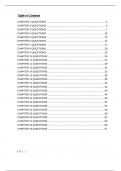
,Table of Contents
Chapter 01 The Injury Response Process 1
Chapter 02 The Physiology and Psychology of Pain 5
Chapter 03 Development and Delivery of Intervention Strategies 9
Chapter 04 Administrative Considerations 13
Chapter 05 Thermal Modalities 17
Chapter 06 Clinical Application of Thermal Modalities 21
Chapter 07 Therapeutic Ultrasound 25
Chapter 08 Clinical Application of Therapeutic Ultrasound 29
Chapter 09 Shortwave Diathermy 33
Chapter 10 Clinical Application of Shortwave Diathermy 37
Chapter 11 Principles of Electrical Stimulation 41
Chapter 12 Electrical Stimulation Techniques 45
Chapter 13 Clinical Application of Electrical Agents 49
Chapter 14 Intermittent Compression 53
Chapter 15 Continuous Passive Motion 57
Chapter 16 Cervical and Lumbar Traction 61
Chapter 17 Therapeutic Massage 65
Chapter 18 Electromyographic Biofeedback 69
Chapter 19 Low-Level Laser Therapy 73
,______________________________________________________________________________________________
Test Bank - Therapeutic Modalities, 4th Edition (Starkey, 2014)
Chapter 1 The Injury Response Process
MULTIPLE CHOICE
1. Which is an accurate statement regarding the effect of modalities and the healing process?
A. Modalities attempt to provide the optimal environment for healing to occur.
B. Most modalities can speed up the healing of an injury.
C. Modality devices are primarily used to alter the body’s psychological status to
provide a good healing environment.
D. The stage of the healing process does not influence which modality is used.
ANS: A PTS: 1
2. According to the physical stress theory, what changes will result from a physical stress that is
categorized as none to low?
A. Cell death
B. Decreased tolerance
C. Increased tolerance
D. Injury
ANS: C PTS: 1
3. What type of tissue is devoid of blood vessels and is able to secrete and absorb various
substances?
A. Epithelial
B. Muscle
C. Adipose
D. Connective
ANS: A PTS: 1
4. According to the general adaptation syndrome, what is the correct order of the three stages of
stress response?
A. Alarm, resistance, exhaustion
B. Resistance, alarm, excitement
C. Exhaustion, excitement, alarm
D. Resistance, exhaustion, excitement
ANS: A PTS: 1
5. What segment of a neuron is responsible for transmitting impulses toward the nerve body?
A. Dendrites
B. Axons
C. Electrical synapses
D. Chemical synapses
ANS: A PTS: 1
6. What is the longest stage of the general adaptation syndrome?
A. Alarm
B. Resistance
______________________________________________________________________________________________
1|Page
, ______________________________________________________________________________________________
Test Bank - Therapeutic Modalities, 4th Edition (Starkey, 2014)
C. Exhaustion
D. Excitement
ANS: B PTS: 1
7. In what tissue order must the different forms of therapeutic energy pass through to affect the
target tissues?
A. Epithelial, adipose, muscular, nervous, connective
B. Epithelial, nervous, adipose, muscular, nervous
C. Epithelial, connective, nervous, muscular, adipose
D. Epithelial, adipose, connective, muscular, nervous
ANS: A PTS: 1
8. What type of tissue is the most abundant in the body?
A. Epithelial
B. Muscle
C. Adipose
D. Connective
ANS: D PTS: 1
9. During the healing process, when do you see the formation of granulation tissue and the
migration of phagocytes and fibroblasts to the injured area?
A. Acute inflammatory response
B. Proliferation phase
C. Maturation phase
D. Chronic inflammatory response
ANS: A PTS: 1
10. In order to maximize the effect of gravity on the venous return system, a limb should be
placed at a _________________ to the heart.
A. 0 degree or horizontal angle
B. 90 degree angle above horizontal
C. 30 degree angle above horizontal
D. 60 degree angle above horizontal
ANS: B PTS: 1
11. What type of afferent peripheral nerve is a muscle spindle?
A. Ia
B. Ib
C. II
D. III
ANS: A PTS: 1
12. What neurotransmitter is located in the brainstem and will increase blood pressure and cardiac
output?
A. Dopamine
B. Epinephrine
______________________________________________________________________________________________
2|Page
Therapeutic Modalities
Chad Starkey
4th Edition
,Table of Contents
Chapter 01 The Injury Response Process 1
Chapter 02 The Physiology and Psychology of Pain 5
Chapter 03 Development and Delivery of Intervention Strategies 9
Chapter 04 Administrative Considerations 13
Chapter 05 Thermal Modalities 17
Chapter 06 Clinical Application of Thermal Modalities 21
Chapter 07 Therapeutic Ultrasound 25
Chapter 08 Clinical Application of Therapeutic Ultrasound 29
Chapter 09 Shortwave Diathermy 33
Chapter 10 Clinical Application of Shortwave Diathermy 37
Chapter 11 Principles of Electrical Stimulation 41
Chapter 12 Electrical Stimulation Techniques 45
Chapter 13 Clinical Application of Electrical Agents 49
Chapter 14 Intermittent Compression 53
Chapter 15 Continuous Passive Motion 57
Chapter 16 Cervical and Lumbar Traction 61
Chapter 17 Therapeutic Massage 65
Chapter 18 Electromyographic Biofeedback 69
Chapter 19 Low-Level Laser Therapy 73
,______________________________________________________________________________________________
Test Bank - Therapeutic Modalities, 4th Edition (Starkey, 2014)
Chapter 1 The Injury Response Process
MULTIPLE CHOICE
1. Which is an accurate statement regarding the effect of modalities and the healing process?
A. Modalities attempt to provide the optimal environment for healing to occur.
B. Most modalities can speed up the healing of an injury.
C. Modality devices are primarily used to alter the body’s psychological status to
provide a good healing environment.
D. The stage of the healing process does not influence which modality is used.
ANS: A PTS: 1
2. According to the physical stress theory, what changes will result from a physical stress that is
categorized as none to low?
A. Cell death
B. Decreased tolerance
C. Increased tolerance
D. Injury
ANS: C PTS: 1
3. What type of tissue is devoid of blood vessels and is able to secrete and absorb various
substances?
A. Epithelial
B. Muscle
C. Adipose
D. Connective
ANS: A PTS: 1
4. According to the general adaptation syndrome, what is the correct order of the three stages of
stress response?
A. Alarm, resistance, exhaustion
B. Resistance, alarm, excitement
C. Exhaustion, excitement, alarm
D. Resistance, exhaustion, excitement
ANS: A PTS: 1
5. What segment of a neuron is responsible for transmitting impulses toward the nerve body?
A. Dendrites
B. Axons
C. Electrical synapses
D. Chemical synapses
ANS: A PTS: 1
6. What is the longest stage of the general adaptation syndrome?
A. Alarm
B. Resistance
______________________________________________________________________________________________
1|Page
, ______________________________________________________________________________________________
Test Bank - Therapeutic Modalities, 4th Edition (Starkey, 2014)
C. Exhaustion
D. Excitement
ANS: B PTS: 1
7. In what tissue order must the different forms of therapeutic energy pass through to affect the
target tissues?
A. Epithelial, adipose, muscular, nervous, connective
B. Epithelial, nervous, adipose, muscular, nervous
C. Epithelial, connective, nervous, muscular, adipose
D. Epithelial, adipose, connective, muscular, nervous
ANS: A PTS: 1
8. What type of tissue is the most abundant in the body?
A. Epithelial
B. Muscle
C. Adipose
D. Connective
ANS: D PTS: 1
9. During the healing process, when do you see the formation of granulation tissue and the
migration of phagocytes and fibroblasts to the injured area?
A. Acute inflammatory response
B. Proliferation phase
C. Maturation phase
D. Chronic inflammatory response
ANS: A PTS: 1
10. In order to maximize the effect of gravity on the venous return system, a limb should be
placed at a _________________ to the heart.
A. 0 degree or horizontal angle
B. 90 degree angle above horizontal
C. 30 degree angle above horizontal
D. 60 degree angle above horizontal
ANS: B PTS: 1
11. What type of afferent peripheral nerve is a muscle spindle?
A. Ia
B. Ib
C. II
D. III
ANS: A PTS: 1
12. What neurotransmitter is located in the brainstem and will increase blood pressure and cardiac
output?
A. Dopamine
B. Epinephrine
______________________________________________________________________________________________
2|Page