Lecture - WEEK01
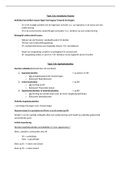
General background: EU integration process
Enlargement → we went from 6 to 28 member states
We wanted markets and countries to be interdependent, so counties would have no incentive to
attack each other, since it would harm those countries themselves.
Building a European market was at the heart of the project from the outset (at the heart of EU
law).
art . 3 Lisbon Treaty: the Union shall establish an internal market. [balanced economic growth]
[highly competitive social market economy] [promote economic, social and territorial cohesion,
and solidarity] [shall establish an economic and monetary union].
This is an ongoing project.
Forms of economic integration:
● Free trade area (FTA): no tariffs, but what they do with third countries is up to them.
● Customs union (CU) = FTA + common external policy (e.g. single customs tariff).
● Common market (CM) = CU + free movement of other factors of production (four
fundamental freedoms).
● Monetary union (MU) = CM + single currency + monetary policy.
● Economic union (Ec.U) = MU + common fiscal policy controlled by a central authority.
● Political union = Ec.U + central authority (such as a parlement).
● Full union: the United States of Europe.
The EU strives toward a political union:
1. Common foreign and securities policy.
2. Area of freedom, security and justice.
3. Economic and monetary union, although the crisis showed that the Union has a
monetary union, but not an economic union.
Art. 26 TFEU: definition single market.
Techniques of economic integration:
● Negative integration:
○ Deregulatory
○ Mutual recognition
○ Decentralized model
■ Aims to remove obstacles to trade when they occur, case by
case → Court of Justice of the EU.
● Positive integration
○ Harmonisation of national laws
○ Regulation
○ Centralised model
■ Aims to remove obstacles to trade beforehand → lawmaking
General background: EU integration process
Enlargement → we went from 6 to 28 member states
We wanted markets and countries to be interdependent, so counties would have no incentive to
attack each other, since it would harm those countries themselves.
Building a European market was at the heart of the project from the outset (at the heart of EU
law).
art . 3 Lisbon Treaty: the Union shall establish an internal market. [balanced economic growth]
[highly competitive social market economy] [promote economic, social and territorial cohesion,
and solidarity] [shall establish an economic and monetary union].
This is an ongoing project.
Forms of economic integration:
● Free trade area (FTA): no tariffs, but what they do with third countries is up to them.
● Customs union (CU) = FTA + common external policy (e.g. single customs tariff).
● Common market (CM) = CU + free movement of other factors of production (four
fundamental freedoms).
● Monetary union (MU) = CM + single currency + monetary policy.
● Economic union (Ec.U) = MU + common fiscal policy controlled by a central authority.
● Political union = Ec.U + central authority (such as a parlement).
● Full union: the United States of Europe.
The EU strives toward a political union:
1. Common foreign and securities policy.
2. Area of freedom, security and justice.
3. Economic and monetary union, although the crisis showed that the Union has a
monetary union, but not an economic union.
Art. 26 TFEU: definition single market.
Techniques of economic integration:
● Negative integration:
○ Deregulatory
○ Mutual recognition
○ Decentralized model
■ Aims to remove obstacles to trade when they occur, case by
case → Court of Justice of the EU.
● Positive integration
○ Harmonisation of national laws
○ Regulation
○ Centralised model
■ Aims to remove obstacles to trade beforehand → lawmaking