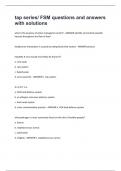
TAP SERIES FINAL EXAM questions and
answers with solutions
Highly Susceptible Populations (HSPs) - ANSWER -The very young
-The elderly
-The chronically ill
-Those with immune problems
Five Most Common Risk Factors - ANSWER Purchasing food from unsafe sources
Failing to cook food adequately
Holding food at incorrect temperatures
Using contaminated equipment
Practicing poor personal hygiene
Agencies Regulating Food And Food Service - ANSWER o U.S.DepartmentofAgriculture(USDA)
Regulates meat, poultry, eggs, food crossing state boundaries or involves more than one state o
FoodandDrugAdministration(FDA)
Regulates all food other than meat, poultry, and eggs.
Publishes Food Code CenterforDiseaseControlandPrevention(CDC)
Conducts research into causes of illness and assists in investigations o PublicHealthService(PHS)
Conducts research into causes of illness and assists in investigations o
StateandLocalHealthjurisdictions
Your Role As A Manager - ANSWER Ensure safety of customer
Ensure food is safe from the time it is delivered until food service
Ensure rules are in place and followed
,Ensure staff knows their role
Be prepared for inspections
Active Management Controls - ANSWER -Create a set of Standard Operating Procedures (SOPs)
-Ensure SOPs are followed
-Train staff
-Evaluate and revise
Foods Most Likely to Become Unsafe - ANSWER o
TimeandTemperatureControlledforSafety(TCS)-Milk,chicken,cookedrice,melons,sprouts,vacuum-
packaged foods, eggs, meats, fish, and cooked potatoes o Ready-to-eat-
Vegetables,fruits,deli,andbakeryitems
The Three Food Contaminants - ANSWER biological- also known as Pathogens)-
Bacteria,Viruses,Parasites,Fungi, chemical-Cleaners,sanitizers,poisons, physical-
Glass,bandages,dirt,fakefingernails,jewelry
microorganism - ANSWER Any living organism of microscopic or submicroscopic size.
FATTOM - ANSWER Food, Acidity, Temperature, Time, Oxygen, Moisture
consumer advisory - ANSWER Statements related to increased risk of eating raw or
undercooked animal-derived foods
Must be on menus and/or menu boards, placards, table tents, or accessible & readable
materials
Shigella spp characteristics - ANSWER -bacteria found in human feces
-bacteria can remain in feces for weeks after symptoms have ended
, -illness occurs when eating or drinking contaminated food or water
-transferred by flies
-only small amount is needed for infection
Shigella spp foods most at risk - ANSWER Those easily contaminated by hands
Salads with TCS foods
Foods washed in
contaminated water
Shigella spp. prevention - ANSWER -Exclude food workers with diarrhea who have been
diagnosed with illness caused by Shigella spp.
-Use proper handwashing techniques
-Control flies
Salmonella typhi charachteristics - ANSWER Bacteria found in blood and feces of humans
infected with Typhoid Fever
Bacteria can remain in feces for weeks after symptoms have ended
Only a small amount is needed for infection
Severity depends on health of infected individual
Salmonella typhi foods at risk - ANSWER Ready-to-eat foods
Beverages
Salmonella typhi prevention - ANSWER -Exclude food workers with diarrhea who have been
diagnosed with illness caused by Salmonella Typhi
Use proper handwashing techniques
Cook foods to minimum internal temperatures
answers with solutions
Highly Susceptible Populations (HSPs) - ANSWER -The very young
-The elderly
-The chronically ill
-Those with immune problems
Five Most Common Risk Factors - ANSWER Purchasing food from unsafe sources
Failing to cook food adequately
Holding food at incorrect temperatures
Using contaminated equipment
Practicing poor personal hygiene
Agencies Regulating Food And Food Service - ANSWER o U.S.DepartmentofAgriculture(USDA)
Regulates meat, poultry, eggs, food crossing state boundaries or involves more than one state o
FoodandDrugAdministration(FDA)
Regulates all food other than meat, poultry, and eggs.
Publishes Food Code CenterforDiseaseControlandPrevention(CDC)
Conducts research into causes of illness and assists in investigations o PublicHealthService(PHS)
Conducts research into causes of illness and assists in investigations o
StateandLocalHealthjurisdictions
Your Role As A Manager - ANSWER Ensure safety of customer
Ensure food is safe from the time it is delivered until food service
Ensure rules are in place and followed
,Ensure staff knows their role
Be prepared for inspections
Active Management Controls - ANSWER -Create a set of Standard Operating Procedures (SOPs)
-Ensure SOPs are followed
-Train staff
-Evaluate and revise
Foods Most Likely to Become Unsafe - ANSWER o
TimeandTemperatureControlledforSafety(TCS)-Milk,chicken,cookedrice,melons,sprouts,vacuum-
packaged foods, eggs, meats, fish, and cooked potatoes o Ready-to-eat-
Vegetables,fruits,deli,andbakeryitems
The Three Food Contaminants - ANSWER biological- also known as Pathogens)-
Bacteria,Viruses,Parasites,Fungi, chemical-Cleaners,sanitizers,poisons, physical-
Glass,bandages,dirt,fakefingernails,jewelry
microorganism - ANSWER Any living organism of microscopic or submicroscopic size.
FATTOM - ANSWER Food, Acidity, Temperature, Time, Oxygen, Moisture
consumer advisory - ANSWER Statements related to increased risk of eating raw or
undercooked animal-derived foods
Must be on menus and/or menu boards, placards, table tents, or accessible & readable
materials
Shigella spp characteristics - ANSWER -bacteria found in human feces
-bacteria can remain in feces for weeks after symptoms have ended
, -illness occurs when eating or drinking contaminated food or water
-transferred by flies
-only small amount is needed for infection
Shigella spp foods most at risk - ANSWER Those easily contaminated by hands
Salads with TCS foods
Foods washed in
contaminated water
Shigella spp. prevention - ANSWER -Exclude food workers with diarrhea who have been
diagnosed with illness caused by Shigella spp.
-Use proper handwashing techniques
-Control flies
Salmonella typhi charachteristics - ANSWER Bacteria found in blood and feces of humans
infected with Typhoid Fever
Bacteria can remain in feces for weeks after symptoms have ended
Only a small amount is needed for infection
Severity depends on health of infected individual
Salmonella typhi foods at risk - ANSWER Ready-to-eat foods
Beverages
Salmonella typhi prevention - ANSWER -Exclude food workers with diarrhea who have been
diagnosed with illness caused by Salmonella Typhi
Use proper handwashing techniques
Cook foods to minimum internal temperatures