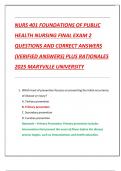
NURS 401 FOUNDATIONS OF PUBLIC
HEALTH NURSING FINAL EXAM 2
QUESTIONS AND CORRECT ANSWERS
(VERIFIED ANSWERS) PLUS RATIONALES
2025 MARYVILLE UNIVERSITY
1. Which level of prevention focuses on preventing the initial occurrence
of disease or injury?
A. Tertiary prevention
B. Primary prevention
C. Secondary prevention
D. Curative prevention
Rationale – Primary Prevention: Primary prevention includes
interventions that prevent the onset of illness before the disease
process begins, such as immunizations and health education.
,2. What is the primary focus of public health nursing?
A. Individual patient care
B. Acute disease management
C. Population health
D. Hospital-based interventions
Rationale – Population Health: Public health nursing prioritizes the
health of populations through assessment, policy development, and
assurance.
3. Which of the following is a key function of public health?
A. Assurance
B. Diagnosis
C. Treatment
D. Counseling
Rationale – Assurance: Assurance ensures that essential community-
oriented health services are available and accessible.
4. Which federal agency is responsible for overseeing public health in the
U.S.?
A. DEA
B. CDC
C. NIH
D. FDA
Rationale – Cdc: The Centers for Disease Control and Prevention
(CDC) leads efforts to protect public health and safety.
,5. The public health core function of policy development involves:
A. Providing clinical care
B. Funding services
C. Informing, educating, and empowering people
D. Inspecting facilities
Rationale – Policy Development: This function involves developing
policies that support health initiatives through education and
community collaboration.
6. An example of secondary prevention is:
A. Vaccination
B. Blood pressure screening
C. Rehabilitation therapy
D. Policy creation
Rationale – Secondary Prevention: Secondary prevention includes
early detection and prompt intervention, such as screenings.
7. A nurse assessing lead levels in a community’s water supply is
engaging in:
A. Tertiary prevention
B. Community assessment
C. Environmental sampling
D. Program evaluation
Rationale – Community Assessment: Public health nurses gather data
to identify community health needs.
, 8. Which of the following is considered a social determinant of health?
A. Body mass index
B. Immune response
C. Education level
D. Genetic makeup
Rationale – Social Determinant: Education level is a social factor that
influences health outcomes and access to care.
9. Herd immunity protects a population by:
A. Eliminating the pathogen
B. Reducing susceptible hosts
C. Curing infected individuals
D. Preventing reinfection
Rationale – Herd Immunity: When enough people are immune, the
spread of contagious disease is minimized, protecting those who are
unvaccinated.
10. Which model emphasizes the interrelationship between
individuals and their environments?
A. Biomedical model
B. Ecological model
C. Pathophysiologic model
D. Clinical nursing model
Rationale – Ecological Model: This model shows how environmental
HEALTH NURSING FINAL EXAM 2
QUESTIONS AND CORRECT ANSWERS
(VERIFIED ANSWERS) PLUS RATIONALES
2025 MARYVILLE UNIVERSITY
1. Which level of prevention focuses on preventing the initial occurrence
of disease or injury?
A. Tertiary prevention
B. Primary prevention
C. Secondary prevention
D. Curative prevention
Rationale – Primary Prevention: Primary prevention includes
interventions that prevent the onset of illness before the disease
process begins, such as immunizations and health education.
,2. What is the primary focus of public health nursing?
A. Individual patient care
B. Acute disease management
C. Population health
D. Hospital-based interventions
Rationale – Population Health: Public health nursing prioritizes the
health of populations through assessment, policy development, and
assurance.
3. Which of the following is a key function of public health?
A. Assurance
B. Diagnosis
C. Treatment
D. Counseling
Rationale – Assurance: Assurance ensures that essential community-
oriented health services are available and accessible.
4. Which federal agency is responsible for overseeing public health in the
U.S.?
A. DEA
B. CDC
C. NIH
D. FDA
Rationale – Cdc: The Centers for Disease Control and Prevention
(CDC) leads efforts to protect public health and safety.
,5. The public health core function of policy development involves:
A. Providing clinical care
B. Funding services
C. Informing, educating, and empowering people
D. Inspecting facilities
Rationale – Policy Development: This function involves developing
policies that support health initiatives through education and
community collaboration.
6. An example of secondary prevention is:
A. Vaccination
B. Blood pressure screening
C. Rehabilitation therapy
D. Policy creation
Rationale – Secondary Prevention: Secondary prevention includes
early detection and prompt intervention, such as screenings.
7. A nurse assessing lead levels in a community’s water supply is
engaging in:
A. Tertiary prevention
B. Community assessment
C. Environmental sampling
D. Program evaluation
Rationale – Community Assessment: Public health nurses gather data
to identify community health needs.
, 8. Which of the following is considered a social determinant of health?
A. Body mass index
B. Immune response
C. Education level
D. Genetic makeup
Rationale – Social Determinant: Education level is a social factor that
influences health outcomes and access to care.
9. Herd immunity protects a population by:
A. Eliminating the pathogen
B. Reducing susceptible hosts
C. Curing infected individuals
D. Preventing reinfection
Rationale – Herd Immunity: When enough people are immune, the
spread of contagious disease is minimized, protecting those who are
unvaccinated.
10. Which model emphasizes the interrelationship between
individuals and their environments?
A. Biomedical model
B. Ecological model
C. Pathophysiologic model
D. Clinical nursing model
Rationale – Ecological Model: This model shows how environmental