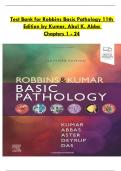
Test Bank for Robbins Basic Pathology 11th
Edition by Kumar, Abul K. Abba
Chapters 1 - 24
,Table of Content
Chapter 1. The Cell as a Unit of Health and Disease
Chapter 2. Cell Injury, Cell Death, and Adaptations
Chapter 3. Inflammation and Repair
Chapter 4. Hemodynamic Disorders, Thromboembolism, and Shock
Chapter 5. Diseases of the Immune System
Chapter 6. Neoplasia
Chapter 7. Genetic and Pediatric Diseases
Chapter 8. Environmental and Nutritional Diseases
Chapter 9. General Pathology of Infectious Diseases
Chapter 10. Blood Vessels
Chapter 11. Heart
Chapter 12. Hematopoietic and Lymphoid Systems
Chapter 13. Lung
Chapter 14. Kidney and Its Collecting System
Chapter 15. Oral Cavities and Gastrointestinal Tract
Chapter 16. Liver and Gallbladder
Chapter 17. Pancreas
,Chapter 18. Male Genital System and Lower Urinary Tract
Chapter 19. Female Genital System and Breast
Chapter 20. Endocrine System
Chapter 21. Bones, Joints, and Soft Tissue Tumors
Chapter 22. Peripheral Nerves and Muscles
Chapter 23. Central Nervous System
Chapter 24. Skin
, Robbins Basic Pathology 11th Edition Kymar Abbas Test Bank
Chapter 1. The Cell das da dUnit dof dHealth dand dDisease
1 The dnucleus , dwhich dis dessential dfor dfunction dand
dsurvival dof dthe dcell.
A) is dthe dsite dof dprotein dsynthesis
B) contains dthe dgenetic dcode
C) transforms dcellular denergy
D) initiates daerobic dmetabolism
2 Although denergy dis dnot dmade din dmitochondria, dthey dare
dknown das dthe dpower dplants dof dthe dcell dbecause dthey:
A) contain dRNA dfor dprotein dsynthesis.
B) utilize dglycolysis dfor doxidative denergy.
C) extract denergy dfrom dorganic dcompounds.
D) store dcalcium dbonds dfor dmuscle dcontractions.
3 Although dthe dbasic dstructure dof dthe dcell dplasma dmembrane dis
dformed dby da dlipid dbilayer, dmost dof dthe dspecific dmembrane
dfunctions dare dcarried dout dby:
A) bound dand dtransmembrane dproteins.
B) complex, dlong dcarbohydrate dchains.
C) surface dantigens dand dhormone dreceptors.
D) a dgating dsystem dof dselective dion dchannels.
4 To deffectively drelay dsignals, dcell-to-cell dcommunication
dutilizes dchemical dmessenger dsystems dthat:
A) displace dsurface dreceptor dproteins.
B) accumulate dwithin dcell dgap djunctions.
Edition by Kumar, Abul K. Abba
Chapters 1 - 24
,Table of Content
Chapter 1. The Cell as a Unit of Health and Disease
Chapter 2. Cell Injury, Cell Death, and Adaptations
Chapter 3. Inflammation and Repair
Chapter 4. Hemodynamic Disorders, Thromboembolism, and Shock
Chapter 5. Diseases of the Immune System
Chapter 6. Neoplasia
Chapter 7. Genetic and Pediatric Diseases
Chapter 8. Environmental and Nutritional Diseases
Chapter 9. General Pathology of Infectious Diseases
Chapter 10. Blood Vessels
Chapter 11. Heart
Chapter 12. Hematopoietic and Lymphoid Systems
Chapter 13. Lung
Chapter 14. Kidney and Its Collecting System
Chapter 15. Oral Cavities and Gastrointestinal Tract
Chapter 16. Liver and Gallbladder
Chapter 17. Pancreas
,Chapter 18. Male Genital System and Lower Urinary Tract
Chapter 19. Female Genital System and Breast
Chapter 20. Endocrine System
Chapter 21. Bones, Joints, and Soft Tissue Tumors
Chapter 22. Peripheral Nerves and Muscles
Chapter 23. Central Nervous System
Chapter 24. Skin
, Robbins Basic Pathology 11th Edition Kymar Abbas Test Bank
Chapter 1. The Cell das da dUnit dof dHealth dand dDisease
1 The dnucleus , dwhich dis dessential dfor dfunction dand
dsurvival dof dthe dcell.
A) is dthe dsite dof dprotein dsynthesis
B) contains dthe dgenetic dcode
C) transforms dcellular denergy
D) initiates daerobic dmetabolism
2 Although denergy dis dnot dmade din dmitochondria, dthey dare
dknown das dthe dpower dplants dof dthe dcell dbecause dthey:
A) contain dRNA dfor dprotein dsynthesis.
B) utilize dglycolysis dfor doxidative denergy.
C) extract denergy dfrom dorganic dcompounds.
D) store dcalcium dbonds dfor dmuscle dcontractions.
3 Although dthe dbasic dstructure dof dthe dcell dplasma dmembrane dis
dformed dby da dlipid dbilayer, dmost dof dthe dspecific dmembrane
dfunctions dare dcarried dout dby:
A) bound dand dtransmembrane dproteins.
B) complex, dlong dcarbohydrate dchains.
C) surface dantigens dand dhormone dreceptors.
D) a dgating dsystem dof dselective dion dchannels.
4 To deffectively drelay dsignals, dcell-to-cell dcommunication
dutilizes dchemical dmessenger dsystems dthat:
A) displace dsurface dreceptor dproteins.
B) accumulate dwithin dcell dgap djunctions.