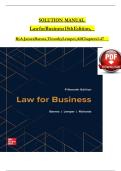
SOLUTION MANUAL nn
Law for Business 15th Edition,
n n n n
ByA.JamesBarnes,TimothyLemper,AllChapters1-47
n n n n n n n n n n
,TABLE nOF nCONTENTS n
PART nONE: nIntroduction nto nthe nLaw
n Chapter n1: nLaw nand nLegal nReasoning
n Chapter n2: nDispute nSettlement
Chapter n3: nBusiness nEthics nand nCorporate nSocial nResponsibility
n Chapter n4: nBusiness nand nthe nConstitution
Chapter n5: nCriminal nLaw nand nProcedure
n Chapter n6: nIntentional nTorts
Chapter n7: nNegligence nand nStrict nLiability
n Chapter n8: nIntellectual nProperty
PART nTWO: nContracts
Chapter n9: nThe nNature nand nOrigins nof nContracts
n Chapter n10: nCreating na nContract: nOffers n
n Chapter n11: nCreating na nContract: nAcceptances
n Chapter n12: nConsideration
Chapter n13: nCapacity nto nContract
n Chapter n14: nConsent nto nContract
n Chapter n15: nIllegality
Chapter n16: nForm nand nMeaning nof nContracts
n Chapter n17: nThird nParties’ nContract nRights n Chapter
n18: nContract nPerformance nand nRemedies
PART nTHREE: nSales
Chapter n19: nFormation nand nTerms nof nSales nContracts
n Chapter n20: nWarranties nand nProduct nLiability
n Chapter n21: nPerformance nof nSales nContracts
Chapter n22: nRemedies nfor nBreach nof nSales nContracts
PART nFOUR: nAgency nand nEmployment
Chapter n23: nThe nAgency nRelationship—Creation, nDuties, nand nTermination n Chapter
n24: nLiability nof nPrincipals nand nAgents nto nThird nParties
Chapter n25: nEmployment nLaws
PART nFIVE: nBusiness nOrganizations
Chapter n26: nWhich nForm nof nBusiness nOrganization?
n Chapter n27: nPartnerships
Chapter n28: nFormation nand nTermination nof nCorporations n Chapter
n29: nManagement nof nthe nCorporate nBusiness
Chapter n30: nFinancing nthe nCorporation nand nthe nRole nof nthe nShareholders n Chapter
n31: nSecurities nRegulation
Chapter n32: nLegal nLiability nof nAccountants
,PART nSIX: nProperty
Chapter n33: nPersonal nProperty nand nBailments
n Chapter n34: nReal nProperty
Chapter n35: nLandlord nand nTenant
n Chapter n36: nEstates nand nTrusts
n Chapter n37: nInsurance
PART nSEVEN: nCommercial nPaper
Chapter n38: nNegotiable nInstruments
Chapter n39: nNegotiation nand nHolder nin nDue nCourse
n Chapter n40: nLiability nof nParties
Chapter n41: nChecks nand nElectronic nFund nTransfers
PART nEIGHT: nCredit nTransactions
Chapter n42: nIntroduction nto nSecurity
Chapter n43: nSecurity nInterests nin nPersonal nProperty
n Chapter n44: nBankruptcy
PART nNINE: nGovernment nRegulation
n Chapter n45: nThe nAntitrust nLaws n Chapter
n46: nConsumer nProtection nLaws n Chapter
n47: nEnvironmental nRegulation
, CHAPTER 1: LAW AND LEGAL REASONING
n n n n n
LECTURE nOUTLINE
1. Discuss nthe nTwisdale ncase nthat nopens nthis nchapter. nIt nprovides nan ninteresting nvehicle
nfor n discussing nthe nfunctions nof nlaw nand nlegal ninterpretation.
a. Have nyour nstudents nidentify nthe nvarious nfunctions nof nthe nlaw nand nthen ndiscuss nwhich
n specific nfunctions nare nfurthered nby nthis nantiretaliation n aspects nof nthe nCivil nRights
nstatute.
b. In nthe ncontext nof nlegal ninterpretation, nthe ncourt nfound nthat n Twisdale ndid nseem nto nbe
n protected nbased non nthe nliteral nlanguage nof nthe nstatute. nHowever, nit nlooked nbeyond
nthe n plain n meaning nto nreject nhis nclaim. nSpecifically, nthe ncourt nbelieved nthat
ninterpreting nthe n law nin na n manner nthat nwould nprotect nhim nfrom nretaliation n would
nundermine nthe npurpose nofthe n statute. n It nis nconceivable nthat nthe ncourt nis nmotivated nby
npublic npolicy nconcerns nas nwell.
c. What ndo nyour nstudents nthink nof ncourts nwho ndo nlook nat nintent nand npublic npolicy? nUse
nthisas n a nlead-in nfor na ndiscussion nof nlegal njurisprudence.
2. Question nstudents nabout ntheir ndefinitions nof n―law.‖ nMake ncertain nthey nunderstand
nthe n importance nof nlaw nin nall naspects nof nour n lives.
3. Discuss nthe nvarious nfunctions nthat nlaw nserves nin nsociety. nYou nmight ndo nthis nby nhaving
nthe n students nidentify nsome nof nthem.
a. Discuss nthe nconflicts nthat narise nbetween nand namong nthe nvarious nfunctions nof nlaw. nFor
n example, nthere noften nare nconflicts nbetween nthe ngoals nof nindividual nfreedom nand
nachieving n social njustice. nNote nthe nproblems nthat narise nwhen nthere nis nno n clear nconsensus
non nwhat nis njust.
b. Ask nthe nstudents nif nthey nthink nthat nlaw never nis n―overused.‖ nThey nare nlikely nto ncite
nnumerous n examples. nFor ninstance, nthis nmight nbe na ntime nto ntalk nabout nthe nproduct
nliabilitycases nthat nare n regularly nin nthe nheadlines. nPerhaps nthe ncase ninvolving nthe
nwoman nwho nburned nherself nwith n coffee nfrom nMcDonald’s nwould nbe nappropriate
nhere.
Law for Business 15th Edition,
n n n n
ByA.JamesBarnes,TimothyLemper,AllChapters1-47
n n n n n n n n n n
,TABLE nOF nCONTENTS n
PART nONE: nIntroduction nto nthe nLaw
n Chapter n1: nLaw nand nLegal nReasoning
n Chapter n2: nDispute nSettlement
Chapter n3: nBusiness nEthics nand nCorporate nSocial nResponsibility
n Chapter n4: nBusiness nand nthe nConstitution
Chapter n5: nCriminal nLaw nand nProcedure
n Chapter n6: nIntentional nTorts
Chapter n7: nNegligence nand nStrict nLiability
n Chapter n8: nIntellectual nProperty
PART nTWO: nContracts
Chapter n9: nThe nNature nand nOrigins nof nContracts
n Chapter n10: nCreating na nContract: nOffers n
n Chapter n11: nCreating na nContract: nAcceptances
n Chapter n12: nConsideration
Chapter n13: nCapacity nto nContract
n Chapter n14: nConsent nto nContract
n Chapter n15: nIllegality
Chapter n16: nForm nand nMeaning nof nContracts
n Chapter n17: nThird nParties’ nContract nRights n Chapter
n18: nContract nPerformance nand nRemedies
PART nTHREE: nSales
Chapter n19: nFormation nand nTerms nof nSales nContracts
n Chapter n20: nWarranties nand nProduct nLiability
n Chapter n21: nPerformance nof nSales nContracts
Chapter n22: nRemedies nfor nBreach nof nSales nContracts
PART nFOUR: nAgency nand nEmployment
Chapter n23: nThe nAgency nRelationship—Creation, nDuties, nand nTermination n Chapter
n24: nLiability nof nPrincipals nand nAgents nto nThird nParties
Chapter n25: nEmployment nLaws
PART nFIVE: nBusiness nOrganizations
Chapter n26: nWhich nForm nof nBusiness nOrganization?
n Chapter n27: nPartnerships
Chapter n28: nFormation nand nTermination nof nCorporations n Chapter
n29: nManagement nof nthe nCorporate nBusiness
Chapter n30: nFinancing nthe nCorporation nand nthe nRole nof nthe nShareholders n Chapter
n31: nSecurities nRegulation
Chapter n32: nLegal nLiability nof nAccountants
,PART nSIX: nProperty
Chapter n33: nPersonal nProperty nand nBailments
n Chapter n34: nReal nProperty
Chapter n35: nLandlord nand nTenant
n Chapter n36: nEstates nand nTrusts
n Chapter n37: nInsurance
PART nSEVEN: nCommercial nPaper
Chapter n38: nNegotiable nInstruments
Chapter n39: nNegotiation nand nHolder nin nDue nCourse
n Chapter n40: nLiability nof nParties
Chapter n41: nChecks nand nElectronic nFund nTransfers
PART nEIGHT: nCredit nTransactions
Chapter n42: nIntroduction nto nSecurity
Chapter n43: nSecurity nInterests nin nPersonal nProperty
n Chapter n44: nBankruptcy
PART nNINE: nGovernment nRegulation
n Chapter n45: nThe nAntitrust nLaws n Chapter
n46: nConsumer nProtection nLaws n Chapter
n47: nEnvironmental nRegulation
, CHAPTER 1: LAW AND LEGAL REASONING
n n n n n
LECTURE nOUTLINE
1. Discuss nthe nTwisdale ncase nthat nopens nthis nchapter. nIt nprovides nan ninteresting nvehicle
nfor n discussing nthe nfunctions nof nlaw nand nlegal ninterpretation.
a. Have nyour nstudents nidentify nthe nvarious nfunctions nof nthe nlaw nand nthen ndiscuss nwhich
n specific nfunctions nare nfurthered nby nthis nantiretaliation n aspects nof nthe nCivil nRights
nstatute.
b. In nthe ncontext nof nlegal ninterpretation, nthe ncourt nfound nthat n Twisdale ndid nseem nto nbe
n protected nbased non nthe nliteral nlanguage nof nthe nstatute. nHowever, nit nlooked nbeyond
nthe n plain n meaning nto nreject nhis nclaim. nSpecifically, nthe ncourt nbelieved nthat
ninterpreting nthe n law nin na n manner nthat nwould nprotect nhim nfrom nretaliation n would
nundermine nthe npurpose nofthe n statute. n It nis nconceivable nthat nthe ncourt nis nmotivated nby
npublic npolicy nconcerns nas nwell.
c. What ndo nyour nstudents nthink nof ncourts nwho ndo nlook nat nintent nand npublic npolicy? nUse
nthisas n a nlead-in nfor na ndiscussion nof nlegal njurisprudence.
2. Question nstudents nabout ntheir ndefinitions nof n―law.‖ nMake ncertain nthey nunderstand
nthe n importance nof nlaw nin nall naspects nof nour n lives.
3. Discuss nthe nvarious nfunctions nthat nlaw nserves nin nsociety. nYou nmight ndo nthis nby nhaving
nthe n students nidentify nsome nof nthem.
a. Discuss nthe nconflicts nthat narise nbetween nand namong nthe nvarious nfunctions nof nlaw. nFor
n example, nthere noften nare nconflicts nbetween nthe ngoals nof nindividual nfreedom nand
nachieving n social njustice. nNote nthe nproblems nthat narise nwhen nthere nis nno n clear nconsensus
non nwhat nis njust.
b. Ask nthe nstudents nif nthey nthink nthat nlaw never nis n―overused.‖ nThey nare nlikely nto ncite
nnumerous n examples. nFor ninstance, nthis nmight nbe na ntime nto ntalk nabout nthe nproduct
nliabilitycases nthat nare n regularly nin nthe nheadlines. nPerhaps nthe ncase ninvolving nthe
nwoman nwho nburned nherself nwith n coffee nfrom nMcDonald’s nwould nbe nappropriate
nhere.