ISTQB Foundation Level (Chapter 1)
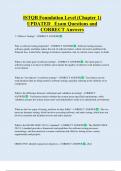
UPDATED Exam Questions and
CORRECT Answers
1.1 What is Testing? - CORRECT ANSWER -
Why is software testing important? - CORRECT ANSWER - Software testing assesses
software quality and helps reduce the risk of software failure, which can lead to problems like
financial loss, wasted time, damage to business reputation, and, in extreme cases, injury or death.
What is the main goal of software testing? - CORRECT ANSWER - The main goal of
software testing is to discover defects and evaluate the quality of software work products, known
as test objects.
What are "test objects" in software testing? - CORRECT ANSWER - Test objects are the
work products that are being tested in software testing, typically referring to the software or its
components.
What is the difference between verification and validation in testing? - CORRECT
ANSWER - Verification checks whether the system meets specified requirements, while
validation ensures the system meets users' and stakeholders' needs in its operational environment.
What are the two types of testing, and how do they differ? - CORRECT ANSWER - The two
types are dynamic testing, which involves executing software, and static testing, which does not
involve execution and includes reviews and static analysis.
What is the ISO/IEC/IEEE 29119-1 standard? - CORRECT ANSWER - The ISO/IEC/IEEE
29119-1 standard provides a framework and guidelines for software testing processes,
terminology, and best practices to ensure consistent and effective testing across various
organizations and projects.
OBJECTIVE: Identify typical test objectives - CORRECT ANSWER - (K1)
, What are typical test objectives in software testing? - CORRECT ANSWER - Typical test
objectives include evaluating work products, finding defects, ensuring coverage, reducing risks,
verifying requirements, ensuring compliance, providing information to stakeholders, building
confidence, and validating completeness.
What is meant by "evaluating work products" in testing? - CORRECT ANSWER - It refers to
assessing work products like requirements, user stories, designs, and code to ensure they meet
the desired quality and expectations.
What is the purpose of causing failures and finding defects in testing? - CORRECT
ANSWER - The purpose is to intentionally identify defects or issues in the software to
improve its reliability and prevent future problems.
Why is ensuring required coverage of a test object an important test objective? - CORRECT
ANSWER - Ensuring coverage ensures that all aspects of the software are tested, making sure
that no critical areas are left unexamined.
How does testing reduce the risk level of inadequate software quality? - CORRECT
ANSWER - Testing identifies and addresses defects, thereby lowering the risk of delivering
software with poor quality that could lead to failure or user dissatisfaction.
Why is verifying compliance with contractual, legal, and regulatory requirements a test
objective? - CORRECT ANSWER - This ensures that the software adheres to necessary legal,
contractual, and regulatory standards, avoiding potential legal or compliance issues.
How does testing provide information to stakeholders to help them make informed decisions? -
CORRECT ANSWER - Testing provides data and insights about the software's quality,
performance, and potential risks, enabling stakeholders to make well-informed decisions about
the software's release.
How does testing help build confidence in the quality of the test object? - CORRECT
ANSWER - Through thorough testing, stakeholders can be assured that the software has been
rigorously evaluated and meets the necessary quality standards.
UPDATED Exam Questions and
CORRECT Answers
1.1 What is Testing? - CORRECT ANSWER -
Why is software testing important? - CORRECT ANSWER - Software testing assesses
software quality and helps reduce the risk of software failure, which can lead to problems like
financial loss, wasted time, damage to business reputation, and, in extreme cases, injury or death.
What is the main goal of software testing? - CORRECT ANSWER - The main goal of
software testing is to discover defects and evaluate the quality of software work products, known
as test objects.
What are "test objects" in software testing? - CORRECT ANSWER - Test objects are the
work products that are being tested in software testing, typically referring to the software or its
components.
What is the difference between verification and validation in testing? - CORRECT
ANSWER - Verification checks whether the system meets specified requirements, while
validation ensures the system meets users' and stakeholders' needs in its operational environment.
What are the two types of testing, and how do they differ? - CORRECT ANSWER - The two
types are dynamic testing, which involves executing software, and static testing, which does not
involve execution and includes reviews and static analysis.
What is the ISO/IEC/IEEE 29119-1 standard? - CORRECT ANSWER - The ISO/IEC/IEEE
29119-1 standard provides a framework and guidelines for software testing processes,
terminology, and best practices to ensure consistent and effective testing across various
organizations and projects.
OBJECTIVE: Identify typical test objectives - CORRECT ANSWER - (K1)
, What are typical test objectives in software testing? - CORRECT ANSWER - Typical test
objectives include evaluating work products, finding defects, ensuring coverage, reducing risks,
verifying requirements, ensuring compliance, providing information to stakeholders, building
confidence, and validating completeness.
What is meant by "evaluating work products" in testing? - CORRECT ANSWER - It refers to
assessing work products like requirements, user stories, designs, and code to ensure they meet
the desired quality and expectations.
What is the purpose of causing failures and finding defects in testing? - CORRECT
ANSWER - The purpose is to intentionally identify defects or issues in the software to
improve its reliability and prevent future problems.
Why is ensuring required coverage of a test object an important test objective? - CORRECT
ANSWER - Ensuring coverage ensures that all aspects of the software are tested, making sure
that no critical areas are left unexamined.
How does testing reduce the risk level of inadequate software quality? - CORRECT
ANSWER - Testing identifies and addresses defects, thereby lowering the risk of delivering
software with poor quality that could lead to failure or user dissatisfaction.
Why is verifying compliance with contractual, legal, and regulatory requirements a test
objective? - CORRECT ANSWER - This ensures that the software adheres to necessary legal,
contractual, and regulatory standards, avoiding potential legal or compliance issues.
How does testing provide information to stakeholders to help them make informed decisions? -
CORRECT ANSWER - Testing provides data and insights about the software's quality,
performance, and potential risks, enabling stakeholders to make well-informed decisions about
the software's release.
How does testing help build confidence in the quality of the test object? - CORRECT
ANSWER - Through thorough testing, stakeholders can be assured that the software has been
rigorously evaluated and meets the necessary quality standards.