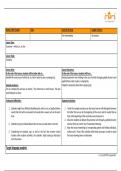
BGZ2024 Food for Life summary of all cases
Extensive summary of all cases with additional comments from the
tutor included
End of the document: case 6 (which was our presentation about
proteins)
PROBLEM 1: MACRO AND MICRONUTRIENTS
Problem statement:
What nutrients does the body need?
Learning goals:
1. What are the macronutrients?
a. Carbohydrates (fibers)
b. Proteins
c. Fats
2. What are the micronutrients?
a. Vitamins
b. Minerals
• Structure/chemical composition
• Functions
• Recommended daily intakes → RDA, percentage (Gezondheidsraad, IFSA)
• Where to find/different kind of diets (Mediterranean, high fat and high protein)?
• Energy content (kcal, joule) → connect with the structure
3. What are the recommendations of these nutrients (amount)? And what is the average
consumption at the moment?
4. What type of research do you need to base these recommendations on?
5. What’s a healthy diet?
Literature:
IFSA, WHO, gezondheidsraad
1. What are the macronutrients?
❖ Macronutrients: nutrients that deliver calories or energy/fuel to the body. The body
needs these nutrients for growth, its metabolism and other body functions. Macro means
large/big → nutrients that the body needs in huge amounts.
1kcal is the amount of energy that will raise the temp of 1 kg of water by 1 degree
Celsius:
• Carbohydrates → 4.2 kcal/1 gram of carbohydrates
• Fats → 9.4 kcal/1 gram of fats
• Proteins → 4.2 kcal/1 gram of proteins
a. Carbohydrates (including fibers)
• Carbohydrates are made of carbon (C), hydrogen (H) and oxygen (O) and are a
major source of fuel for the body. Dietary carbohydrates are starches and sugars
found in grains, vegetable, legumes (dry beans and peas) and fruits.
• The body converts most dietary carbohydrates to glucose, a simple sugar compound.
It is glucose that can be found in the circulation, providing a source of energy for
cells and tissues.
• Simple carbohydrates are naturally present as simple sugars in fruit, milk and other
foods. Simple sugars are monosaccharides (glucose, fructose and galactose) or
disaccharides.
Extensive summary of all cases with additional comments from the
tutor included
End of the document: case 6 (which was our presentation about
proteins)
PROBLEM 1: MACRO AND MICRONUTRIENTS
Problem statement:
What nutrients does the body need?
Learning goals:
1. What are the macronutrients?
a. Carbohydrates (fibers)
b. Proteins
c. Fats
2. What are the micronutrients?
a. Vitamins
b. Minerals
• Structure/chemical composition
• Functions
• Recommended daily intakes → RDA, percentage (Gezondheidsraad, IFSA)
• Where to find/different kind of diets (Mediterranean, high fat and high protein)?
• Energy content (kcal, joule) → connect with the structure
3. What are the recommendations of these nutrients (amount)? And what is the average
consumption at the moment?
4. What type of research do you need to base these recommendations on?
5. What’s a healthy diet?
Literature:
IFSA, WHO, gezondheidsraad
1. What are the macronutrients?
❖ Macronutrients: nutrients that deliver calories or energy/fuel to the body. The body
needs these nutrients for growth, its metabolism and other body functions. Macro means
large/big → nutrients that the body needs in huge amounts.
1kcal is the amount of energy that will raise the temp of 1 kg of water by 1 degree
Celsius:
• Carbohydrates → 4.2 kcal/1 gram of carbohydrates
• Fats → 9.4 kcal/1 gram of fats
• Proteins → 4.2 kcal/1 gram of proteins
a. Carbohydrates (including fibers)
• Carbohydrates are made of carbon (C), hydrogen (H) and oxygen (O) and are a
major source of fuel for the body. Dietary carbohydrates are starches and sugars
found in grains, vegetable, legumes (dry beans and peas) and fruits.
• The body converts most dietary carbohydrates to glucose, a simple sugar compound.
It is glucose that can be found in the circulation, providing a source of energy for
cells and tissues.
• Simple carbohydrates are naturally present as simple sugars in fruit, milk and other
foods. Simple sugars are monosaccharides (glucose, fructose and galactose) or
disaccharides.