6/20/25, 11:22 PM NR508 Week 4-Midterm 58 out of 60 = 96.7% Summative Practice Exam 2025 UPDATE/PRACTICE QUESTIONS AND CORREC…
NR508 Week 4-Midterm 58 out of 60 = 96.7%
Summative Practice Exam 2025
UPDATE/PRACTICE QUESTIONS AND CORRECT
VERIFIED ANSWERS
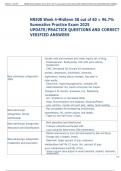
Usually mild and transient and rarely require d/c of drug.
1. Cardiovascular: Bradycardia, CHF with pulm edema,
hypotension
2. CNS: Decreased O2 to brain d/t hypotension,
anxiety, depression, drowsiness, insomnia,
Beta-adrenergic antagonists: nightmares, mental status changes. Esp seen in
ADRs
older adults.
3. Endocrine: Hyper/hypoglycemia, unstable DM.
4. Gastrointestinal: Dry mouth uncommon but maybe.
Changes in GI motility: anorexia, n/v, flatulence,
constipation.
5. GU: Impotence or decreased libido.
6. Resp: Bronchospasm and dyspnea. Nasal stuffiness.
7. Less common: muscle and joint pain, rashes, facial swelling.
1. May precipitate life-threatening arrhythmias,
Beta-adrenergic
hypertension, MI, severe angina, and death.
antagonists: Abrupt
2. Taper by one-half every 4 days.
withdrawal
1. Well absorbed and distributed
Beta-adrenergic antagonists:
2. Crosses: placenta and breast milk
Absorption and distribution
3. Lipid solubility determines CNS penetration.
1. Metab extensively by liver and eliminated by bile and feces.
2. Dosage adj in hepatic impair.
Beta-adrenergic antagonists:
3. Nebivolol: larger percent of pop: extensive
metabolism and excretion
metabolizers-half life 12 hours. Sm. percent of pop:
poor metabolizers-half life 19 hrs.
4. Some require dose adjust in renal (atenolol, nadolol, nebivolol,
acebutolol).
… 1/27
,6/20/25, 11:22 PM NR508 Week 4-Midterm 58 out of 60 = 96.7% Summative Practice Exam 2025 UPDATE/PRACTICE QUESTIONS AND CORREC…
1. Contra: respiratory conditions with bonchospastic component,
Beta-adrenergic antagonists:
AV block
precautions and
2. Caution: Older adults, DM, pregnancy, breast feeding
contraindications 3. No precautions: Hyperthyroidism, children
Atenolol, metoprolol, nadolol, propranolol
1. Reduce MOD, drug of choice in exertion angina.
Beta-adrenergic antagonists: 2. Do not increase MOS.
Angina 3. Start and increase slowly to reduce ADRs.
4. Dosage adjust in renal and hepatic.
Atenolol, metprolol, nadolol, propranolol (can have propranolol
with HCTZ)
1. Initial is with a diuretic.
Beta-adrenergic antagonists: 2. Can be used in combination
HTN
3. Pindolol and Acebutolol have few myocardial
depressant effects and don't increase cholesterol
or TG levels.
4. Renal dosing required.
Beta-adrenergic antagonists: 1. Decreases mortality by 30-40%.
Post MI prophylaxis 2. Atenolol, metoprolol, propranolol, and timolol
1. MOA: prevention of beta receptor-induced
Beta-adrenergic antagonists:
vasodilation and promotion of incrased
Migraine Headaches
extracellular levels of serotonin.
2. Propranolol: should be effective in 4-6 wks. Gradually
withdrawal.
1. Receptors located: eye, heart, blood vessels, lung, GI, Bladder,
sweat glands.
Muscarinic Agonists: MOA 2. Release of ACh from PNS nerves: 1. activates
muscarinic receptors on target organs to alter organ
fx. 2. activates muscarinic receptors on nerve
terminals to inhibit release of their
neurotransmitters.
3. Drugs in this class: ACh, Carbachol, pilocarpine, bethanechol,
methacholine.
… 2/27
, 6/20/25, 11:22 PM NR508 Week 4-Midterm 58 out of 60 = 96.7% Summative Practice Exam 2025 UPDATE/PRACTICE QUESTIONS AND CORREC…
1. Glaucoma
Improve GI and urinary bladder tone
2.
ACh: short-acting, limited to pupil dilation
for ophthalmic surgery Methacholine:
diagnosis of bronchial airway hyper-
Muscarinic Agonists: Treatment
reactivity Carbachol and pilocarpine:
uses
glaucoma
Pilocarpine: oral form: salivary gland secretion
treatment for xerostomia from radiation.
Bethanechol: increases tone of detrusor urinae
muscle: produces contractions strong enough to
initiate micturation and empty the bladder.
Stimulates gastric motility as well, increasing gastric
tone and restoring rhythmic peristalsis.
1. Caution: pt w/ hx of alcohol/drug dependancy--
>High risk of tolerance and dependence.
2. Combo alcohol and anorexiant: depression, paranoia, and
psychosis.
3. Use should be limited to 6 mos and d/c at any sign of
Anorexiants: precautions and intolerance.
contraindications 4. Contraind: in pt who abuse: cocaine, phencyclidine, and
methamphetamine
5. Pt with diabetes may have altered insulin or
oral hypoglycemic dosage requirements.
6. Lorcaserin: serotonergic drug-->may develop
serotonin syndrome or neuroleptic malignant
syndrome-like reactions if coadmin with serotonergic
drugs.-->preg X and not approved for children under
18yrs.
Carbamepine: metob in liver and may induce own
metabolism (autoinduction) in which therapeutic levels
Iminostilbenes: Metabolism may fall despite good compliance. Also induces metab
and excretion
of CYP450 enzymes. Excreted in urine and feces.
Oxcarbazepine: active metabolite is responsible for drug
effects. 95% excreted in urine, 4% in feces and 1% and
unmetabolized. Does not autoinduce metabolism.
… 3/27
NR508 Week 4-Midterm 58 out of 60 = 96.7%
Summative Practice Exam 2025
UPDATE/PRACTICE QUESTIONS AND CORRECT
VERIFIED ANSWERS
Usually mild and transient and rarely require d/c of drug.
1. Cardiovascular: Bradycardia, CHF with pulm edema,
hypotension
2. CNS: Decreased O2 to brain d/t hypotension,
anxiety, depression, drowsiness, insomnia,
Beta-adrenergic antagonists: nightmares, mental status changes. Esp seen in
ADRs
older adults.
3. Endocrine: Hyper/hypoglycemia, unstable DM.
4. Gastrointestinal: Dry mouth uncommon but maybe.
Changes in GI motility: anorexia, n/v, flatulence,
constipation.
5. GU: Impotence or decreased libido.
6. Resp: Bronchospasm and dyspnea. Nasal stuffiness.
7. Less common: muscle and joint pain, rashes, facial swelling.
1. May precipitate life-threatening arrhythmias,
Beta-adrenergic
hypertension, MI, severe angina, and death.
antagonists: Abrupt
2. Taper by one-half every 4 days.
withdrawal
1. Well absorbed and distributed
Beta-adrenergic antagonists:
2. Crosses: placenta and breast milk
Absorption and distribution
3. Lipid solubility determines CNS penetration.
1. Metab extensively by liver and eliminated by bile and feces.
2. Dosage adj in hepatic impair.
Beta-adrenergic antagonists:
3. Nebivolol: larger percent of pop: extensive
metabolism and excretion
metabolizers-half life 12 hours. Sm. percent of pop:
poor metabolizers-half life 19 hrs.
4. Some require dose adjust in renal (atenolol, nadolol, nebivolol,
acebutolol).
… 1/27
,6/20/25, 11:22 PM NR508 Week 4-Midterm 58 out of 60 = 96.7% Summative Practice Exam 2025 UPDATE/PRACTICE QUESTIONS AND CORREC…
1. Contra: respiratory conditions with bonchospastic component,
Beta-adrenergic antagonists:
AV block
precautions and
2. Caution: Older adults, DM, pregnancy, breast feeding
contraindications 3. No precautions: Hyperthyroidism, children
Atenolol, metoprolol, nadolol, propranolol
1. Reduce MOD, drug of choice in exertion angina.
Beta-adrenergic antagonists: 2. Do not increase MOS.
Angina 3. Start and increase slowly to reduce ADRs.
4. Dosage adjust in renal and hepatic.
Atenolol, metprolol, nadolol, propranolol (can have propranolol
with HCTZ)
1. Initial is with a diuretic.
Beta-adrenergic antagonists: 2. Can be used in combination
HTN
3. Pindolol and Acebutolol have few myocardial
depressant effects and don't increase cholesterol
or TG levels.
4. Renal dosing required.
Beta-adrenergic antagonists: 1. Decreases mortality by 30-40%.
Post MI prophylaxis 2. Atenolol, metoprolol, propranolol, and timolol
1. MOA: prevention of beta receptor-induced
Beta-adrenergic antagonists:
vasodilation and promotion of incrased
Migraine Headaches
extracellular levels of serotonin.
2. Propranolol: should be effective in 4-6 wks. Gradually
withdrawal.
1. Receptors located: eye, heart, blood vessels, lung, GI, Bladder,
sweat glands.
Muscarinic Agonists: MOA 2. Release of ACh from PNS nerves: 1. activates
muscarinic receptors on target organs to alter organ
fx. 2. activates muscarinic receptors on nerve
terminals to inhibit release of their
neurotransmitters.
3. Drugs in this class: ACh, Carbachol, pilocarpine, bethanechol,
methacholine.
… 2/27
, 6/20/25, 11:22 PM NR508 Week 4-Midterm 58 out of 60 = 96.7% Summative Practice Exam 2025 UPDATE/PRACTICE QUESTIONS AND CORREC…
1. Glaucoma
Improve GI and urinary bladder tone
2.
ACh: short-acting, limited to pupil dilation
for ophthalmic surgery Methacholine:
diagnosis of bronchial airway hyper-
Muscarinic Agonists: Treatment
reactivity Carbachol and pilocarpine:
uses
glaucoma
Pilocarpine: oral form: salivary gland secretion
treatment for xerostomia from radiation.
Bethanechol: increases tone of detrusor urinae
muscle: produces contractions strong enough to
initiate micturation and empty the bladder.
Stimulates gastric motility as well, increasing gastric
tone and restoring rhythmic peristalsis.
1. Caution: pt w/ hx of alcohol/drug dependancy--
>High risk of tolerance and dependence.
2. Combo alcohol and anorexiant: depression, paranoia, and
psychosis.
3. Use should be limited to 6 mos and d/c at any sign of
Anorexiants: precautions and intolerance.
contraindications 4. Contraind: in pt who abuse: cocaine, phencyclidine, and
methamphetamine
5. Pt with diabetes may have altered insulin or
oral hypoglycemic dosage requirements.
6. Lorcaserin: serotonergic drug-->may develop
serotonin syndrome or neuroleptic malignant
syndrome-like reactions if coadmin with serotonergic
drugs.-->preg X and not approved for children under
18yrs.
Carbamepine: metob in liver and may induce own
metabolism (autoinduction) in which therapeutic levels
Iminostilbenes: Metabolism may fall despite good compliance. Also induces metab
and excretion
of CYP450 enzymes. Excreted in urine and feces.
Oxcarbazepine: active metabolite is responsible for drug
effects. 95% excreted in urine, 4% in feces and 1% and
unmetabolized. Does not autoinduce metabolism.
… 3/27