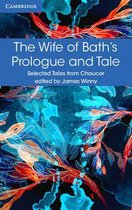
“The Wife of Bath’s Prologue and Tale” - Context, Analysis, and
Interpretation
The Canterbury Tales
● Chaucer began to write his best known work, The Canterbury Tales, in
1380. They were never finished, as Chaucer died before completing
them.
● Tales are grouped into segments with a particular focus (eg. marriage)
○ The Wife’s tale is the first of a group of seven known as the
“Marriage Group”
● Not only does the Wife have the longest prologue (by a substantial
amount), she is the only one to supply a prologue longer than her actual
tale.
The General Prologue of The Canterbury Tales
● The prologue can be used in your examination as a source of context.
● The prologue details how Chaucer found himself riding with a group of
pilgrims from London to Canterbury.
● Initially, the tales were meant to be told in order of descending social
class, but the drunken Miller insists on following the Knight, showing
how Chaucer abandoned traditional depictions of class in mediaeval
society.
The Portrait of The Wife Of Bath
● A segment of the General Prologue which focuses on the Wife of Bath.
● We are treated to a top-to-toe description of the Wife, which highlights
her wealth and physical dominance (with her “paire or spores sharpe”)
, ● The Wife is described as “gat-tothed”, indicating a ravenous sexual
appetite.
● The Wife is gaudy and ostentatious, rather than elegant or traditionally
beautiful. She cares not for beauty, but power.
● The Wife has had “oother compaignye in youthe” prior to her marriages.
Abbreviato quickly moves beyond this scandal.
The Wife of Bath’s Prologue
● Not unlike the Pardoner, the Wife’s tale is semi-confessional, but with a
heavy focus on justifying her own actions.
● The Wife outlines her theories about female authority in marriage, using
her own five marriages as examples. Her tale serves as a model
illustration of these theories.
● The most bitter of the Wife’s struggles was with her fifth husband,
Janekin, although she ultimately prevailed, according to her own
recollection.
The Wife of Bath’s Tale
● The Wife imbues her tale with a level of fantasy, setting it in the age of
King Arthur.
○ She sarcastically and ironically praises holymen for ridding the
land of fantasy and fairies, mainly as an insult to the Friar who bid
her to finish her prologue.
● The tale’s “hero”, a knight, is given one year to discover what women
truly desire to avoid execution.
● The Wife includes a key digression (allowing her to serve her own focus
on the plight of women more than the plot of the tale) where she
Interpretation
The Canterbury Tales
● Chaucer began to write his best known work, The Canterbury Tales, in
1380. They were never finished, as Chaucer died before completing
them.
● Tales are grouped into segments with a particular focus (eg. marriage)
○ The Wife’s tale is the first of a group of seven known as the
“Marriage Group”
● Not only does the Wife have the longest prologue (by a substantial
amount), she is the only one to supply a prologue longer than her actual
tale.
The General Prologue of The Canterbury Tales
● The prologue can be used in your examination as a source of context.
● The prologue details how Chaucer found himself riding with a group of
pilgrims from London to Canterbury.
● Initially, the tales were meant to be told in order of descending social
class, but the drunken Miller insists on following the Knight, showing
how Chaucer abandoned traditional depictions of class in mediaeval
society.
The Portrait of The Wife Of Bath
● A segment of the General Prologue which focuses on the Wife of Bath.
● We are treated to a top-to-toe description of the Wife, which highlights
her wealth and physical dominance (with her “paire or spores sharpe”)
, ● The Wife is described as “gat-tothed”, indicating a ravenous sexual
appetite.
● The Wife is gaudy and ostentatious, rather than elegant or traditionally
beautiful. She cares not for beauty, but power.
● The Wife has had “oother compaignye in youthe” prior to her marriages.
Abbreviato quickly moves beyond this scandal.
The Wife of Bath’s Prologue
● Not unlike the Pardoner, the Wife’s tale is semi-confessional, but with a
heavy focus on justifying her own actions.
● The Wife outlines her theories about female authority in marriage, using
her own five marriages as examples. Her tale serves as a model
illustration of these theories.
● The most bitter of the Wife’s struggles was with her fifth husband,
Janekin, although she ultimately prevailed, according to her own
recollection.
The Wife of Bath’s Tale
● The Wife imbues her tale with a level of fantasy, setting it in the age of
King Arthur.
○ She sarcastically and ironically praises holymen for ridding the
land of fantasy and fairies, mainly as an insult to the Friar who bid
her to finish her prologue.
● The tale’s “hero”, a knight, is given one year to discover what women
truly desire to avoid execution.
● The Wife includes a key digression (allowing her to serve her own focus
on the plight of women more than the plot of the tale) where she