Organisational psychology
-mini lectures summary-
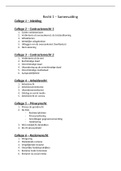
Introduction to organisational psychology __________________________________ 1
Work-related attitudes __________________________________________________ 5
Emotions at work _____________________________________________________ 9
Decision making _____________________________________________________ 13
Job performance _____________________________________________________ 15
Teams _____________________________________________________________ 19
Change in Teams & Changing Teams ____________________________________ 22
Leadership __________________________________________________________ 30
Organizational justice _________________________________________________ 33
Organizational structure and culture ______________________________________ 36
Change management and communication _________________________________ 39
Technostress ________________________________________________________ 42
Telecommuting and New Ways of Working _______________________________ 44
Introduction to organisational psychology
Psychology is the study of the human mind and behaviour.
Organizational Psychology (OP) is the study of human mind and behaviour in an
organizational context. It seeks to understand why people feel, think, and act the way they do
at work, applying psychological principles, theory, and research to work settings. It has
significant overlap with other areas of psychology, such as personality, social, cognitive, and
cross-cultural psychology.
An organization is defined as a group of people regularly working together to
achieve some common goal. Examples like McDonald's and Tilburg University are presented
as organizations, while a Halloween party in Friends is not.
Three Levels of Study: Organizational psychology investigates the impact of
individuals, groups, and structure on behaviour within organizations across three levels:
▪ individual level: topics include work-related attitudes, emotions at work, decision-
making, and job performance
▪ group level: focuses on teamwork, cooperation and competition, agile teams, and
leadership
1
Laura C | Tilburg University | 2024-2025
,▪ organizational level: covers organizational justice, organizational structure and culture,
change management and communication, telecommuting and new ways of working, and
technostress
Difference with Organizational Behavior (OB): Organizational Behavior (OB)
investigates the impact that individuals, groups, and structure have on behavior within
organizations.
It explores what people think, feel, and do in organizational settings, how individuals
and teams relate to each other and the organization, and how organizations interact with their
external environment.
The goal of OB is to improve the performance of organizations in terms of
effectiveness (achieving goals) and efficiency (minimizing costs), drawing on multiple
disciplines including psychology, sociology, and anthropology.
Importance of Studying Psychology at Work
Central Place of Work: the majority of waking weekdays are devoted to work. Work
centrality is defined as "the degree of importance work plays in one’s life". A significant
portion of people (approximately 70% of U.S. respondents in a 1999 survey) would continue
working even if they had enough money to live comfortably, indicating that work defines
"who we are" and is crucial for people's self-assessment and values (work is a defining
characteristic of how people assess their value to society, their family, and themselves)
Predictable Patterns of Human Behavior: the field of organizational psychology is
founded on the belief that human mind and behaviour are not random but exhibit predictable
patterns. This allows for:
▪ predicting: determining if a causes b
▪ explaining: understanding why and when events occur as they do
▪ managing: directing people's minds and behaviour to achieve defined goals
Common Sense vs. Evidence: People's intuitions about human behaviour are often
incorrect. Organizational psychology moves beyond common sense to provide evidence-
based insights.
__________
Wealth and "unseemly behavior (Paul Piff and Dr. Dacher Keltner at UC Berkeley)
2
Observed Behaviors of Wealthier Individuals:
Laura C | Tilburg University | 2024-2025
,Traffic Violations: A study in California found that approximately ninety percent of drivers
stopped for pedestrians in crosswalks, except for those driving luxury cars (like
BMWs, Porsches, Mercedes), who were three to four times more likely to break the
law and run the intersection
Taking More Resources: In an experiment, wealthier participants took two times as much
candy from children as poorer participants
Cheating and Dishonesty: Another experiment tested honesty in reporting dice scores for a
cash prize. People earning $150,000-$200,000 annually were four times more likely
to cheat than those earning under $15,000. Additionally, the research showed that
wealthier individuals were more likely to lie during negotiations and endorse
unethical behavior, including stealing at work
The findings were consistent across 30 studies involving thousands of people across
the United States, and they apply to both liberals and conservatives; wealth itself appears to
be the influencing factor.
The "Why" Behind the Behavior: The Monopoly Experiment
To understand why wealth might lead to these behaviors, Piff designed experiments
that made subjects feel rich in a lab setting, often using a rigged Monopoly game. In these
games, "rich" players (randomly assigned by a coin toss) started with more money, had
upscale playing pieces, and had advantages like rolling two dice instead of one. Despite the
game being rigged so they could not lose, the "rich" players consistently felt they "deserved
to win". This revealed an "incredible insight into what the mind does to make sense of
advantage or disadvantage". Even when arbitrarily assigned a successful role, subjects began
to attribute their success to their own individual skills and talents, becoming "less attuned to
all the other things that contributed" to their advantageous position.
Furthermore, these "rich" players also became more directive, even rude, in their
interactions, eating with their mouths full and showing less consideration for others.
The research suggests that wealth can come with a set of values or a "deeper
ideology," including beliefs like "generosity is for suckers" and "greed is good".
The research team studies the psychological effects of economic inequality, noting
that it is at a near-century high in the U.S. and has "pernicious" effects on various aspects of
life, such as bullying, physical health, and disease management.
While statistically there's a "significant tendency to look out for number one" for
those at the top, the source acknowledges that "plenty of wildly generous rich folks" exist,
citing billionaires who pledge their fortunes to charity.
Crucially, the studies found that making rich people feel "psychologically a little less
well-off" made them "way more generous, way more charitable, way more likely to offer
help". Similarly, making poor people feel rich also shifted their behavior. This suggests that
subconscious biases related to wealth can be moderated.
____________
Evidence-Based Management
Decisions in management should be based on a combination of critical thinking and
the best available evidence, utilizing data to drive decisions.
There are four sources of information: for evidence-based practice, decision-making
3
should be guided by:
Laura C | Tilburg University | 2024-2025
, 1. scientific literature (empirical studies)
2. organization internal data
3. stakeholders' values and concerns
4. practitioners' professional expertise
____________
Rob Briner on Evidence-Based Management
Evidence-Based Management (EBM) is fundamentally about making better-
informed decisions in a management context. It involves using different kinds of evidence
from various sources to both identify a particular problem or opportunity and then to
determine the most likely solutions. The core idea is to gather evidence from these sources,
combine it to better understand the problem, and subsequently identify the most effective
solution.
Four Main Sources of Evidence: EBM integrates evidence from four key areas:
managers' own professional expertise: this includes what managers have learned throughout
their careers and the expertise they possess
stakeholders: this broad category encompasses employees, shareholders, and potentially the
wider community, whose perspectives and concerns are crucial
scientific evidence: this refers to scientific research and studies that are relevant to both the
identified problem and potential solutions
organizational data itself: this involves using internal data from the organization to inform
decisions
Barriers to Implementing EBM: While practitioners generally understand the need for
more evidence in decision-making, several factors often "get in the way":
management fads and fashions: new ideas in areas like HR (e.g., employee engagement,
talent management) can lead organizations to adopt practices without first identifying
a specific problem or understanding why that particular fad is relevant to them;
managers might rush to measure engagement without knowing if it's even a problem
or important for their specific context
lack of evaluation: managers and HR professionals often feel that their actions are not
evaluated, meaning they "never get to find out" whether what they do works, doesn't
work, or has no effect; this lack of feedback reduces the incentive to use evidence
resistance to questioning: while some people find the practice of constantly asking "why"
useful, others may resist it, preferring to "just get on and do something"
"Simple straightforward things" for practitioners to start doing immediately
▪ build a supportive team: it's very difficult to implement EBM alone; practitioners should
strive to be part of a team interested in evidence-based practice
▪ ask "why?": consistently ask "why are we doing this?", "why do you think it's a
problem?", and "on what basis?"
▪ utilize resources: look at websites like the "centre for evidence-based management" for
tools, techniques, and ways of thinking about problems in an evidence-based manner
4
Laura C | Tilburg University | 2024-2025
-mini lectures summary-
Introduction to organisational psychology __________________________________ 1
Work-related attitudes __________________________________________________ 5
Emotions at work _____________________________________________________ 9
Decision making _____________________________________________________ 13
Job performance _____________________________________________________ 15
Teams _____________________________________________________________ 19
Change in Teams & Changing Teams ____________________________________ 22
Leadership __________________________________________________________ 30
Organizational justice _________________________________________________ 33
Organizational structure and culture ______________________________________ 36
Change management and communication _________________________________ 39
Technostress ________________________________________________________ 42
Telecommuting and New Ways of Working _______________________________ 44
Introduction to organisational psychology
Psychology is the study of the human mind and behaviour.
Organizational Psychology (OP) is the study of human mind and behaviour in an
organizational context. It seeks to understand why people feel, think, and act the way they do
at work, applying psychological principles, theory, and research to work settings. It has
significant overlap with other areas of psychology, such as personality, social, cognitive, and
cross-cultural psychology.
An organization is defined as a group of people regularly working together to
achieve some common goal. Examples like McDonald's and Tilburg University are presented
as organizations, while a Halloween party in Friends is not.
Three Levels of Study: Organizational psychology investigates the impact of
individuals, groups, and structure on behaviour within organizations across three levels:
▪ individual level: topics include work-related attitudes, emotions at work, decision-
making, and job performance
▪ group level: focuses on teamwork, cooperation and competition, agile teams, and
leadership
1
Laura C | Tilburg University | 2024-2025
,▪ organizational level: covers organizational justice, organizational structure and culture,
change management and communication, telecommuting and new ways of working, and
technostress
Difference with Organizational Behavior (OB): Organizational Behavior (OB)
investigates the impact that individuals, groups, and structure have on behavior within
organizations.
It explores what people think, feel, and do in organizational settings, how individuals
and teams relate to each other and the organization, and how organizations interact with their
external environment.
The goal of OB is to improve the performance of organizations in terms of
effectiveness (achieving goals) and efficiency (minimizing costs), drawing on multiple
disciplines including psychology, sociology, and anthropology.
Importance of Studying Psychology at Work
Central Place of Work: the majority of waking weekdays are devoted to work. Work
centrality is defined as "the degree of importance work plays in one’s life". A significant
portion of people (approximately 70% of U.S. respondents in a 1999 survey) would continue
working even if they had enough money to live comfortably, indicating that work defines
"who we are" and is crucial for people's self-assessment and values (work is a defining
characteristic of how people assess their value to society, their family, and themselves)
Predictable Patterns of Human Behavior: the field of organizational psychology is
founded on the belief that human mind and behaviour are not random but exhibit predictable
patterns. This allows for:
▪ predicting: determining if a causes b
▪ explaining: understanding why and when events occur as they do
▪ managing: directing people's minds and behaviour to achieve defined goals
Common Sense vs. Evidence: People's intuitions about human behaviour are often
incorrect. Organizational psychology moves beyond common sense to provide evidence-
based insights.
__________
Wealth and "unseemly behavior (Paul Piff and Dr. Dacher Keltner at UC Berkeley)
2
Observed Behaviors of Wealthier Individuals:
Laura C | Tilburg University | 2024-2025
,Traffic Violations: A study in California found that approximately ninety percent of drivers
stopped for pedestrians in crosswalks, except for those driving luxury cars (like
BMWs, Porsches, Mercedes), who were three to four times more likely to break the
law and run the intersection
Taking More Resources: In an experiment, wealthier participants took two times as much
candy from children as poorer participants
Cheating and Dishonesty: Another experiment tested honesty in reporting dice scores for a
cash prize. People earning $150,000-$200,000 annually were four times more likely
to cheat than those earning under $15,000. Additionally, the research showed that
wealthier individuals were more likely to lie during negotiations and endorse
unethical behavior, including stealing at work
The findings were consistent across 30 studies involving thousands of people across
the United States, and they apply to both liberals and conservatives; wealth itself appears to
be the influencing factor.
The "Why" Behind the Behavior: The Monopoly Experiment
To understand why wealth might lead to these behaviors, Piff designed experiments
that made subjects feel rich in a lab setting, often using a rigged Monopoly game. In these
games, "rich" players (randomly assigned by a coin toss) started with more money, had
upscale playing pieces, and had advantages like rolling two dice instead of one. Despite the
game being rigged so they could not lose, the "rich" players consistently felt they "deserved
to win". This revealed an "incredible insight into what the mind does to make sense of
advantage or disadvantage". Even when arbitrarily assigned a successful role, subjects began
to attribute their success to their own individual skills and talents, becoming "less attuned to
all the other things that contributed" to their advantageous position.
Furthermore, these "rich" players also became more directive, even rude, in their
interactions, eating with their mouths full and showing less consideration for others.
The research suggests that wealth can come with a set of values or a "deeper
ideology," including beliefs like "generosity is for suckers" and "greed is good".
The research team studies the psychological effects of economic inequality, noting
that it is at a near-century high in the U.S. and has "pernicious" effects on various aspects of
life, such as bullying, physical health, and disease management.
While statistically there's a "significant tendency to look out for number one" for
those at the top, the source acknowledges that "plenty of wildly generous rich folks" exist,
citing billionaires who pledge their fortunes to charity.
Crucially, the studies found that making rich people feel "psychologically a little less
well-off" made them "way more generous, way more charitable, way more likely to offer
help". Similarly, making poor people feel rich also shifted their behavior. This suggests that
subconscious biases related to wealth can be moderated.
____________
Evidence-Based Management
Decisions in management should be based on a combination of critical thinking and
the best available evidence, utilizing data to drive decisions.
There are four sources of information: for evidence-based practice, decision-making
3
should be guided by:
Laura C | Tilburg University | 2024-2025
, 1. scientific literature (empirical studies)
2. organization internal data
3. stakeholders' values and concerns
4. practitioners' professional expertise
____________
Rob Briner on Evidence-Based Management
Evidence-Based Management (EBM) is fundamentally about making better-
informed decisions in a management context. It involves using different kinds of evidence
from various sources to both identify a particular problem or opportunity and then to
determine the most likely solutions. The core idea is to gather evidence from these sources,
combine it to better understand the problem, and subsequently identify the most effective
solution.
Four Main Sources of Evidence: EBM integrates evidence from four key areas:
managers' own professional expertise: this includes what managers have learned throughout
their careers and the expertise they possess
stakeholders: this broad category encompasses employees, shareholders, and potentially the
wider community, whose perspectives and concerns are crucial
scientific evidence: this refers to scientific research and studies that are relevant to both the
identified problem and potential solutions
organizational data itself: this involves using internal data from the organization to inform
decisions
Barriers to Implementing EBM: While practitioners generally understand the need for
more evidence in decision-making, several factors often "get in the way":
management fads and fashions: new ideas in areas like HR (e.g., employee engagement,
talent management) can lead organizations to adopt practices without first identifying
a specific problem or understanding why that particular fad is relevant to them;
managers might rush to measure engagement without knowing if it's even a problem
or important for their specific context
lack of evaluation: managers and HR professionals often feel that their actions are not
evaluated, meaning they "never get to find out" whether what they do works, doesn't
work, or has no effect; this lack of feedback reduces the incentive to use evidence
resistance to questioning: while some people find the practice of constantly asking "why"
useful, others may resist it, preferring to "just get on and do something"
"Simple straightforward things" for practitioners to start doing immediately
▪ build a supportive team: it's very difficult to implement EBM alone; practitioners should
strive to be part of a team interested in evidence-based practice
▪ ask "why?": consistently ask "why are we doing this?", "why do you think it's a
problem?", and "on what basis?"
▪ utilize resources: look at websites like the "centre for evidence-based management" for
tools, techniques, and ways of thinking about problems in an evidence-based manner
4
Laura C | Tilburg University | 2024-2025