CFH CVICU EXAM STUDY GUIDE
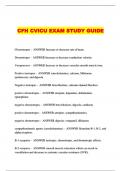
Chronotropes - ANSWER Increase or decrease rate of heart.
Dromotropes - ANSWER Increase or decrease conduction velocity.
Vasopressors - ANSWER Increase or decrease vascular smooth muscle tone.
Positive inotropes - ANSWER catecholamines, calcium, Milrinone
(primacore), and digoxin
Negative inotropes - ANSWER beta-blockers, calcium channel blockers
positive chronotropes - ANSWER atropine, dopamine, dobutamine,
epinephrine.
negative chronotropes - ANSWER beta-blockers, digoxin, cardizem
positive dromotropes - ANSWER atropine, sympathomimetics
negative dromotropes - ANSWER digoxin, verapamil, diltiazem
sympathomimetic agents (catecholamines) - ANSWER Stimulate B-1, B-2, and
alpha receptors.
B-1 receptors - ANSWER inotropic, chronotropic, and dromotropic effects.
B-2 receptors - ANSWER smooth muscle relaxation which can result in
vasodilation and decrease in systemic vascular resistance (SVR).
, Alpha receptors - ANSWER vasoconstriction, increase in SVR, increase in
blood pressure; can lead to decrease in CI due to increase in after load.
Sympathomimetic drugs - ANSWER dobutamine, dopamine, epinephrine,
norepinephrine (Levo), phenylephrine (Neo).
Dobutamine - ANSWER B-1 and B-2 effects
dopamine - ANSWER B-1 at 1-2 mcg/kg/min
alpha at 10 mag/kg/min
epinephrine - ANSWER B-1 + B-2 at .01-.03mcg/kg/min
alpha > .03 mag/kg/min
epi notable effects - ANSWER blood sugar may increase. K will enter cells -->
K levels decrease. When blood sugar normalizes --> K can spike.
Norepinephrine - ANSWER some B-1; mainly alpha effects
Phenylephrine - ANSWER only alpha
phosphodiesterase inhibitors (milrinone) - ANSWER -do not affect adrenergic
receptors
-increase myocardial contraction (augment CI) and venous/arterial dilation
(decrease preload and SVR).
beta blockers - ANSWER negative inotropes, decrease contractility, delay HR,
and excuse blood vessel contraction.
selective beta blockers - ANSWER only B-1 receptors (atenolol, metoprolol,
esmolol*).
non-selective beta blockers - ANSWER B-1 and B-2 receptors (labetalol,
propranolol, carvedilol).
Chronotropes - ANSWER Increase or decrease rate of heart.
Dromotropes - ANSWER Increase or decrease conduction velocity.
Vasopressors - ANSWER Increase or decrease vascular smooth muscle tone.
Positive inotropes - ANSWER catecholamines, calcium, Milrinone
(primacore), and digoxin
Negative inotropes - ANSWER beta-blockers, calcium channel blockers
positive chronotropes - ANSWER atropine, dopamine, dobutamine,
epinephrine.
negative chronotropes - ANSWER beta-blockers, digoxin, cardizem
positive dromotropes - ANSWER atropine, sympathomimetics
negative dromotropes - ANSWER digoxin, verapamil, diltiazem
sympathomimetic agents (catecholamines) - ANSWER Stimulate B-1, B-2, and
alpha receptors.
B-1 receptors - ANSWER inotropic, chronotropic, and dromotropic effects.
B-2 receptors - ANSWER smooth muscle relaxation which can result in
vasodilation and decrease in systemic vascular resistance (SVR).
, Alpha receptors - ANSWER vasoconstriction, increase in SVR, increase in
blood pressure; can lead to decrease in CI due to increase in after load.
Sympathomimetic drugs - ANSWER dobutamine, dopamine, epinephrine,
norepinephrine (Levo), phenylephrine (Neo).
Dobutamine - ANSWER B-1 and B-2 effects
dopamine - ANSWER B-1 at 1-2 mcg/kg/min
alpha at 10 mag/kg/min
epinephrine - ANSWER B-1 + B-2 at .01-.03mcg/kg/min
alpha > .03 mag/kg/min
epi notable effects - ANSWER blood sugar may increase. K will enter cells -->
K levels decrease. When blood sugar normalizes --> K can spike.
Norepinephrine - ANSWER some B-1; mainly alpha effects
Phenylephrine - ANSWER only alpha
phosphodiesterase inhibitors (milrinone) - ANSWER -do not affect adrenergic
receptors
-increase myocardial contraction (augment CI) and venous/arterial dilation
(decrease preload and SVR).
beta blockers - ANSWER negative inotropes, decrease contractility, delay HR,
and excuse blood vessel contraction.
selective beta blockers - ANSWER only B-1 receptors (atenolol, metoprolol,
esmolol*).
non-selective beta blockers - ANSWER B-1 and B-2 receptors (labetalol,
propranolol, carvedilol).