Truth/Lies/Scheming
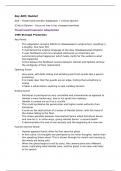
KEY IDEAS:
- Deceit is at the heart of the corrupt state, originating from Claudius’ regicide, which
he has to manipulate to maintain his false exterior
-> corrupts friendships – R+G + Hamlet
-> corrupts relationships – Ophelia used as a pawn to lie to Hamlet, whom she loves
= deceit breaks down relationships, all as a result of Claudius’ Machiavellian scheming
Marcellus: ‘Something is rotten in the state of Denmark’ -> metaphor of decay and corruption
which has happened as a result of regicide (we will find this out later) – links to A1S1 ‘sick at heart’,
A1S2 ‘all is not well’ [1.4]
Ghost: ‘Revenge his foul and most unnatural murder’
Claudius: ‘gather’ ‘glean’ -> harvesting terms used to describe how R+G must gather information
from Hamlet – cunning [2.2]
Hamlet, following R+G interrogation, and after deciphering that they were “called for”
contemplates the earth as a “quintessence of dust” [2.2] - the world he is in is consistently failing
and disappointing him + says “Denmark’s a prison” - entrapped in deceit
Ophelia ‘in her duty and obedience’ (Polonius, 2.2) deceives Hamlet at command of her father
and Claudius in rejecting his love/gifts - destroys their relationship, heightening Hamlet’s fragile
state to become more emotional (Hamlet: ‘Get thee to a nunnery, why wouldst thou be a breeder
of sinners?’ [3.1])
Claudius: ‘lawful espials’ - him and Polonius are legitimate spies – justifying their immoral
behaviour – Machiavellian [3.1]
A05
Hytner (director of National Theatre production, 2010, Kinnear as Hamlet): “Dishonesty is at
the heart of the regime”
Godwin / Paapa Essiedu
-> Gertrude pretends that she cannot see the ghost – Is she partly guilty/aware of Claudius act? -
even Gertrude lies to her son, deceiving him
Doran, 2008
-> CCTV cameras used to show spying
-> new technology of the modern era allows for this representation of surveillance/deceit
Atlick: “The cunning and lecherousness of Claudius’ evil has corrupted the whole kingdom of
Denmark”
, Buccola
“throughout Hamlet, the audience sees the harm that deceit causes”
17th century saw usurpation as a truly corrupting force – now we view the psychological effects
- ^ This lack of trust due to deceit and corruption brewing in Elsinore (detected first by the
ghost’s hauntings and then validated by R+G’s betrayal) encouraging Hamlet to resort to
pursuing the truth + validating the ghost (cannot trust anyone)
- Hamlet is forced to become scheming in an ironic attempt to pursue truth – his
pursuit of truth is his downfall – conforms with the manipulative court - “antic
disposition” allows him to uncover the truth without raising suspicion
- However, as a man of thought, overthinks (hamartia) = delayed revenge = death/tragedy
-> as an overthinker, Hamlet cannot simply accept the task but must prove the ghost’s
legitimacy – cannot trust anyone in his corrupt state – if he’d acted immediately, he
wouldn’t have become habituated into overthinking/delaying
-> hamlet’s thoughts shown in soliloquies, perhaps the only source of genuine truth and
honesty, reveal his deteriorating mental state as a result of this overthinking – cannot cope
Hamlet: ‘I perchance hereafter shall think meet / To put an antic disposition on’ -> he might think it
wise to pretend to be mad (will appear less threatening) - warning his friends of this [1.5]
Hamlet: ‘the play’s the thing / Wherein I’ll catch the conscience of the King’ - cunning, rhyming
couplet – triumphant, has a plan [2.2]
Hamlet [to the players]: ‘[theatre’s purpose is to] hold as ’twere the mirror up to / nature; to show
virtue her own feature, scorn her / own image, and the very age and body of the / time his form and
pressure’ - the value and art of theatre is to reflect reality – Hamlet will put on a play mirroring the
murder [3.2] -> an attempt to reveal the truth
Hamlet: ‘Observe mine uncle. If his occulted guilt / Do not itself unkennel in one speech, / It is a
damned ghost that we have seen’ - reminds the audience of the plan – if Claudius shows no guilt,
then the ghost must be the devil/from hell [3.2]
Hamlet calls the play ‘The Mouse-trap' [3.2]
Hamlet: ‘We are arrant / knaves all, believe none of us’ - everyone is villainous – deception in the
court – unable to source the truth [3.1]
Hamlet: ‘whether it be / Bestial oblivion, or some craven scruple / Of thinking too precisely on
the event [4.4] (7th soliloquy – identifies his hamartia as an overthinker, failed revenge hero)
A05
Hytner (director of National Theatre production, 2010, Kinnear as Hamlet):
- Hamlet is desperately concerned with truth
- “Hamlet is constantly trying to get beyond show to the truth”
KEY IDEAS:
- Deceit is at the heart of the corrupt state, originating from Claudius’ regicide, which
he has to manipulate to maintain his false exterior
-> corrupts friendships – R+G + Hamlet
-> corrupts relationships – Ophelia used as a pawn to lie to Hamlet, whom she loves
= deceit breaks down relationships, all as a result of Claudius’ Machiavellian scheming
Marcellus: ‘Something is rotten in the state of Denmark’ -> metaphor of decay and corruption
which has happened as a result of regicide (we will find this out later) – links to A1S1 ‘sick at heart’,
A1S2 ‘all is not well’ [1.4]
Ghost: ‘Revenge his foul and most unnatural murder’
Claudius: ‘gather’ ‘glean’ -> harvesting terms used to describe how R+G must gather information
from Hamlet – cunning [2.2]
Hamlet, following R+G interrogation, and after deciphering that they were “called for”
contemplates the earth as a “quintessence of dust” [2.2] - the world he is in is consistently failing
and disappointing him + says “Denmark’s a prison” - entrapped in deceit
Ophelia ‘in her duty and obedience’ (Polonius, 2.2) deceives Hamlet at command of her father
and Claudius in rejecting his love/gifts - destroys their relationship, heightening Hamlet’s fragile
state to become more emotional (Hamlet: ‘Get thee to a nunnery, why wouldst thou be a breeder
of sinners?’ [3.1])
Claudius: ‘lawful espials’ - him and Polonius are legitimate spies – justifying their immoral
behaviour – Machiavellian [3.1]
A05
Hytner (director of National Theatre production, 2010, Kinnear as Hamlet): “Dishonesty is at
the heart of the regime”
Godwin / Paapa Essiedu
-> Gertrude pretends that she cannot see the ghost – Is she partly guilty/aware of Claudius act? -
even Gertrude lies to her son, deceiving him
Doran, 2008
-> CCTV cameras used to show spying
-> new technology of the modern era allows for this representation of surveillance/deceit
Atlick: “The cunning and lecherousness of Claudius’ evil has corrupted the whole kingdom of
Denmark”
, Buccola
“throughout Hamlet, the audience sees the harm that deceit causes”
17th century saw usurpation as a truly corrupting force – now we view the psychological effects
- ^ This lack of trust due to deceit and corruption brewing in Elsinore (detected first by the
ghost’s hauntings and then validated by R+G’s betrayal) encouraging Hamlet to resort to
pursuing the truth + validating the ghost (cannot trust anyone)
- Hamlet is forced to become scheming in an ironic attempt to pursue truth – his
pursuit of truth is his downfall – conforms with the manipulative court - “antic
disposition” allows him to uncover the truth without raising suspicion
- However, as a man of thought, overthinks (hamartia) = delayed revenge = death/tragedy
-> as an overthinker, Hamlet cannot simply accept the task but must prove the ghost’s
legitimacy – cannot trust anyone in his corrupt state – if he’d acted immediately, he
wouldn’t have become habituated into overthinking/delaying
-> hamlet’s thoughts shown in soliloquies, perhaps the only source of genuine truth and
honesty, reveal his deteriorating mental state as a result of this overthinking – cannot cope
Hamlet: ‘I perchance hereafter shall think meet / To put an antic disposition on’ -> he might think it
wise to pretend to be mad (will appear less threatening) - warning his friends of this [1.5]
Hamlet: ‘the play’s the thing / Wherein I’ll catch the conscience of the King’ - cunning, rhyming
couplet – triumphant, has a plan [2.2]
Hamlet [to the players]: ‘[theatre’s purpose is to] hold as ’twere the mirror up to / nature; to show
virtue her own feature, scorn her / own image, and the very age and body of the / time his form and
pressure’ - the value and art of theatre is to reflect reality – Hamlet will put on a play mirroring the
murder [3.2] -> an attempt to reveal the truth
Hamlet: ‘Observe mine uncle. If his occulted guilt / Do not itself unkennel in one speech, / It is a
damned ghost that we have seen’ - reminds the audience of the plan – if Claudius shows no guilt,
then the ghost must be the devil/from hell [3.2]
Hamlet calls the play ‘The Mouse-trap' [3.2]
Hamlet: ‘We are arrant / knaves all, believe none of us’ - everyone is villainous – deception in the
court – unable to source the truth [3.1]
Hamlet: ‘whether it be / Bestial oblivion, or some craven scruple / Of thinking too precisely on
the event [4.4] (7th soliloquy – identifies his hamartia as an overthinker, failed revenge hero)
A05
Hytner (director of National Theatre production, 2010, Kinnear as Hamlet):
- Hamlet is desperately concerned with truth
- “Hamlet is constantly trying to get beyond show to the truth”