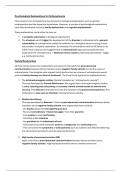
Psychological Explanations for Schizophrenia
Most research into schizophrenia has focused on biological explanations such as genetic
predisposition and the dopamine hypotheses. However, a number of psychological explanations
have been developed including family dysfunction and cognitive explanations.
These explanations could either be seen as:
1. A complete alternative to biological explanations
2. The stressors which trigger the development of the disorder in individuals with a genetic
vulnerability to schizophrenia (whilst the evidence for a biological cause is strong it does
not provide a complete explanation, for example, the concordance rate for MZ twins is not
100%. Most research now suggests that an interactionist approach provides the best
explanation for schizophrenia). = Diathesis-stress model (underlying vulnerability + trigger
e.g. family dysfunction)
Family Dysfunction
All three family dysfunction explanations are based on the belief that poor/abnormal
communication between family members and a negative family climate can be the cause of
schizophrenia. Psychologists who support family dysfunction as a cause of schizophrenia would
promote family therapy as a form of treatment. The three family dysfunction explanations are:
1. The schizophrenogenic mother (literally translates as “schizophrenic causing”)
This was developed by Fromm-Reichmann. She argued that a schizophrenogenic mother
is cold, rejecting and calculating and creates a family climate based on tension and
secrecy. This distrust eventually turns into the symptoms of paranoid schizophrenia. This
explanation is now seen as obsolete / lacking temporal validity.
2. Double-bind theory
This was developed by Bateson. It links to poor/abnormal communication between family
members and a negative family climate as he argues that some children:
- Are fearful about what the right thing to do is
- Receive contradictory “mixed messages” from their parent(s)
- Feel unable to seek clarification
- Inevitably make mistakes
- Are punished by the withdrawal of love
- This leads to the child seeing the world as a dangerous and confusing place.
- This can lead to the symptoms of schizophrenia such as avolition and affective flattening
but also positive symptoms such as paranoid delusions.
3. High levels of expressed emotion (EE)
Again, this links to poor/abnormal communication between family members and a
negative family climate. High expressed emotion refers to families where the
, schizophrenic family member is:
- Verbally criticised and spoken about in a way which shows hostility, anger and rejection
- Where parents are over-involved in the child’s life and show excess concern
- Parents make needless self-sacrifices and put guilt on the child
This suggests that schizophrenic individuals are less able to tolerate intense emotional
stimuli such as hostile comments from other family members and the negative emotional
climate in high EE families causes more stress than schizophrenic individuals (who may
already have impaired coping mechanisms) can cope with. This then triggers a psychotic
episode. Levels of EE (high or low) in the family therefore influences the relapse rates of
schizophrenic individuals (see the PEC points by Linszen and by Noll)
A03 – Family dysfunction
Point Evidence Conclusion
There is evidence to Berger found that This supports double blind /
support double-bind schizophrenics reported a family dysfunction as an
theory from Berger. higher recall of double explanation for
bind statements from their schizophrenia as an
mothers than non- explanation for
schizophrenic recalls. schizophrenia as it
suggests that
schizophrenics are more
likely to come from
families where double
bind statements are
common.
However, there are The study relies on the Given that schizophrenia is
methodological problems memory and subjective a psychotic disorder,
with Berger’s study. perception of individuals patients’ recall may be
with schizophrenia. affected by their
schizophrenia, and this
undermines the validity of
family dysfunction as an
explanation for the
disorder.
Support for family Linszen et al found that This supports family
dysfunction as an individuals returning to dysfunction as an
explanation for families with high EE (e.g. explanation for
schizophrenia comes from after hospitalisation) were schizophrenia as the
Linszen et al’s study of four times more likely to significantly higher
relapse rates. relapse than individuals relapse rates suggests that
Most research into schizophrenia has focused on biological explanations such as genetic
predisposition and the dopamine hypotheses. However, a number of psychological explanations
have been developed including family dysfunction and cognitive explanations.
These explanations could either be seen as:
1. A complete alternative to biological explanations
2. The stressors which trigger the development of the disorder in individuals with a genetic
vulnerability to schizophrenia (whilst the evidence for a biological cause is strong it does
not provide a complete explanation, for example, the concordance rate for MZ twins is not
100%. Most research now suggests that an interactionist approach provides the best
explanation for schizophrenia). = Diathesis-stress model (underlying vulnerability + trigger
e.g. family dysfunction)
Family Dysfunction
All three family dysfunction explanations are based on the belief that poor/abnormal
communication between family members and a negative family climate can be the cause of
schizophrenia. Psychologists who support family dysfunction as a cause of schizophrenia would
promote family therapy as a form of treatment. The three family dysfunction explanations are:
1. The schizophrenogenic mother (literally translates as “schizophrenic causing”)
This was developed by Fromm-Reichmann. She argued that a schizophrenogenic mother
is cold, rejecting and calculating and creates a family climate based on tension and
secrecy. This distrust eventually turns into the symptoms of paranoid schizophrenia. This
explanation is now seen as obsolete / lacking temporal validity.
2. Double-bind theory
This was developed by Bateson. It links to poor/abnormal communication between family
members and a negative family climate as he argues that some children:
- Are fearful about what the right thing to do is
- Receive contradictory “mixed messages” from their parent(s)
- Feel unable to seek clarification
- Inevitably make mistakes
- Are punished by the withdrawal of love
- This leads to the child seeing the world as a dangerous and confusing place.
- This can lead to the symptoms of schizophrenia such as avolition and affective flattening
but also positive symptoms such as paranoid delusions.
3. High levels of expressed emotion (EE)
Again, this links to poor/abnormal communication between family members and a
negative family climate. High expressed emotion refers to families where the
, schizophrenic family member is:
- Verbally criticised and spoken about in a way which shows hostility, anger and rejection
- Where parents are over-involved in the child’s life and show excess concern
- Parents make needless self-sacrifices and put guilt on the child
This suggests that schizophrenic individuals are less able to tolerate intense emotional
stimuli such as hostile comments from other family members and the negative emotional
climate in high EE families causes more stress than schizophrenic individuals (who may
already have impaired coping mechanisms) can cope with. This then triggers a psychotic
episode. Levels of EE (high or low) in the family therefore influences the relapse rates of
schizophrenic individuals (see the PEC points by Linszen and by Noll)
A03 – Family dysfunction
Point Evidence Conclusion
There is evidence to Berger found that This supports double blind /
support double-bind schizophrenics reported a family dysfunction as an
theory from Berger. higher recall of double explanation for
bind statements from their schizophrenia as an
mothers than non- explanation for
schizophrenic recalls. schizophrenia as it
suggests that
schizophrenics are more
likely to come from
families where double
bind statements are
common.
However, there are The study relies on the Given that schizophrenia is
methodological problems memory and subjective a psychotic disorder,
with Berger’s study. perception of individuals patients’ recall may be
with schizophrenia. affected by their
schizophrenia, and this
undermines the validity of
family dysfunction as an
explanation for the
disorder.
Support for family Linszen et al found that This supports family
dysfunction as an individuals returning to dysfunction as an
explanation for families with high EE (e.g. explanation for
schizophrenia comes from after hospitalisation) were schizophrenia as the
Linszen et al’s study of four times more likely to significantly higher
relapse rates. relapse than individuals relapse rates suggests that