The Use of Psychological Formulation
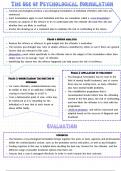
Forensic psychologists produce a psychological formulation of individual offenders after they are
sentenced.
Such formulations apply to each individual and thus are sometimes called a ‘case formulation’.
Involves an analysis of the offence to try to understand why the offender did what they did and
whether they are likely to reoffend.
Involve the drawing up of a treatment plan to minimise the risk of reoffending in the future.
Phase 1: offence analysis:
Analyse the offence or offences to gain insight into the offender’s motivation.
The forensic psychologist may refer to similar offences committed by others to see if there are general
factors that are relevant in this case.
Idiographic - must relate specifically to the offender who is the subject of the formulation rather than
simply look for an average ‘type’ of offender.
Identifying the reason why the offence happened can help assess the risk of reoffence.
Phase 3: Application to treatment:
Psychological formulation has its roots in the
Phase 2: Understanding the function of
field of mental health treatment, and of course
offending:
there may be overlap here, as many offenders
For some offenders, criminal behaviour may
also have mental health problems.
be similar to that of an addiction, fulfilling a
The rehabilitative programme that is
craving or need (Hodge et al 2011).
recommended should reflect how the offending
From a behaviourist point of view, crime may
started in the first place, the risk of reoffending,
be reinforced as it is rewarding for the
and how likely the offender is to stick with the
individual or it may hint at early issues or
programme.
abuse within family.
‘Work in progress’ and will be reassessed and
adapted based on the success of diagnosis and
treatment.
Evaluation
Strength:
The business of psychological formulation brings together the work of many agencies and professionals
within the criminal justice system, such as the probation service and police, as well as psychologists.
Pooling expertise in this way is helpful when deciding the best way forward for the offender, and the
different range of possible treatment options that there are.
Ensures that a case is managed effectively in order to work towards the best outcome.
Forensic psychologists produce a psychological formulation of individual offenders after they are
sentenced.
Such formulations apply to each individual and thus are sometimes called a ‘case formulation’.
Involves an analysis of the offence to try to understand why the offender did what they did and
whether they are likely to reoffend.
Involve the drawing up of a treatment plan to minimise the risk of reoffending in the future.
Phase 1: offence analysis:
Analyse the offence or offences to gain insight into the offender’s motivation.
The forensic psychologist may refer to similar offences committed by others to see if there are general
factors that are relevant in this case.
Idiographic - must relate specifically to the offender who is the subject of the formulation rather than
simply look for an average ‘type’ of offender.
Identifying the reason why the offence happened can help assess the risk of reoffence.
Phase 3: Application to treatment:
Psychological formulation has its roots in the
Phase 2: Understanding the function of
field of mental health treatment, and of course
offending:
there may be overlap here, as many offenders
For some offenders, criminal behaviour may
also have mental health problems.
be similar to that of an addiction, fulfilling a
The rehabilitative programme that is
craving or need (Hodge et al 2011).
recommended should reflect how the offending
From a behaviourist point of view, crime may
started in the first place, the risk of reoffending,
be reinforced as it is rewarding for the
and how likely the offender is to stick with the
individual or it may hint at early issues or
programme.
abuse within family.
‘Work in progress’ and will be reassessed and
adapted based on the success of diagnosis and
treatment.
Evaluation
Strength:
The business of psychological formulation brings together the work of many agencies and professionals
within the criminal justice system, such as the probation service and police, as well as psychologists.
Pooling expertise in this way is helpful when deciding the best way forward for the offender, and the
different range of possible treatment options that there are.
Ensures that a case is managed effectively in order to work towards the best outcome.