MNG2602 – Activities
Learning Unit 1 – Questions
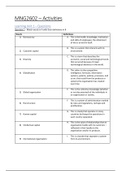
Question 1 – Match words in A with their definitions in B
Words Definitions
1) Bureaucracy A. This is the health, knowledge, motivation,
and skills of employees; the attainment
of this is an end in itself.
B. This is a system that interacts with its
2) Customer capital environment
C. This is a term that describes the
3) Diversity economic, social and technological trends
that occurred because of major
technological advances in the world.
D. This refers to the competitive
4) Globalisation intelligence, formulas, information
systems, patents, policies, processes, and
so on, that result from the products or
systems the organisation has created
over time.
E. This is the collective knowledge (whether
5) Global organisation or not documented) of the individuals in
an organisation or society.
F. This is a system of administration marked
6) Flat structure by rules and regulations, red tape and
proliferation.
G. This is a body that operates in many
7) Human capital countries but keeps the operations in
each country separated.
H. This is the value of relationships that an
8) Intellectual capital organisation builds with its customers –
reflected in their loyalty to the
organisation and/or its products.
I. This is a border that separates a system
9) International organisation from its environment.
, J. This is an organisational structure that
10) Information technology revolution has fewer levels of management.
K. This is a set of interrelated parts designed
11) Open system to achieve a singular purpose to stay in
balance.
12) Structural capital L. This is the state of being different
M. This occurs when many elements or
13) Synergy subsystems work together to create an
outcome that is of more value than the
total of what the individual input is.
N. This is an organisation that operates in
14) System many countries as an integrated unit.
O. This is the economic and social
15) System boundary interaction process whereby different
countries work together to create a
global economy
Question 2
1. List the six major forces for change in organisations
2. Give 4 strengths of bureaucracy
3. Give 4 weaknesses of bureaucracy
4. Name 2 factors that bring change to our lives
5. Define systems theory
6. What are the 5 characteristics that organisations should subscribe to, according to Weber’s
model
7. Give 5 features of the “new” organisation
Learning Unit 1 – Answers
Question 1
1. F
2. H
3. L
4. O
5. N
6. J
7. A
8. E
9. G
10. C
Learning Unit 1 – Questions
Question 1 – Match words in A with their definitions in B
Words Definitions
1) Bureaucracy A. This is the health, knowledge, motivation,
and skills of employees; the attainment
of this is an end in itself.
B. This is a system that interacts with its
2) Customer capital environment
C. This is a term that describes the
3) Diversity economic, social and technological trends
that occurred because of major
technological advances in the world.
D. This refers to the competitive
4) Globalisation intelligence, formulas, information
systems, patents, policies, processes, and
so on, that result from the products or
systems the organisation has created
over time.
E. This is the collective knowledge (whether
5) Global organisation or not documented) of the individuals in
an organisation or society.
F. This is a system of administration marked
6) Flat structure by rules and regulations, red tape and
proliferation.
G. This is a body that operates in many
7) Human capital countries but keeps the operations in
each country separated.
H. This is the value of relationships that an
8) Intellectual capital organisation builds with its customers –
reflected in their loyalty to the
organisation and/or its products.
I. This is a border that separates a system
9) International organisation from its environment.
, J. This is an organisational structure that
10) Information technology revolution has fewer levels of management.
K. This is a set of interrelated parts designed
11) Open system to achieve a singular purpose to stay in
balance.
12) Structural capital L. This is the state of being different
M. This occurs when many elements or
13) Synergy subsystems work together to create an
outcome that is of more value than the
total of what the individual input is.
N. This is an organisation that operates in
14) System many countries as an integrated unit.
O. This is the economic and social
15) System boundary interaction process whereby different
countries work together to create a
global economy
Question 2
1. List the six major forces for change in organisations
2. Give 4 strengths of bureaucracy
3. Give 4 weaknesses of bureaucracy
4. Name 2 factors that bring change to our lives
5. Define systems theory
6. What are the 5 characteristics that organisations should subscribe to, according to Weber’s
model
7. Give 5 features of the “new” organisation
Learning Unit 1 – Answers
Question 1
1. F
2. H
3. L
4. O
5. N
6. J
7. A
8. E
9. G
10. C