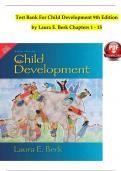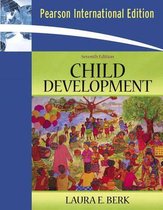
Test Bank For Child Development 9th Edition by
Laura E. Berk Chapters 1 - 15
,Test Bank For Child Development 9th Edition by Laura E. Berk
LKJ LKJ LKJ LKJ LKJ LKJ LKJ LKJ LKJ LKJ
TableofContentsLKJ LKJ
Part I: Theory and Research in Child Development
LKJ LKJ LKJ LKJ LKJ LKJ LKJ
Chapter 1History, Theory,andAppliedDirections
LKJ LKJ LKJ LKJ LKJ KLJ
Chapter 2ResearchStrategies LKJ LKJ LKJ
Part II: Foundationsof Development
LKJ LKJ KJ
L LKJ
Chapter 3BiologicalFoundations, PrenatalDevelopment, andBirth
LKJ LKJ LKJ LKJ LKJ LKJ LKJ
Chapter 4Infancy:Early Learning,MotorSkills, andPerceptualCapacities
LKJ LKJ LKJ LKJ LKJ LKJ LKJ LKJ LKJ
Chapter 5Physical Growth LKJ LKJ LKJ
PartIII: Cognitive and Language Development
KJ
L LKJ LKJ LKJ LKJ
Chapter6CognitiveDevelopment: Piagetian,CoreKnowledge,andVygotskian
LKJ LKJ LKJ LKJ LKJ LKJ LKJ LKJ
Perspectives
Chapter7CognitiveDevelopment:AnInformation-ProcessingPerspective
LKJ LKJ LKJ LKJ LKJ LKJ
Chapter 8 Intelligence LKJ LKJ
Chapter 9LanguageDevelopment LKJ LKJ LKJ
PartIV: Personality and Social Development
J
K
L LKJ LKJ LKJ LKJ
Chapter 10 EmotionalDevelopment LKJ LKJ LKJ
Chapter 11Self andSocial Understanding LKJ LKJ LKJ LKJ LKJ
Chapter 12MoralDevelopment LKJ LKJ LKJ
Chapter 13 Development ofSex Differences andGender Roles
LKJ LKJ LKJ LKJ LKJ LKJ LKJ LKJ
Part V: Contextsfor Development
LKJ LKJ J
K
L LKJ
Chapter 14 TheFamily LKJ LKJ LKJ
Chapter 15 Peers,Media, and Schooling LKJ LKJ LKJ LKJ LKJ
,CHAPTER 1 LKJ
HISTORY,THEORY,ANDAPPLIEDDIRECTIONS LKJ LKJ LKJ LKJ LKJ
MULTIPLE CHOICE LKJ
1) The field of child development
LKJ LKJ LKJ LKJ
A) is devoted to understanding human constancyand change throughout the lifespan.
LKJ LKJ LKJ LKJ LKJ LKJ LKJ LKJ LKJ LKJ
B) ispart of alarger, interdisciplinaryfield known as developmental science.
LKJ LKJ LKJ LKJ LKJ LKJ LKJ LKJ LKJ LKJ
C) focusesprimarilyon children’sphysical and emotional development. LKJ LKJ LKJ LKJ LKJ LKJ LKJ
D) focusesprimarilyoninfants’andchildren’ssocialandcognitivedevelopment. AN LKJ LKJ LKJ LKJ LKJ LKJ LKJ LKJ LKJ LKJ
SWER: B LKJ
PageRef: 4 LKJ LKJ
2) The common goal of investigators who study child development is to
LKJ LKJ LKJ LKJ LKJ LKJ LKJ LKJ LKJ LKJ
A) understand howphysical growth and nutrition contribute to health and well-being throughout the lifespan. LKJ LKJ LKJ LKJ LKJ LKJ LKJ LKJ LKJ LKJ LKJ LKJ LKJ
B) understand more about personalityand social development. LKJ LKJ LKJ LKJ LKJ LKJ
C) analyzechild-rearingpracticesandexperiencesthatpromotechildren’s well-being. LKJ LKJ LKJ LKJ LKJ LKJ LKJ LKJ
D) describe andidentifythosefactorsthat influencetheconsistenciesand changes in youngpeople duringthe first LKJ LKJ LKJ LKJ LKJ LKJ LKJ LKJ LKJ LKJ LKJ LKJ LKJ LKJ LKJ LKJ LK
two decades of life.
J LKJ LKJ LKJ
ANSWER: D LKJ L
KJ
PageRef:4 LKJ LKJ
3) Which of thefollowing factors contributed to the study of child development in the twentieth century?
LKJ LKJ LKJ LKJ LKJ LKJ LKJ LKJ LKJ LKJ LKJ LKJ LKJ LKJ LKJ
A) Thebeginning ofpublic education led to a demand for knowledge about what andhow to teachchildren of differ
LKJ LKJ LKJ LKJ LKJ LKJ LKJ LKJ LKJ LKJ LKJ LKJ LKJ LKJ LKJ LKJ LKJ LKJ LKJ
ent ages.
LKJ
B) Parents were havingmore children andresearchers became interested intheeffects offamilysize on chil
LKJ LKJ LKJ LKJ LKJ LKJ LKJ LKJ LKJ LKJ LKJ LKJ LKJ LKJ LKJ LKJ
dren’s well-being. LKJ
C) Pediatricianswerepressuredbyinsurance companiestoimprovechildren’shealth,whichinspirednutritional res LKJ LKJ LKJ LKJ LKJ LKJ LKJ LKJ LKJ LKJ LKJ LKJ LKJ
earch.
D) High ratesofchildhooddepressioninspirednewareas ofresearchintochildren’sanxietiesandbehavior prob
LKJ LKJ LKJ LKJ LKJ LKJ LKJ LKJ LKJ LKJ LKJ LKJ LKJ LKJ LKJ
lems.
ANSWER: A LKJ LK
J
PageRef:4 LKJ LKJ
, 4) Which of thefollowing statements is true about the field of child development?
LKJ LKJ LKJ LKJ LKJ LKJ LKJ LKJ LKJ LKJ LKJ LKJ
A) Scientific curiosityis the prevailing factor that led to the studyof children, and current researchers primarily answ
LKJ LKJ LKJ LKJ LKJ LKJ LKJ LKJ LKJ LKJ LKJ LKJ LKJ LKJ LKJ LKJ LKJ
er questions of scientific interest.
LKJ LKJ LKJ LKJ
B) Thefield ofchilddevelopment is considered interdisciplinarybecauseit hasgrown through thecombined effo
LKJ LKJ LKJ LKJ LKJ LKJ LKJ LKJ LKJ LKJ LKJ LKJ LKJ LKJ LKJ
rts of people from many fields.
LKJ LKJ LKJ LKJ LKJ
C) Child development istheareaof studydevoted to understandingconstancyand change throughout the life
LKJ LKJ LKJ LKJ LKJ LKJ LKJ LKJ LKJ LKJ LKJ LKJ LKJ LKJ LKJ
span.
D) Most ofwhat weknowaboutchilddevelopment comesfrom psychologistsandmedicalprofessionals. ANS
LKJ LKJ LKJ LKJ LKJ LKJ LKJ LKJ LKJ LKJ LKJ LKJ LKJ LKJ
WER: B LKJ
PageRef: 4 LKJ LKJ
5) Development is often divided into which of thefollowing threebroad domains? LKJ LKJ LKJ LKJ LKJ LKJ LKJ LKJ LKJ LKJ LKJ
A) infancy,childhood,andadolescence LKJ LKJ LKJ
B) social, cultural, and historical LKJ LKJ LKJ
C) physical, cognitive, and emotional and social LKJ LKJ LKJ LKJ LKJ
D) biological,social,andintellectual A LKJ LKJ LKJ LKJ
NSWER: C LKJ
PageRef: 4 LKJ LKJ
Laura E. Berk Chapters 1 - 15
,Test Bank For Child Development 9th Edition by Laura E. Berk
LKJ LKJ LKJ LKJ LKJ LKJ LKJ LKJ LKJ LKJ
TableofContentsLKJ LKJ
Part I: Theory and Research in Child Development
LKJ LKJ LKJ LKJ LKJ LKJ LKJ
Chapter 1History, Theory,andAppliedDirections
LKJ LKJ LKJ LKJ LKJ KLJ
Chapter 2ResearchStrategies LKJ LKJ LKJ
Part II: Foundationsof Development
LKJ LKJ KJ
L LKJ
Chapter 3BiologicalFoundations, PrenatalDevelopment, andBirth
LKJ LKJ LKJ LKJ LKJ LKJ LKJ
Chapter 4Infancy:Early Learning,MotorSkills, andPerceptualCapacities
LKJ LKJ LKJ LKJ LKJ LKJ LKJ LKJ LKJ
Chapter 5Physical Growth LKJ LKJ LKJ
PartIII: Cognitive and Language Development
KJ
L LKJ LKJ LKJ LKJ
Chapter6CognitiveDevelopment: Piagetian,CoreKnowledge,andVygotskian
LKJ LKJ LKJ LKJ LKJ LKJ LKJ LKJ
Perspectives
Chapter7CognitiveDevelopment:AnInformation-ProcessingPerspective
LKJ LKJ LKJ LKJ LKJ LKJ
Chapter 8 Intelligence LKJ LKJ
Chapter 9LanguageDevelopment LKJ LKJ LKJ
PartIV: Personality and Social Development
J
K
L LKJ LKJ LKJ LKJ
Chapter 10 EmotionalDevelopment LKJ LKJ LKJ
Chapter 11Self andSocial Understanding LKJ LKJ LKJ LKJ LKJ
Chapter 12MoralDevelopment LKJ LKJ LKJ
Chapter 13 Development ofSex Differences andGender Roles
LKJ LKJ LKJ LKJ LKJ LKJ LKJ LKJ
Part V: Contextsfor Development
LKJ LKJ J
K
L LKJ
Chapter 14 TheFamily LKJ LKJ LKJ
Chapter 15 Peers,Media, and Schooling LKJ LKJ LKJ LKJ LKJ
,CHAPTER 1 LKJ
HISTORY,THEORY,ANDAPPLIEDDIRECTIONS LKJ LKJ LKJ LKJ LKJ
MULTIPLE CHOICE LKJ
1) The field of child development
LKJ LKJ LKJ LKJ
A) is devoted to understanding human constancyand change throughout the lifespan.
LKJ LKJ LKJ LKJ LKJ LKJ LKJ LKJ LKJ LKJ
B) ispart of alarger, interdisciplinaryfield known as developmental science.
LKJ LKJ LKJ LKJ LKJ LKJ LKJ LKJ LKJ LKJ
C) focusesprimarilyon children’sphysical and emotional development. LKJ LKJ LKJ LKJ LKJ LKJ LKJ
D) focusesprimarilyoninfants’andchildren’ssocialandcognitivedevelopment. AN LKJ LKJ LKJ LKJ LKJ LKJ LKJ LKJ LKJ LKJ
SWER: B LKJ
PageRef: 4 LKJ LKJ
2) The common goal of investigators who study child development is to
LKJ LKJ LKJ LKJ LKJ LKJ LKJ LKJ LKJ LKJ
A) understand howphysical growth and nutrition contribute to health and well-being throughout the lifespan. LKJ LKJ LKJ LKJ LKJ LKJ LKJ LKJ LKJ LKJ LKJ LKJ LKJ
B) understand more about personalityand social development. LKJ LKJ LKJ LKJ LKJ LKJ
C) analyzechild-rearingpracticesandexperiencesthatpromotechildren’s well-being. LKJ LKJ LKJ LKJ LKJ LKJ LKJ LKJ
D) describe andidentifythosefactorsthat influencetheconsistenciesand changes in youngpeople duringthe first LKJ LKJ LKJ LKJ LKJ LKJ LKJ LKJ LKJ LKJ LKJ LKJ LKJ LKJ LKJ LKJ LK
two decades of life.
J LKJ LKJ LKJ
ANSWER: D LKJ L
KJ
PageRef:4 LKJ LKJ
3) Which of thefollowing factors contributed to the study of child development in the twentieth century?
LKJ LKJ LKJ LKJ LKJ LKJ LKJ LKJ LKJ LKJ LKJ LKJ LKJ LKJ LKJ
A) Thebeginning ofpublic education led to a demand for knowledge about what andhow to teachchildren of differ
LKJ LKJ LKJ LKJ LKJ LKJ LKJ LKJ LKJ LKJ LKJ LKJ LKJ LKJ LKJ LKJ LKJ LKJ LKJ
ent ages.
LKJ
B) Parents were havingmore children andresearchers became interested intheeffects offamilysize on chil
LKJ LKJ LKJ LKJ LKJ LKJ LKJ LKJ LKJ LKJ LKJ LKJ LKJ LKJ LKJ LKJ
dren’s well-being. LKJ
C) Pediatricianswerepressuredbyinsurance companiestoimprovechildren’shealth,whichinspirednutritional res LKJ LKJ LKJ LKJ LKJ LKJ LKJ LKJ LKJ LKJ LKJ LKJ LKJ
earch.
D) High ratesofchildhooddepressioninspirednewareas ofresearchintochildren’sanxietiesandbehavior prob
LKJ LKJ LKJ LKJ LKJ LKJ LKJ LKJ LKJ LKJ LKJ LKJ LKJ LKJ LKJ
lems.
ANSWER: A LKJ LK
J
PageRef:4 LKJ LKJ
, 4) Which of thefollowing statements is true about the field of child development?
LKJ LKJ LKJ LKJ LKJ LKJ LKJ LKJ LKJ LKJ LKJ LKJ
A) Scientific curiosityis the prevailing factor that led to the studyof children, and current researchers primarily answ
LKJ LKJ LKJ LKJ LKJ LKJ LKJ LKJ LKJ LKJ LKJ LKJ LKJ LKJ LKJ LKJ LKJ
er questions of scientific interest.
LKJ LKJ LKJ LKJ
B) Thefield ofchilddevelopment is considered interdisciplinarybecauseit hasgrown through thecombined effo
LKJ LKJ LKJ LKJ LKJ LKJ LKJ LKJ LKJ LKJ LKJ LKJ LKJ LKJ LKJ
rts of people from many fields.
LKJ LKJ LKJ LKJ LKJ
C) Child development istheareaof studydevoted to understandingconstancyand change throughout the life
LKJ LKJ LKJ LKJ LKJ LKJ LKJ LKJ LKJ LKJ LKJ LKJ LKJ LKJ LKJ
span.
D) Most ofwhat weknowaboutchilddevelopment comesfrom psychologistsandmedicalprofessionals. ANS
LKJ LKJ LKJ LKJ LKJ LKJ LKJ LKJ LKJ LKJ LKJ LKJ LKJ LKJ
WER: B LKJ
PageRef: 4 LKJ LKJ
5) Development is often divided into which of thefollowing threebroad domains? LKJ LKJ LKJ LKJ LKJ LKJ LKJ LKJ LKJ LKJ LKJ
A) infancy,childhood,andadolescence LKJ LKJ LKJ
B) social, cultural, and historical LKJ LKJ LKJ
C) physical, cognitive, and emotional and social LKJ LKJ LKJ LKJ LKJ
D) biological,social,andintellectual A LKJ LKJ LKJ LKJ
NSWER: C LKJ
PageRef: 4 LKJ LKJ