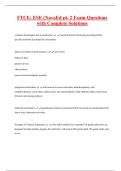
FTCE: ESE (NavaEd pt. 2 Exam Questions
with Complete Solutions
evidence-based approach to instruction research based; instruction developed from
specific methods developed by researchers
types of evidence-based practices test scores
behavior data
parent surveys
observations
peer-reviewed academic journals
integrated curriculum also known as cross-curricular, interdisciplinary, and
multidisciplinary curriculum; subject areas are intermingled to help students make connections
between and among subjects
informal assessment spontaneous forms of assessment that can easily be incorporated into
day-to-day classroom activities
Example of Vertical Alignment The skills outlined in a standard 7th grade math class are
designed to help students prepare for what they will need in 8th grade math, 9th grade math, and
so on.
, Example of Horizontal Alignment The 9th grade social studies teachers plan with the 9th
grade English teachers to design a common lesson focusing on the Civil Rights Movement.
Integrating History and English. The relationship between the two content areas focus on
common content, goals, and standards.
Classroom Environment Seat students in area free of distraction
Eliminate unnecessary materials from work desk
Use checklists to keep students organized
Allow student frequent breaks
Time management and Transition Place intermittent breaks between work periods
Provide additional time to complete assignments
Use multiple reminders several minutes apart before changing from one activity to the
Provide a specific place for turning in assignments
Presentation of materials Modify expectations based on student needs
with Complete Solutions
evidence-based approach to instruction research based; instruction developed from
specific methods developed by researchers
types of evidence-based practices test scores
behavior data
parent surveys
observations
peer-reviewed academic journals
integrated curriculum also known as cross-curricular, interdisciplinary, and
multidisciplinary curriculum; subject areas are intermingled to help students make connections
between and among subjects
informal assessment spontaneous forms of assessment that can easily be incorporated into
day-to-day classroom activities
Example of Vertical Alignment The skills outlined in a standard 7th grade math class are
designed to help students prepare for what they will need in 8th grade math, 9th grade math, and
so on.
, Example of Horizontal Alignment The 9th grade social studies teachers plan with the 9th
grade English teachers to design a common lesson focusing on the Civil Rights Movement.
Integrating History and English. The relationship between the two content areas focus on
common content, goals, and standards.
Classroom Environment Seat students in area free of distraction
Eliminate unnecessary materials from work desk
Use checklists to keep students organized
Allow student frequent breaks
Time management and Transition Place intermittent breaks between work periods
Provide additional time to complete assignments
Use multiple reminders several minutes apart before changing from one activity to the
Provide a specific place for turning in assignments
Presentation of materials Modify expectations based on student needs