DAANCE Module 4 Actual Exam Questions And Answers
Verified 100% Correct
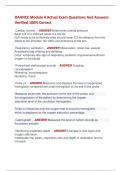
Cardiac monitor - ANSWER Determines arterial pressure
Adult cuff of a child will result in a low bp
Cuff needs to be sufficiently wide-should cover 2/3 the distance from the
elbow to the shoulder. 80-100% circumference of the arm
Respiratory ventilation - ANSWER Observation: chest rise- easiest
Anesthesia bag-inflating and deflating
Color- extremely late sign of respiratory problems (hypoxemainsufficient
oxygen in the blood)
Pretracheal stethoscope sounds - ANSWER Gurgling:
Laryngospasm
Wheezing: bronchospasm
Rumbling: Vomit
Pulse ox - ANSWER Measures and displays the level of oxygenated
hemoglobin compared with total hemoglobin at the site of the probe
Measures pulse rate, the perfusion at the site of the probe, and
the oxygenation of the patient by determining the oxygen
saturation level of the circulation hemoglobin.
Pulse ox measures only the oxygen that is bound to hemoglobin
which is displayed as the oxygen saturation percentage.
Capnograph - ANSWER Measures the level of carbon dioxide as
the patient exhales
Monitoring anesthetic depth - ANSWER Changes in vital signs and
oxygen saturation.
Inadequate: bp, pulse, respiratory rate and depth of respiration tend to
increase.
, Too deep: vital signs and O2 decrease eyelid reflex-reflex is
lost when pt is heavily sedated.
Stroking the eyelashes will elicit a closing movement of the eyelid as the
patient begins to awaken.
How often should the function of an anesthesia machine be
checked? - ANSWER Daily
in the US, the color for a Nitrous oxide cylinder is? - ANSWER
Blue
Blood pressure levels will most likely be falsely LOW when using
- ANSWER an adult cuff on a small child
A monitoring device that gives information about both circulation
and ventilation is the? - ANSWER Capnograph
What are the indicators of partial respiratory obstruction in a
sedated patient? - ANSWER Gurgling, snoring, high-pitched
crowing or wheezing noted while monitoring with a precordial
stethoscope
Ventilations can be monitored continuously by - ANSWER
Auscultation in the precordial or pretracheal region
observation of the rebreathing bag
A rocking or "see-sawing" rhythm of the chest and abdomen may
indicate - ANSWER an airway obstruction
An increased heart rate may be cause by - ANSWER painful
stimuli
Capnography measures - ANSWER level of CO2 expired in
each breath
Verified 100% Correct
Cardiac monitor - ANSWER Determines arterial pressure
Adult cuff of a child will result in a low bp
Cuff needs to be sufficiently wide-should cover 2/3 the distance from the
elbow to the shoulder. 80-100% circumference of the arm
Respiratory ventilation - ANSWER Observation: chest rise- easiest
Anesthesia bag-inflating and deflating
Color- extremely late sign of respiratory problems (hypoxemainsufficient
oxygen in the blood)
Pretracheal stethoscope sounds - ANSWER Gurgling:
Laryngospasm
Wheezing: bronchospasm
Rumbling: Vomit
Pulse ox - ANSWER Measures and displays the level of oxygenated
hemoglobin compared with total hemoglobin at the site of the probe
Measures pulse rate, the perfusion at the site of the probe, and
the oxygenation of the patient by determining the oxygen
saturation level of the circulation hemoglobin.
Pulse ox measures only the oxygen that is bound to hemoglobin
which is displayed as the oxygen saturation percentage.
Capnograph - ANSWER Measures the level of carbon dioxide as
the patient exhales
Monitoring anesthetic depth - ANSWER Changes in vital signs and
oxygen saturation.
Inadequate: bp, pulse, respiratory rate and depth of respiration tend to
increase.
, Too deep: vital signs and O2 decrease eyelid reflex-reflex is
lost when pt is heavily sedated.
Stroking the eyelashes will elicit a closing movement of the eyelid as the
patient begins to awaken.
How often should the function of an anesthesia machine be
checked? - ANSWER Daily
in the US, the color for a Nitrous oxide cylinder is? - ANSWER
Blue
Blood pressure levels will most likely be falsely LOW when using
- ANSWER an adult cuff on a small child
A monitoring device that gives information about both circulation
and ventilation is the? - ANSWER Capnograph
What are the indicators of partial respiratory obstruction in a
sedated patient? - ANSWER Gurgling, snoring, high-pitched
crowing or wheezing noted while monitoring with a precordial
stethoscope
Ventilations can be monitored continuously by - ANSWER
Auscultation in the precordial or pretracheal region
observation of the rebreathing bag
A rocking or "see-sawing" rhythm of the chest and abdomen may
indicate - ANSWER an airway obstruction
An increased heart rate may be cause by - ANSWER painful
stimuli
Capnography measures - ANSWER level of CO2 expired in
each breath