“The Embassy of Cambodia“ by Zadie Smith, published in 2013
Contents
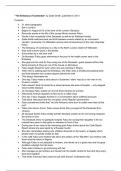
• 21 short paragraphs
• Set in London
• Begins in August 2012 at the time of the London Olympics
• Recounts events in the life of the young African woman Fatou
• Works in the household of the Derawals (a well-to-do Pakistani family)
• Zadie Smith switches back and forth between events related by an omniscient
narrator, comments of a Willesden woman and reminiscences of the main character
Fatou
• The Embassy of Cambodia is a villa in the North London district of Willesden
• Was built at some point in the thirties
• Surrounded by a red brick wall
• On Mondays Fatou goes swimming in the pool in the health center next to the
Embassy
• She gets into the club for free using one of the Derawals´ guest passes without the
family knowing it (they are out of the house on Mondays)
• Fatou taught herself to swim when she was working in Ghana
• When she is walking past the Embassy, she often sees a shuttlecock passing back
and forth between two unseen players behind the wall
• This always fascinates her
• One day, Fatou reads a story about a Sudanese “slave” kept by a rich man in his
house in London
• Fatou doesn’t think of herself as a slave because she was not beaten – only slapped
twice by Mrs Derawal
• On Sundays Fatou meets her church friend Andrew to worship
• Afterwards Andrew regularly invites her to a coffee shop
• One day, Fatou engages Andrew in a conversation about suffering and pain
• Talk about Holocaust and the corruption of the Nigerian government
• Fatou sometimes thinks that “we (the Africans) were born to suffer more than all the
rest”
• When she returns home, Fatou saves Asma (the youngest of the Derawals) from
choking
• Mr Derawal thanks Fatou briefly but Mrs Derawal scolds her for not having prepared
the dinner in time
• The Derawals show no gratitude towards Fatou for saving their daughter´s life but
instead they seem to feel guilty or awkward in front of her
• During one of her visits to the swimming pool Fatou thinks about the Carib Beach
Resort where she was raped by a Russian tourist
• She also remembers seeing nine children drowned on the beach, a tragedy which
people seem to quietly accept as fate
• In the café Fatou and Andrew talk about the politics of the “Big Men” (as Andrew calls
them) and the rulers in Nigeria
• Although Fatou is not attracted to Andrew, she thinks he is a good man and his good
qualities outweigh his bad ones.
• Fatou asks Andrew to go swimming with her
• She manages to get Andrew and herself into the health centre for free and they enjoy
their time together
• That same evening Fatou loses her job (she doesn’t understand why)
Contents
• 21 short paragraphs
• Set in London
• Begins in August 2012 at the time of the London Olympics
• Recounts events in the life of the young African woman Fatou
• Works in the household of the Derawals (a well-to-do Pakistani family)
• Zadie Smith switches back and forth between events related by an omniscient
narrator, comments of a Willesden woman and reminiscences of the main character
Fatou
• The Embassy of Cambodia is a villa in the North London district of Willesden
• Was built at some point in the thirties
• Surrounded by a red brick wall
• On Mondays Fatou goes swimming in the pool in the health center next to the
Embassy
• She gets into the club for free using one of the Derawals´ guest passes without the
family knowing it (they are out of the house on Mondays)
• Fatou taught herself to swim when she was working in Ghana
• When she is walking past the Embassy, she often sees a shuttlecock passing back
and forth between two unseen players behind the wall
• This always fascinates her
• One day, Fatou reads a story about a Sudanese “slave” kept by a rich man in his
house in London
• Fatou doesn’t think of herself as a slave because she was not beaten – only slapped
twice by Mrs Derawal
• On Sundays Fatou meets her church friend Andrew to worship
• Afterwards Andrew regularly invites her to a coffee shop
• One day, Fatou engages Andrew in a conversation about suffering and pain
• Talk about Holocaust and the corruption of the Nigerian government
• Fatou sometimes thinks that “we (the Africans) were born to suffer more than all the
rest”
• When she returns home, Fatou saves Asma (the youngest of the Derawals) from
choking
• Mr Derawal thanks Fatou briefly but Mrs Derawal scolds her for not having prepared
the dinner in time
• The Derawals show no gratitude towards Fatou for saving their daughter´s life but
instead they seem to feel guilty or awkward in front of her
• During one of her visits to the swimming pool Fatou thinks about the Carib Beach
Resort where she was raped by a Russian tourist
• She also remembers seeing nine children drowned on the beach, a tragedy which
people seem to quietly accept as fate
• In the café Fatou and Andrew talk about the politics of the “Big Men” (as Andrew calls
them) and the rulers in Nigeria
• Although Fatou is not attracted to Andrew, she thinks he is a good man and his good
qualities outweigh his bad ones.
• Fatou asks Andrew to go swimming with her
• She manages to get Andrew and herself into the health centre for free and they enjoy
their time together
• That same evening Fatou loses her job (she doesn’t understand why)