Rising Action
Iago tells the audience of his scheme, arranges for Cassio to lose his position as lieutenant,
and gradually insinuates to Othello that Desdemona is unfaithful.
Climax
The climax occurs at the end of Act III, scene iii, when Othello kneels with Iago and vows not
to change course until he has archieved bloody revenge.
Falling Action
Iago plants the handkerchief in Cassio´s room and later arranges a conversation with Cassio,
which Othello watches and sees as “proof“ that Cassio and Desdemona have slept together.
Iago unsuccessfully attempts to kill Cassio, and Othello smothers Desdemona with a pillow.
Emilia exposes iago´s deceptions, Othello kills himself, and Iago is taken away to be
tortured.
Foreshadowing
Othello and Desdemona´s speeches about love foreshadow the disaster to come; Othello´s
description of his past and his wooing of Desdemona foreshadow his suicide speech;
Desdemona´s “Willow“ song and remarks to Emilia in Act IV, scene iii, foreshadow her death.
Jealousy
• Jealousy motivates the central conflicts of Othello: Iago´s resentment of Othello, and
Othello´s suspicion of Desdemona
• Iago is immediately revealed as a jealous character: in the first scene, he complains
that Cassio has been promoted instead of him even though “I am worth no worse a
place“ (I, i).
• He also later implies that his hatred of Othello is rooted in jealousy, since there are
rumors of Othello having slept with Emilia. As Iago explanis, even the hint of this
possibility enrages him.
• It seems that Iago´s jealousy is so intense that he does not need proof of this infidelity
before punishing Othello for it. Iago decides to seek revenge by using jealousy as a
weapon against Othello.
• Iago knows, perhaps from his own experience, that jealousy is a form of
psychological torture which will constantly torment Othello. By making Othello feel the
torments of jealousy towards Desdemona and her supposed lover, Iago causes
Othello to suffer as much as he does.
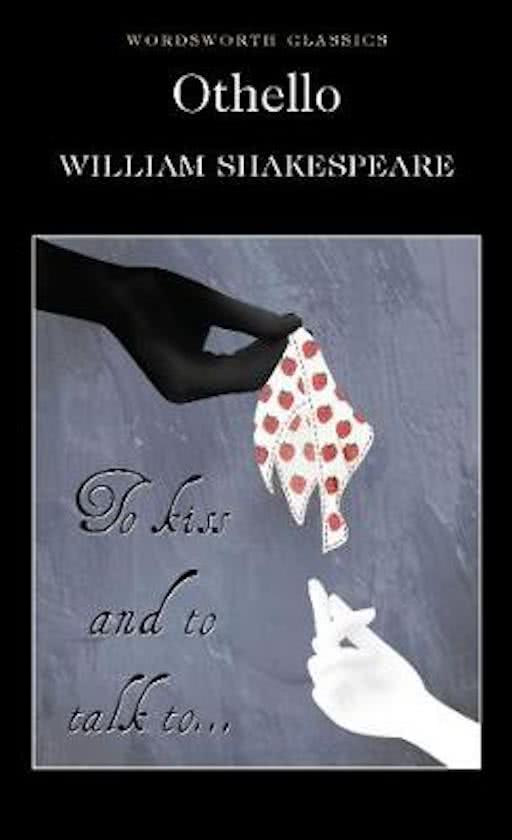
Symbol: The Handkerchief
➢ It symbolizes different things to different characters
➢ Since the handkerchief was the first gift Desdemona received from Othello, she
keeps it about her constantly as a symbol of Othello´s love
➢ Iago manipulates the handkerchief so that Othello comes to see it as a symbol of
Desdemona herself --- her faith and chastity. By taking possession o fit, he is able to
convert it into evidence of her infidelity. But the handkerchief´s importance to Iago
and Desdemona derives from ist importance to Othello himself.
➢ Othello claims that his mother used it to keep his father faithful to her, so, to him, the
handkerchief represents marital fidelity. The pattern of strawberries (dyed with virgins´
blood) on a white background strongly suggests the bloodstains left on the sheets on
a virgin´s wedding night, so the handkerchief implicitly suggests a guarantee of
virginity as well as fidelity.
Iago tells the audience of his scheme, arranges for Cassio to lose his position as lieutenant,
and gradually insinuates to Othello that Desdemona is unfaithful.
Climax
The climax occurs at the end of Act III, scene iii, when Othello kneels with Iago and vows not
to change course until he has archieved bloody revenge.
Falling Action
Iago plants the handkerchief in Cassio´s room and later arranges a conversation with Cassio,
which Othello watches and sees as “proof“ that Cassio and Desdemona have slept together.
Iago unsuccessfully attempts to kill Cassio, and Othello smothers Desdemona with a pillow.
Emilia exposes iago´s deceptions, Othello kills himself, and Iago is taken away to be
tortured.
Foreshadowing
Othello and Desdemona´s speeches about love foreshadow the disaster to come; Othello´s
description of his past and his wooing of Desdemona foreshadow his suicide speech;
Desdemona´s “Willow“ song and remarks to Emilia in Act IV, scene iii, foreshadow her death.
Jealousy
• Jealousy motivates the central conflicts of Othello: Iago´s resentment of Othello, and
Othello´s suspicion of Desdemona
• Iago is immediately revealed as a jealous character: in the first scene, he complains
that Cassio has been promoted instead of him even though “I am worth no worse a
place“ (I, i).
• He also later implies that his hatred of Othello is rooted in jealousy, since there are
rumors of Othello having slept with Emilia. As Iago explanis, even the hint of this
possibility enrages him.
• It seems that Iago´s jealousy is so intense that he does not need proof of this infidelity
before punishing Othello for it. Iago decides to seek revenge by using jealousy as a
weapon against Othello.
• Iago knows, perhaps from his own experience, that jealousy is a form of
psychological torture which will constantly torment Othello. By making Othello feel the
torments of jealousy towards Desdemona and her supposed lover, Iago causes
Othello to suffer as much as he does.
Symbol: The Handkerchief
➢ It symbolizes different things to different characters
➢ Since the handkerchief was the first gift Desdemona received from Othello, she
keeps it about her constantly as a symbol of Othello´s love
➢ Iago manipulates the handkerchief so that Othello comes to see it as a symbol of
Desdemona herself --- her faith and chastity. By taking possession o fit, he is able to
convert it into evidence of her infidelity. But the handkerchief´s importance to Iago
and Desdemona derives from ist importance to Othello himself.
➢ Othello claims that his mother used it to keep his father faithful to her, so, to him, the
handkerchief represents marital fidelity. The pattern of strawberries (dyed with virgins´
blood) on a white background strongly suggests the bloodstains left on the sheets on
a virgin´s wedding night, so the handkerchief implicitly suggests a guarantee of
virginity as well as fidelity.