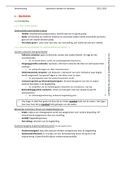
Wetenskapmannetjies Antjie Krog
Poem in context:
Antjie Krog was born in Kroonstad in the Free State into a family of writers. She is the eldest
of five children. She grew up on a farm - her father was a farmer and her mother the famous
writer, Dot Serfontein. She went to school in Kroonstad.
Daughter of Jefta contains poems that describe the life of the farm and school child -
adolescence, mice nests (lovesickness) and the background of the school with its classrooms
and teachers. The outlook on life that we find in this poem is the opinion of a country girl who
did not necessarily have the same interests as her teachers and the other learners. "Little
scientists" comes from this volume.
Analysis:
alliterasie Alliteration is the repetition of consonants in words, especially
(alliteration) at the beginning of emphasized syllables: "sun bumps its
head" – L8.
enjambement One line of verse flows into the next without a break at the
(enjambment) end of the first line. If there is no punctuation, but one still has
a natural rest (full stop) at the end of the line, it is not
enjambment.
inversie/omgekeerde When the poet changes the word order of a sentence to
woordorde emphasize certain words, or for the sake of the rhyme or
(inversion) rhythm in a poem, for example: "Pathetically, you then
determine..." instead of “You then pathetically determine...”
ironie When the opposite is meant than what is said.
(irony)
kontras Words or ideas with an opposite meaning are used, for
(contrast) example "delight" over "heartache"
metafoor When a word is used in an unusual way to create an image
(metaphor) and not in a comparison, for example: "I'd rather quadrate my
delights"-L18
personifikasie When a writer gives human characteristics to non-human
(personification) things, for example: "how the sun bumps its head".
progressie It is related to development and change. For example, there
(progression) can be development in the course of time or in the course of
events (chain of events).
sarkasme Exactly what is meant is said in a mocking manner.
(sarcasm)
sintuiglike waarneming One observes through your senses: you smell/taste/see/hear
(sensory perception) something. When a poet wants to draw a picture, he uses
images where the reader has to rely on his senses to
, understand it, for example: "the trees scorch to silhouettes"
(see), "listen to the lost bustard" (hear).
tipografie This is how the poem is printed on the paper (the external
(typography) construction of a poem - stanzas, lines, indentation,
typographic white, italics, single placement).
vrye vers When a poem does not follow specific rules, such as a fixed
(free verse) rhyme scheme, stanza lines or stanza structure. Capital
letters, punctuation and normal sentence construction
according to the rules may be absent. However, such a poem
must contain other poetic elements, for example repetition of
sounds, words, images, thoughts or lines.
Outline
Tema How much and why the speaker hates science.
(theme)
Stemming Philosophical. She can also appear quite feisty (in a fighting
(appearance) mood)/provoking outcome.
Bou External construction: A free verse with three stanzas of
(structure) different lengths. Linking elements are the following: There is
no fixed rhyming pattern, but rhyming words. Enjambment,
alliteration and assonance connect thoughts in the poem.
Inner construction: The poem has the form of a reasoned
(argumentative) speech. Stanza 1 describes the little
scientists and how they look at the sun/experience their
surroundings. Stanza 2 describes how the speaker does this.
Stanza 3 brings a twist when the speaker says why she
prefers her way of looking at nature. Stanza 4 contains the
conclusion, in which the speaker states exactly how she feels
about science.
Titel The diminutive is derogatory and clearly shows what the
(Title) speaker thinks of scientists.
Strofe 1 Line 1: "You" sit under black “telescopes". The plural
(stanza 1) "telescopes" suggests that each has its own telescope - so
they work alone. Lines 2 and 3: Pair rhyme. Line 4: "Pathetic"
is negative and expresses the speaker's view. Reversing the
word order (inversion) emphasizes this word because it
stands in the privileged position. The negative view is also
confirmed by the use of "as if" (one can say so/so to speak)
and suggests that the speaker doubts this theory. The
rhyming words "light years" and "as if" help to accentuate.
Enjambment between lines 5 and 6 creates continuity and
speeds up the tempo.
Poem in context:
Antjie Krog was born in Kroonstad in the Free State into a family of writers. She is the eldest
of five children. She grew up on a farm - her father was a farmer and her mother the famous
writer, Dot Serfontein. She went to school in Kroonstad.
Daughter of Jefta contains poems that describe the life of the farm and school child -
adolescence, mice nests (lovesickness) and the background of the school with its classrooms
and teachers. The outlook on life that we find in this poem is the opinion of a country girl who
did not necessarily have the same interests as her teachers and the other learners. "Little
scientists" comes from this volume.
Analysis:
alliterasie Alliteration is the repetition of consonants in words, especially
(alliteration) at the beginning of emphasized syllables: "sun bumps its
head" – L8.
enjambement One line of verse flows into the next without a break at the
(enjambment) end of the first line. If there is no punctuation, but one still has
a natural rest (full stop) at the end of the line, it is not
enjambment.
inversie/omgekeerde When the poet changes the word order of a sentence to
woordorde emphasize certain words, or for the sake of the rhyme or
(inversion) rhythm in a poem, for example: "Pathetically, you then
determine..." instead of “You then pathetically determine...”
ironie When the opposite is meant than what is said.
(irony)
kontras Words or ideas with an opposite meaning are used, for
(contrast) example "delight" over "heartache"
metafoor When a word is used in an unusual way to create an image
(metaphor) and not in a comparison, for example: "I'd rather quadrate my
delights"-L18
personifikasie When a writer gives human characteristics to non-human
(personification) things, for example: "how the sun bumps its head".
progressie It is related to development and change. For example, there
(progression) can be development in the course of time or in the course of
events (chain of events).
sarkasme Exactly what is meant is said in a mocking manner.
(sarcasm)
sintuiglike waarneming One observes through your senses: you smell/taste/see/hear
(sensory perception) something. When a poet wants to draw a picture, he uses
images where the reader has to rely on his senses to
, understand it, for example: "the trees scorch to silhouettes"
(see), "listen to the lost bustard" (hear).
tipografie This is how the poem is printed on the paper (the external
(typography) construction of a poem - stanzas, lines, indentation,
typographic white, italics, single placement).
vrye vers When a poem does not follow specific rules, such as a fixed
(free verse) rhyme scheme, stanza lines or stanza structure. Capital
letters, punctuation and normal sentence construction
according to the rules may be absent. However, such a poem
must contain other poetic elements, for example repetition of
sounds, words, images, thoughts or lines.
Outline
Tema How much and why the speaker hates science.
(theme)
Stemming Philosophical. She can also appear quite feisty (in a fighting
(appearance) mood)/provoking outcome.
Bou External construction: A free verse with three stanzas of
(structure) different lengths. Linking elements are the following: There is
no fixed rhyming pattern, but rhyming words. Enjambment,
alliteration and assonance connect thoughts in the poem.
Inner construction: The poem has the form of a reasoned
(argumentative) speech. Stanza 1 describes the little
scientists and how they look at the sun/experience their
surroundings. Stanza 2 describes how the speaker does this.
Stanza 3 brings a twist when the speaker says why she
prefers her way of looking at nature. Stanza 4 contains the
conclusion, in which the speaker states exactly how she feels
about science.
Titel The diminutive is derogatory and clearly shows what the
(Title) speaker thinks of scientists.
Strofe 1 Line 1: "You" sit under black “telescopes". The plural
(stanza 1) "telescopes" suggests that each has its own telescope - so
they work alone. Lines 2 and 3: Pair rhyme. Line 4: "Pathetic"
is negative and expresses the speaker's view. Reversing the
word order (inversion) emphasizes this word because it
stands in the privileged position. The negative view is also
confirmed by the use of "as if" (one can say so/so to speak)
and suggests that the speaker doubts this theory. The
rhyming words "light years" and "as if" help to accentuate.
Enjambment between lines 5 and 6 creates continuity and
speeds up the tempo.