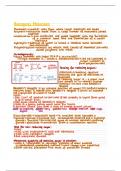
Biological Molecules
Monomers smaller units from which larger molecules are made
Polymers molecules made from a large number of monomers joined
together
condensation two molecules are joinedtogether with the formation
of a chemical bond and the elimination of a water
molecule
Hydrolysis addition of water to break a chemical bond between
two molecules
process by which long chains of monomer sub units
Polymerisation called
polymers are made
carbohydrates
bgsisingenomenromunitis Yaffe'akanamosnao's'atiniadriede
can be combined in
larger numbers to
o O H formpolysaccharides
of or alpha
It OH on glucose testing for reducingsugars
reduction chemical reaction
0 involving the gain of electrons or
III or
on a
beta hydrogen
glucose a reducing sugar is a sugar that
donate to or reduce another
can
chemical in this case Benedict's
reagent
Benedict'sreagent is an alkaline solution of copper il sulfate when a
reducing sugar is heated with Benedict's reagent it forms an insoluble
red precipitate of copper i oxide
steps
1 Add 2cm3 of solution to test tube If not already in liquid form grind
it up in water first
2 Add equalvolume of Benedict's reagent
3 Heat in a gently boiling water bath for 5 mins
4 solution should turn from a blue to orange brown colour
blue no reducing green very yellow low orange medium red high
sugars low
Disaccharides glycosidic bond a covalent bond between a
glucoset fructose sucrose H2o group on another molecule resulting
e
j.IE
Test for non reducing sugar
steps
1 Heat with hydrochloric acid and neutralise
2 eat with benedict's reagent
Measuring quantity ofreducing sugar in solution
i using a colorimeter to calculate intensity of colour produced
Standardisedquantitative method colour change is too subjective
2 filter and dry precipitate Find mass of precipitate formed
, starch
polysaccharide made from the condensation of a glucose molecules
Starch is composed of two types of polysaccharides
1 amylose unbranched form of starch 71,4 glycosidic bonds
2 amylopectin branched form of starch 71,4 and 1,6glycosidicbond
insoluble does not affect water potential
Large and insoluble cannot diffuse out through the membrane
coiled compact alot of it can be stored in a small space
when hydrolysed form glucose molecules usedin respiration
branched has manyends for fasterhydrolysis
Test for starch Iodine blue black
steps
1 Add 2cm3 of sample being tested to a test tube or add 2 drops ofsolution
into a depression on a spotting tile
2 Add 2drops of iodine solution and
3 presence of starch stake
blue black cot ftir
Glycogen
polysaccharide formed by the condensation of a glucoseconsisting of 1,4
and 1,6 glycosidicbonds
Shorter than starch but more highly branched
insoluble does not affect water potential
does not diffuse out of cells
coiled compact alot of it can be stored in a small space
more highly branched than starch faster hydrolysis which produces
glucose for respiration
cellulose
polysaccharide formed by the condensation of b glucose consisting of
1,4 glycosidic bonds
has straightunbranched chains unlike starch
these run parallel to one another allowinghydrogen bonds to form
cross linkages between adjacent chains forming microfibrils which
are in turn grouped to form fibres that form the cell wall of plant
Lipids
contain carbon hydrogen and oxygen
insoluble in water
Soluble in organic solvents e g alcohol or acetone
provide insulation slow conductors of heat
provide protection around delicate organs e g kidneys
great source of energy
waterproofing as they are insoluble in water
Test for lipids
steps
I dissolve food sample in ethanol and then add water and shake stir
2 a white emulsion shows presence of lipid
The cloudy colour is due to any lipid in the sample being finely
dispersed in the water to form an emulsion
Monomers smaller units from which larger molecules are made
Polymers molecules made from a large number of monomers joined
together
condensation two molecules are joinedtogether with the formation
of a chemical bond and the elimination of a water
molecule
Hydrolysis addition of water to break a chemical bond between
two molecules
process by which long chains of monomer sub units
Polymerisation called
polymers are made
carbohydrates
bgsisingenomenromunitis Yaffe'akanamosnao's'atiniadriede
can be combined in
larger numbers to
o O H formpolysaccharides
of or alpha
It OH on glucose testing for reducingsugars
reduction chemical reaction
0 involving the gain of electrons or
III or
on a
beta hydrogen
glucose a reducing sugar is a sugar that
donate to or reduce another
can
chemical in this case Benedict's
reagent
Benedict'sreagent is an alkaline solution of copper il sulfate when a
reducing sugar is heated with Benedict's reagent it forms an insoluble
red precipitate of copper i oxide
steps
1 Add 2cm3 of solution to test tube If not already in liquid form grind
it up in water first
2 Add equalvolume of Benedict's reagent
3 Heat in a gently boiling water bath for 5 mins
4 solution should turn from a blue to orange brown colour
blue no reducing green very yellow low orange medium red high
sugars low
Disaccharides glycosidic bond a covalent bond between a
glucoset fructose sucrose H2o group on another molecule resulting
e
j.IE
Test for non reducing sugar
steps
1 Heat with hydrochloric acid and neutralise
2 eat with benedict's reagent
Measuring quantity ofreducing sugar in solution
i using a colorimeter to calculate intensity of colour produced
Standardisedquantitative method colour change is too subjective
2 filter and dry precipitate Find mass of precipitate formed
, starch
polysaccharide made from the condensation of a glucose molecules
Starch is composed of two types of polysaccharides
1 amylose unbranched form of starch 71,4 glycosidic bonds
2 amylopectin branched form of starch 71,4 and 1,6glycosidicbond
insoluble does not affect water potential
Large and insoluble cannot diffuse out through the membrane
coiled compact alot of it can be stored in a small space
when hydrolysed form glucose molecules usedin respiration
branched has manyends for fasterhydrolysis
Test for starch Iodine blue black
steps
1 Add 2cm3 of sample being tested to a test tube or add 2 drops ofsolution
into a depression on a spotting tile
2 Add 2drops of iodine solution and
3 presence of starch stake
blue black cot ftir
Glycogen
polysaccharide formed by the condensation of a glucoseconsisting of 1,4
and 1,6 glycosidicbonds
Shorter than starch but more highly branched
insoluble does not affect water potential
does not diffuse out of cells
coiled compact alot of it can be stored in a small space
more highly branched than starch faster hydrolysis which produces
glucose for respiration
cellulose
polysaccharide formed by the condensation of b glucose consisting of
1,4 glycosidic bonds
has straightunbranched chains unlike starch
these run parallel to one another allowinghydrogen bonds to form
cross linkages between adjacent chains forming microfibrils which
are in turn grouped to form fibres that form the cell wall of plant
Lipids
contain carbon hydrogen and oxygen
insoluble in water
Soluble in organic solvents e g alcohol or acetone
provide insulation slow conductors of heat
provide protection around delicate organs e g kidneys
great source of energy
waterproofing as they are insoluble in water
Test for lipids
steps
I dissolve food sample in ethanol and then add water and shake stir
2 a white emulsion shows presence of lipid
The cloudy colour is due to any lipid in the sample being finely
dispersed in the water to form an emulsion