k
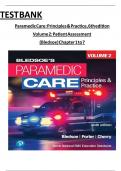
TEST BANK
k
Paramedic Care: Principles & Practice, 6th edition
k k k k k k
Volume 2: Patient Assessment
k k k k
(Bledsoe) Chapter 1 to 7
k k k k
, Test kBank kParamedic kCare: kPrinciples k& kPractice , k5th kedition kVolume k2: kPatient kAssess ment
(Bled soe )
Table Of Contents:
k k
CHAPTER 1: Scene Size-Up
k k k
CHAPTER 2: Primary Assessment
k k k
CHAPTER 3: Therapeutic Communications
k k k
CHAPTER 4: History Taking
k k k
CHAPTER 5: Secondary Assessment
k k k
CHAPTER 6: Patient Monitoring Technology
k k k k
CHAPTER 7: Patient Assessment in the Field
k k k k k k
,Chapter 1: Scene Size-Up k k k
1) You arrive at a location and begin to read the scene by:
k k k k k k k k k k k k
A) approaching the patient.
k k k
B) observing the immediate surroundings.
k k k k
C) conducting a focused exam.
k k k k
D) addressing life threats.
k k k
Answer: B k
Diff: 1 Page Ref: 3
k k k k
Standard: Assessment (Scene Size-Up) k k k
Objective: 2 k
2) Which of the following is a potentially life-threatening patient complaint?
k k k k k k k k k k
A) Fractures of the tibia and radius
k k k k k k
B) Asthma
k
C) Headache
k
D) Chest pain
k k
Answer: D k
Diff: 2 Page Ref: 15-16
k k k k
Standard: Assessment (Scene Size-Up) k k k
Objective: 7 k
3) At the scene of a multiple-vehicle collision, which of the following actions should you take
k k k k k k k k k k k k k k k
first?
A) Wait for additional resources to arrive.
k k k k k k
B) Treat the most seriously injured patient.
k k k k k k
C) Quickly scan the scene to count patients.
k k k k k k k
D) Go directlyto the first patient you see.
k k k k k k k k
Answer: C k
Diff: 2 Page Ref: 14-15
k k k k
Standard: Assessment (Scene Size-Up) k k k
Objective: 6 k
4) A scene size-up is performed for all of the following reasons EXCEPT:
k k k k k k k k k k k k
A) to assess the mechanism of injury.
k k k k k k
B) to assess a baseline mental status.
k k k k k k
C) to provide information that will guide your medical care.
k k k k k k k k k
D) to assess the need for additional resources.
k k k k k k k
Answer: B k
Diff: 1 Page Ref: 3
k k k k
Standard: Assessment (Scene Size-Up) k k k
Objective: 2 k
,k
5) Which of the following is usuallythe best source of information about an alert and oriented
k k k k k k k k k k k k k k k k
patient?
A) The patient
k k
B) Visual cues
k k
C) Diagnostic tests
k k
D) Family members
k k
Answer: A k
Diff: 1 kPage Ref: 16 k k k
Standard: Assessment (Scene Size-Up) k k k
Objective: 7 k
6) Which of the following is NOT a consideration when evaluating the mechanism of injury?
k k k k k k k k k k k k k k
A) Mass and velocity of objects involved
k k k k k k
B) Whether the mechanism was blunt or penetrating
k k k k k k k
C) Direction of impact
k k k
D) Whether it is a rural or an urban setting
k k k k k k k k k
Answer: D k
Diff: 2 kPage Ref: 15-16k k k
Standard: Assessment (Scene Size-Up) k k k
Objective: 7 k
7) When approaching a potential crime scene, you should:
k k k k k k k k
A) enter the scene if no signs of danger are noted.
k k k k k k k k k k
B) quickly enter the scene, retrieve the victim, and withdraw to the vehicle.
k k k k k k k k k k k k
C) park away from the scene until the police arrive and secure the scene.
k k k k k k k k k k k k k
D) park and wait in front of the scene so the victim knows you are there.
k k k k k k k k k k k k k k k
Answer: C k
Diff: 2 kPage Ref: 10 k k k
Standard: Assessment (Scene Size-Up) k k k
Objective: 5 k
8) Which of the following best describes when you should perform a scene size-up?
k k k k k k k k k k k k k
A) Once you arrive at the patient's side
k k k k k k k
B) Throughout your time on the scene
k k k k k k
C) When you initiallyarrive at the scene
k k k k k k k
D) As you are leaving the scene
k k k k k k
Answer: B k
Diff: 1 Page Ref: 3
k k k k
Standard: Assessment (Scene Size-Up) k k k
Objective: 2 k
TEST BANK
k
Paramedic Care: Principles & Practice, 6th edition
k k k k k k
Volume 2: Patient Assessment
k k k k
(Bledsoe) Chapter 1 to 7
k k k k
, Test kBank kParamedic kCare: kPrinciples k& kPractice , k5th kedition kVolume k2: kPatient kAssess ment
(Bled soe )
Table Of Contents:
k k
CHAPTER 1: Scene Size-Up
k k k
CHAPTER 2: Primary Assessment
k k k
CHAPTER 3: Therapeutic Communications
k k k
CHAPTER 4: History Taking
k k k
CHAPTER 5: Secondary Assessment
k k k
CHAPTER 6: Patient Monitoring Technology
k k k k
CHAPTER 7: Patient Assessment in the Field
k k k k k k
,Chapter 1: Scene Size-Up k k k
1) You arrive at a location and begin to read the scene by:
k k k k k k k k k k k k
A) approaching the patient.
k k k
B) observing the immediate surroundings.
k k k k
C) conducting a focused exam.
k k k k
D) addressing life threats.
k k k
Answer: B k
Diff: 1 Page Ref: 3
k k k k
Standard: Assessment (Scene Size-Up) k k k
Objective: 2 k
2) Which of the following is a potentially life-threatening patient complaint?
k k k k k k k k k k
A) Fractures of the tibia and radius
k k k k k k
B) Asthma
k
C) Headache
k
D) Chest pain
k k
Answer: D k
Diff: 2 Page Ref: 15-16
k k k k
Standard: Assessment (Scene Size-Up) k k k
Objective: 7 k
3) At the scene of a multiple-vehicle collision, which of the following actions should you take
k k k k k k k k k k k k k k k
first?
A) Wait for additional resources to arrive.
k k k k k k
B) Treat the most seriously injured patient.
k k k k k k
C) Quickly scan the scene to count patients.
k k k k k k k
D) Go directlyto the first patient you see.
k k k k k k k k
Answer: C k
Diff: 2 Page Ref: 14-15
k k k k
Standard: Assessment (Scene Size-Up) k k k
Objective: 6 k
4) A scene size-up is performed for all of the following reasons EXCEPT:
k k k k k k k k k k k k
A) to assess the mechanism of injury.
k k k k k k
B) to assess a baseline mental status.
k k k k k k
C) to provide information that will guide your medical care.
k k k k k k k k k
D) to assess the need for additional resources.
k k k k k k k
Answer: B k
Diff: 1 Page Ref: 3
k k k k
Standard: Assessment (Scene Size-Up) k k k
Objective: 2 k
,k
5) Which of the following is usuallythe best source of information about an alert and oriented
k k k k k k k k k k k k k k k k
patient?
A) The patient
k k
B) Visual cues
k k
C) Diagnostic tests
k k
D) Family members
k k
Answer: A k
Diff: 1 kPage Ref: 16 k k k
Standard: Assessment (Scene Size-Up) k k k
Objective: 7 k
6) Which of the following is NOT a consideration when evaluating the mechanism of injury?
k k k k k k k k k k k k k k
A) Mass and velocity of objects involved
k k k k k k
B) Whether the mechanism was blunt or penetrating
k k k k k k k
C) Direction of impact
k k k
D) Whether it is a rural or an urban setting
k k k k k k k k k
Answer: D k
Diff: 2 kPage Ref: 15-16k k k
Standard: Assessment (Scene Size-Up) k k k
Objective: 7 k
7) When approaching a potential crime scene, you should:
k k k k k k k k
A) enter the scene if no signs of danger are noted.
k k k k k k k k k k
B) quickly enter the scene, retrieve the victim, and withdraw to the vehicle.
k k k k k k k k k k k k
C) park away from the scene until the police arrive and secure the scene.
k k k k k k k k k k k k k
D) park and wait in front of the scene so the victim knows you are there.
k k k k k k k k k k k k k k k
Answer: C k
Diff: 2 kPage Ref: 10 k k k
Standard: Assessment (Scene Size-Up) k k k
Objective: 5 k
8) Which of the following best describes when you should perform a scene size-up?
k k k k k k k k k k k k k
A) Once you arrive at the patient's side
k k k k k k k
B) Throughout your time on the scene
k k k k k k
C) When you initiallyarrive at the scene
k k k k k k k
D) As you are leaving the scene
k k k k k k
Answer: B k
Diff: 1 Page Ref: 3
k k k k
Standard: Assessment (Scene Size-Up) k k k
Objective: 2 k