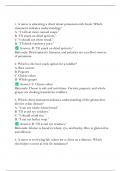
1. A nurse is assessing a client who has dysphagia. Which of the
following interventions is appropriate?
A. Offer fluids through a straw
B. Provide thin liquids
C. Instruct the client to tuck their chin when swallowing
D. Encourage self-feeding
Answer: C. Instruct the client to tuck their chin when swallowing
Rationale: Chin-tuck helps reduce aspiration risk. Thickened liquids are
usually safer than thin ones; straws can increase aspiration risk.
2. A vegetarian is at risk for deficiency in which nutrient?
A. Fiber
B. Vitamin B12
C. Vitamin C
D. Magnesium
Answer: B. Vitamin B12
Rationale: Vitamin B12 is found in animal products. Vegetarians and
vegans may require supplementation.
3. A nurse is teaching a client with celiac disease. Which of the
following grains should be avoided?
A. Corn
B. Rice
C. Barley
D. Quinoa
Answer: C. Barley
Rationale: Barley contains gluten and should be avoided in celiac
disease. Corn, rice, and quinoa are gluten-free.
4. Which intervention helps reduce the risk of aspiration during enteral
feedings?
,A. Infuse feedings rapidly
B. Lower the head of bed
C. Keep client supine during feeding
D. Elevate the head of bed at least 30 degrees
Answer: D. Elevate the head of bed at least 30 degrees
Rationale: Keeping the head elevated during and after feeding reduces
aspiration risk.
5. A nurse is caring for a client with cancer-related cachexia. Which is
the priority nutritional goal?
A. Weight loss
B. Increased fluid intake
C. Increased caloric intake
D. High-fiber diet
Answer: C. Increased caloric intake
Rationale: Cachexia involves significant muscle wasting; the primary
goal is to increase calorie and protein intake.
6. A nurse is reviewing lab values for a client on a diuretic. Which
electrolyte is most at risk for imbalance?
A. Sodium
B. Potassium
C. Calcium
D. Chloride
Answer: B. Potassium
Rationale: Many diuretics (like furosemide) cause potassium loss,
leading to hypokalemia.
7. A client on lithium therapy should avoid excessive intake of which
electrolyte?
A. Sodium
B. Potassium
C. Calcium
, D. Magnesium
Answer: A. Sodium
Rationale: Fluctuations in sodium affect lithium levels. High sodium
intake can reduce lithium effectiveness; low sodium can increase
toxicity risk.
8. A nurse is reviewing nutritional recommendations for older adults.
Which of the following changes is related to aging?
A. Increased calorie needs
B. Increased sense of thirst
C. Decreased absorption of vitamin B12
D. Increased taste sensitivity
Answer: C. Decreased absorption of vitamin B12
Rationale: Older adults often have reduced intrinsic factor, leading to
lower B12 absorption.
9. A client is receiving TPN. Which lab value should the nurse monitor
to assess glucose control?
A. BUN
B. Hemoglobin
C. Blood glucose
D. Sodium
Answer: C. Blood glucose
Rationale: TPN contains high glucose concentrations. Regular
monitoring of blood glucose is essential to avoid hyperglycemia.
10. Which food choice supports iron absorption in a client taking oral
iron supplements?
A. Milk
B. Coffee
C. Orange juice
D. Green tea
Answer: C. Orange juice
following interventions is appropriate?
A. Offer fluids through a straw
B. Provide thin liquids
C. Instruct the client to tuck their chin when swallowing
D. Encourage self-feeding
Answer: C. Instruct the client to tuck their chin when swallowing
Rationale: Chin-tuck helps reduce aspiration risk. Thickened liquids are
usually safer than thin ones; straws can increase aspiration risk.
2. A vegetarian is at risk for deficiency in which nutrient?
A. Fiber
B. Vitamin B12
C. Vitamin C
D. Magnesium
Answer: B. Vitamin B12
Rationale: Vitamin B12 is found in animal products. Vegetarians and
vegans may require supplementation.
3. A nurse is teaching a client with celiac disease. Which of the
following grains should be avoided?
A. Corn
B. Rice
C. Barley
D. Quinoa
Answer: C. Barley
Rationale: Barley contains gluten and should be avoided in celiac
disease. Corn, rice, and quinoa are gluten-free.
4. Which intervention helps reduce the risk of aspiration during enteral
feedings?
,A. Infuse feedings rapidly
B. Lower the head of bed
C. Keep client supine during feeding
D. Elevate the head of bed at least 30 degrees
Answer: D. Elevate the head of bed at least 30 degrees
Rationale: Keeping the head elevated during and after feeding reduces
aspiration risk.
5. A nurse is caring for a client with cancer-related cachexia. Which is
the priority nutritional goal?
A. Weight loss
B. Increased fluid intake
C. Increased caloric intake
D. High-fiber diet
Answer: C. Increased caloric intake
Rationale: Cachexia involves significant muscle wasting; the primary
goal is to increase calorie and protein intake.
6. A nurse is reviewing lab values for a client on a diuretic. Which
electrolyte is most at risk for imbalance?
A. Sodium
B. Potassium
C. Calcium
D. Chloride
Answer: B. Potassium
Rationale: Many diuretics (like furosemide) cause potassium loss,
leading to hypokalemia.
7. A client on lithium therapy should avoid excessive intake of which
electrolyte?
A. Sodium
B. Potassium
C. Calcium
, D. Magnesium
Answer: A. Sodium
Rationale: Fluctuations in sodium affect lithium levels. High sodium
intake can reduce lithium effectiveness; low sodium can increase
toxicity risk.
8. A nurse is reviewing nutritional recommendations for older adults.
Which of the following changes is related to aging?
A. Increased calorie needs
B. Increased sense of thirst
C. Decreased absorption of vitamin B12
D. Increased taste sensitivity
Answer: C. Decreased absorption of vitamin B12
Rationale: Older adults often have reduced intrinsic factor, leading to
lower B12 absorption.
9. A client is receiving TPN. Which lab value should the nurse monitor
to assess glucose control?
A. BUN
B. Hemoglobin
C. Blood glucose
D. Sodium
Answer: C. Blood glucose
Rationale: TPN contains high glucose concentrations. Regular
monitoring of blood glucose is essential to avoid hyperglycemia.
10. Which food choice supports iron absorption in a client taking oral
iron supplements?
A. Milk
B. Coffee
C. Orange juice
D. Green tea
Answer: C. Orange juice