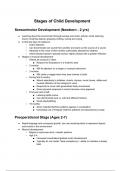
Stages of Child Development
Sensorimotor Development (Newborn - 2 yrs)
● Learning about the environment through senses and motor activity; smell, listening,
touch; mouthing objects, grasping, kicking, cooing and crying
● In first few days of existence:
○ Active listeners
○ Can discriminate one sound from another and seek out the source of a sound
○ Attracted to the voice of their mother, particularly attracted to lullabies
○ Infant-directed speech: typically slower, higher pitched with a greater inflection
● Stages of musical development:
○ Infants as young as 2 days:
■ Respond to fluctuations in a rhythmic beat
○ 2 months:
■ Will fix attention on a singer or musical instrument
○ 3 months:
■ Will smile or wiggle when they hear chimes or bells
○ During first 6 months:
■ Attend selectively to lullabies, chants, rhymes, music boxes, rattles and
musical inflection of the caregiver's voice
■ Responds to music with generalized body movements
■ Gross physical response to music becomes more apparent
○ First year and a half:
■ Listening skills evolve
■ Can discriminate loud vs. soft and different timbres
■ Vocal play/babbling
○ 19 months:
■ Some melodic/rhythmic patterns appear in vocalization
■ Increasing use of irregular rhythmic patterns and spontaneous songs
Preoperational Stage (Ages 2-7)
● Rapid language and conceptual growth, can use words/symbols to represent objects
and events in the environment
● Musical development:
○ Begins to improvise short, melodic patterns
○ Age 2-4:
■ Increased coordination/gradual motor development
■ Typically do not master "beat competency”—ability to maintain a steady
beat
Sensorimotor Development (Newborn - 2 yrs)
● Learning about the environment through senses and motor activity; smell, listening,
touch; mouthing objects, grasping, kicking, cooing and crying
● In first few days of existence:
○ Active listeners
○ Can discriminate one sound from another and seek out the source of a sound
○ Attracted to the voice of their mother, particularly attracted to lullabies
○ Infant-directed speech: typically slower, higher pitched with a greater inflection
● Stages of musical development:
○ Infants as young as 2 days:
■ Respond to fluctuations in a rhythmic beat
○ 2 months:
■ Will fix attention on a singer or musical instrument
○ 3 months:
■ Will smile or wiggle when they hear chimes or bells
○ During first 6 months:
■ Attend selectively to lullabies, chants, rhymes, music boxes, rattles and
musical inflection of the caregiver's voice
■ Responds to music with generalized body movements
■ Gross physical response to music becomes more apparent
○ First year and a half:
■ Listening skills evolve
■ Can discriminate loud vs. soft and different timbres
■ Vocal play/babbling
○ 19 months:
■ Some melodic/rhythmic patterns appear in vocalization
■ Increasing use of irregular rhythmic patterns and spontaneous songs
Preoperational Stage (Ages 2-7)
● Rapid language and conceptual growth, can use words/symbols to represent objects
and events in the environment
● Musical development:
○ Begins to improvise short, melodic patterns
○ Age 2-4:
■ Increased coordination/gradual motor development
■ Typically do not master "beat competency”—ability to maintain a steady
beat