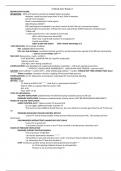
Critical Care Exam 2
RESPIRATORY FAILURE
INTUBATION: -BVM and nasal/oral suction by bedside before procedure
-Attempts should not take longer than 30 sec!! BVM in between
-permit if not emergent
-Nasal is contraindicated in facial injuries
-SEDATE before NMB!!!!
-RSI (rapid sequence intubation): you don't need to do this if the pt is unconscious/apneic
-supine position for protection: sniff pos-flex neck, extend head; Sellick Maneuver-cricoid pressure
* inflate cuff
* confirm placement by: color change at end of tube
ABG's will be lower than actual ABG
Won't hear L side breath sounds if in wrong place!!!
5 point auscultation
CHEST X-RAY FOR SURE!!! DON'T WANT AIR IN BELLY!!!!
CUFF INFLATION: 10ml syringe at balloon
Min. occlusive vol-20-25mmHG
Mlt. min. leak technique- auscultate tracheal area till no air leak sounds then aspirate 0.2ml till hear minimal leak
* ways to not overinflate cuff^^^^
NSG CARE: Reassurance...touch...comfort...
CI OF SEDATIVES...MONITOR FOR S/E: hypoTN, bradycardia
Vigorous mouth care
Limit ADL's when having unstable O2
COMPLICATIONS: tube dislodgement; unplanned extubation; Aspiration----VAP (vent aquired pneumonia)
* AFTER D/C: SHOULD HAVE HOARSENESS!!! SHOULD NOT HAVE STRIDOR----give epi to fix!!
SUCTION: insert catheter-->suction OFF!!...while withdrawing catheter--> suction. SHOULD NOT TAKE LONGER THAN 10sec!
When to suction: Secretions, rhonchi, coughing, PIP increases/High pressure
COMPLICATIONS: Inc ICP, hypoxemia, brochospasm, hypo/hyperTN, mucosal dmg, bleeding
VENTILATOR
SETTING: mode
TV- keep at 6ml/KG in ALI***** state if pt is a spontaneous breather***
FIO2-21-100% to maintain PO2>60, O2 Sat >90%
R/R- 6-20
Peak/ MAP- 15-20
TYPES OF MECHANICAL:
VOLUME VENTILATION: predetermined TV delivered during inspiration pressure will vary
PRESSURE VENTILATION: Pressure is predetermined; Volume varies; MUST BE SPONTANEOUS BREATHER!!!!
MODES OF VOLUME VENTILATION:
ASSIST/CONTROL (A/C):* delivers preset TV at preset R/R
*pt can trigger additional breaths at preset TV
*If pt wants to take additional breath they can, but vent will kick in and only give them the set TV that was
set.
PRESSURE REGULATED VOLUME CONTROL (PRVCV)
* preset TV, but at lowest possible airway pressure with preset pressure limit....this protects pt from
barotrauma
SYNCHRONIZED INTERMITTENT MANDATORY VENT (SIMV)
* preset TV at preset R/R
* if pt wants to breath in more or less TV than set what is already preset, than they can!!!
MODES OF PRESSURE VENTILATION
PRESSURE SUPPORT VENTILATION(PSV)
* Preset pressure of high flow
* pt must be spontaneous breather******
* pt breathes on own and vent gives extra "push" of pressure that pt initiates when breathing.
* pt. determines the TV that they breathe in.
CPAP: Continuous positive airway pressure during spontaneous breaths***
inc O2 by opening collapsed airways at end expiration
Pressure is set at certain percentage!!!!
, PRESSURE-CONTROL INVERSE RATIO VENT:
Inspiration is longer than expiratory
Sedate and NMB them before********
BIPAP: determined pressure on inspiration that is high
determined pressure on expiration that is lower
for example: 30mmHg on inspiration / 20mmHg on expiration
PEEP: gives positive expiratory pressure
this inc air unit which opens up alveoli...BRINGS THEM BACK TO THE FORCE!!
optimal PEEP--least neg effect on CO
High PEEP--->10CMH2O----barotrauma, pneumothorax
* want to wean pat off of vent by using: SIMV...Pt breathes over vent
GRADUATED T-PIECE PRESSURE SUPPORT
VENT COMPLICATIONS:
* dec venous return, Dec CO
*ventilator induced lung injury----barotrauma, pneumo, volutrauma
*alveolar hypoventilation
* ventilator aquired pneumonia (VAP)
*NA/H2O retention....dec CO, SIADH
* inc ICP and GI bleed
VENTILATOR ALARMS
High Pressure: anything that causes Inc. pressure
*bronchospasm...wheezes
* secretions SELECT ALL THAT APPLY!!!!
*fighting vent...breathing against
* gagging/coughing
* water in tubing or kinked circuit tubing
* kinked tube
* stiff lungs
Low pressure: anything that causes dec. pressure
* ventilator disconnect
*cuff leak
*low TV......change in pt breathing effort if pt is dependent on vent to breathe!!!
*IF CAN'T FIND CAUSE ASAP.....BAG VALVE MASK IMMEDIATELY!!!!!!!
ACUTE RESP FAILURE
*either a ventilation problem or a perfusion problem
*pulmonary system fails to maintain adequate gas exchange
ARF: PaO2 < 60mmGh with FIO@60%
PCO2 > 50mmHg....O2 Sat not reliable
COPD....pH <7.35
TYPE 1: Hypoxemic normocapnea......PO2 <60, PCO2 norm
TYPE 2: Hypoxemic hypercapnea........PO2 <60, PCO2 >50
*r/t to any kind of altered pulmonary problem resulting in another disorder:
*dec vent drive....morphine
*dec muscle strength...MS, NMB
*Dec chest wall elasticity
* dec lung gas exchange
*inc met. requirement
HYPOXEMIA IS THE HALLMARK SIGN!!!!!!!!!! PO2<60
CAUSES: Alveolar hypoventilation-O2 being brought is not enough to meet metabolic needs.....associated with hypercapnia
Ventilation perfusion mismatching (V/Q)- blood passes through alveoli that are underventilated.
collapsed are filled with fluid....pneumonia!!
Intrapulmonary shunting- blood reaches arterial system without participating in gas exchange.
basically just a worser V/Q problem....collapses alveoli!!!
COMPLICATIONS: deficit of o2 at progresses......LACTIC ACIDOSIS....METABOLIC ACIDOSIS
RESPIRATORY FAILURE
INTUBATION: -BVM and nasal/oral suction by bedside before procedure
-Attempts should not take longer than 30 sec!! BVM in between
-permit if not emergent
-Nasal is contraindicated in facial injuries
-SEDATE before NMB!!!!
-RSI (rapid sequence intubation): you don't need to do this if the pt is unconscious/apneic
-supine position for protection: sniff pos-flex neck, extend head; Sellick Maneuver-cricoid pressure
* inflate cuff
* confirm placement by: color change at end of tube
ABG's will be lower than actual ABG
Won't hear L side breath sounds if in wrong place!!!
5 point auscultation
CHEST X-RAY FOR SURE!!! DON'T WANT AIR IN BELLY!!!!
CUFF INFLATION: 10ml syringe at balloon
Min. occlusive vol-20-25mmHG
Mlt. min. leak technique- auscultate tracheal area till no air leak sounds then aspirate 0.2ml till hear minimal leak
* ways to not overinflate cuff^^^^
NSG CARE: Reassurance...touch...comfort...
CI OF SEDATIVES...MONITOR FOR S/E: hypoTN, bradycardia
Vigorous mouth care
Limit ADL's when having unstable O2
COMPLICATIONS: tube dislodgement; unplanned extubation; Aspiration----VAP (vent aquired pneumonia)
* AFTER D/C: SHOULD HAVE HOARSENESS!!! SHOULD NOT HAVE STRIDOR----give epi to fix!!
SUCTION: insert catheter-->suction OFF!!...while withdrawing catheter--> suction. SHOULD NOT TAKE LONGER THAN 10sec!
When to suction: Secretions, rhonchi, coughing, PIP increases/High pressure
COMPLICATIONS: Inc ICP, hypoxemia, brochospasm, hypo/hyperTN, mucosal dmg, bleeding
VENTILATOR
SETTING: mode
TV- keep at 6ml/KG in ALI***** state if pt is a spontaneous breather***
FIO2-21-100% to maintain PO2>60, O2 Sat >90%
R/R- 6-20
Peak/ MAP- 15-20
TYPES OF MECHANICAL:
VOLUME VENTILATION: predetermined TV delivered during inspiration pressure will vary
PRESSURE VENTILATION: Pressure is predetermined; Volume varies; MUST BE SPONTANEOUS BREATHER!!!!
MODES OF VOLUME VENTILATION:
ASSIST/CONTROL (A/C):* delivers preset TV at preset R/R
*pt can trigger additional breaths at preset TV
*If pt wants to take additional breath they can, but vent will kick in and only give them the set TV that was
set.
PRESSURE REGULATED VOLUME CONTROL (PRVCV)
* preset TV, but at lowest possible airway pressure with preset pressure limit....this protects pt from
barotrauma
SYNCHRONIZED INTERMITTENT MANDATORY VENT (SIMV)
* preset TV at preset R/R
* if pt wants to breath in more or less TV than set what is already preset, than they can!!!
MODES OF PRESSURE VENTILATION
PRESSURE SUPPORT VENTILATION(PSV)
* Preset pressure of high flow
* pt must be spontaneous breather******
* pt breathes on own and vent gives extra "push" of pressure that pt initiates when breathing.
* pt. determines the TV that they breathe in.
CPAP: Continuous positive airway pressure during spontaneous breaths***
inc O2 by opening collapsed airways at end expiration
Pressure is set at certain percentage!!!!
, PRESSURE-CONTROL INVERSE RATIO VENT:
Inspiration is longer than expiratory
Sedate and NMB them before********
BIPAP: determined pressure on inspiration that is high
determined pressure on expiration that is lower
for example: 30mmHg on inspiration / 20mmHg on expiration
PEEP: gives positive expiratory pressure
this inc air unit which opens up alveoli...BRINGS THEM BACK TO THE FORCE!!
optimal PEEP--least neg effect on CO
High PEEP--->10CMH2O----barotrauma, pneumothorax
* want to wean pat off of vent by using: SIMV...Pt breathes over vent
GRADUATED T-PIECE PRESSURE SUPPORT
VENT COMPLICATIONS:
* dec venous return, Dec CO
*ventilator induced lung injury----barotrauma, pneumo, volutrauma
*alveolar hypoventilation
* ventilator aquired pneumonia (VAP)
*NA/H2O retention....dec CO, SIADH
* inc ICP and GI bleed
VENTILATOR ALARMS
High Pressure: anything that causes Inc. pressure
*bronchospasm...wheezes
* secretions SELECT ALL THAT APPLY!!!!
*fighting vent...breathing against
* gagging/coughing
* water in tubing or kinked circuit tubing
* kinked tube
* stiff lungs
Low pressure: anything that causes dec. pressure
* ventilator disconnect
*cuff leak
*low TV......change in pt breathing effort if pt is dependent on vent to breathe!!!
*IF CAN'T FIND CAUSE ASAP.....BAG VALVE MASK IMMEDIATELY!!!!!!!
ACUTE RESP FAILURE
*either a ventilation problem or a perfusion problem
*pulmonary system fails to maintain adequate gas exchange
ARF: PaO2 < 60mmGh with FIO@60%
PCO2 > 50mmHg....O2 Sat not reliable
COPD....pH <7.35
TYPE 1: Hypoxemic normocapnea......PO2 <60, PCO2 norm
TYPE 2: Hypoxemic hypercapnea........PO2 <60, PCO2 >50
*r/t to any kind of altered pulmonary problem resulting in another disorder:
*dec vent drive....morphine
*dec muscle strength...MS, NMB
*Dec chest wall elasticity
* dec lung gas exchange
*inc met. requirement
HYPOXEMIA IS THE HALLMARK SIGN!!!!!!!!!! PO2<60
CAUSES: Alveolar hypoventilation-O2 being brought is not enough to meet metabolic needs.....associated with hypercapnia
Ventilation perfusion mismatching (V/Q)- blood passes through alveoli that are underventilated.
collapsed are filled with fluid....pneumonia!!
Intrapulmonary shunting- blood reaches arterial system without participating in gas exchange.
basically just a worser V/Q problem....collapses alveoli!!!
COMPLICATIONS: deficit of o2 at progresses......LACTIC ACIDOSIS....METABOLIC ACIDOSIS