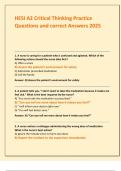
HESI A2 Critical Thinking Practice
Questions and correct Answers 2025
1. A nurse is caring for a patient who is confused and agitated. Which of the
following actions should the nurse take first?
A) Offer a snack
B) Assess the patient’s environment for safety
C) Administer prescribed medication
D) Call the family
Answer: B) Assess the patient’s environment for safety
2. A patient tells you, “I don’t want to take this medication because it makes me
feel sick.” What is the best response by the nurse?
A) “You must take the medication as prescribed.”
B) “Can you tell me more about how it makes you feel?”
C) “I will inform your doctor right now.”
D) “You will feel better soon.”
Answer: B) “Can you tell me more about how it makes you feel?”
3. A nurse notices a colleague administering the wrong dose of medication.
What is the nurse’s best action?
A) Ignore the mistake since no harm was done
B) Report the incident to the supervisor immediately
,C) Confront the colleague in front of the patient
D) Wait to see if the error causes any problems
Answer: B) Report the incident to the supervisor immediately
4. A patient refuses to get out of bed despite encouragement. The nurse should
first:
A) Force the patient to get up
B) Document the refusal and notify the physician
C) Assess why the patient is refusing
D) Ignore the behavior
Answer: C) Assess why the patient is refusing
5. Which of the following statements shows critical thinking?
A) “I’ll do what I did last time because it worked.”
B) “Let me review the patient’s current condition before deciding.”
C) “The doctor said to do this, so I won’t question it.”
D) “I don’t need to check the patient’s chart again.”
Answer: B) “Let me review the patient’s current condition before deciding.”
6. A patient says, “I feel fine now, but I want to stop taking my antibiotics.”
What should the nurse do?
A) Tell the patient to finish the full course of antibiotics
B) Agree and discontinue medication
C) Tell the patient to call the doctor tomorrow
D) Encourage the patient to take a smaller dose
Answer: A) Tell the patient to finish the full course of antibiotics
7. When planning care for a newly admitted patient, the nurse should:
A) Use the same care plan as the previous patient with the same diagnosis
, B) Assess the patient’s individual needs and preferences
C) Follow only the physician’s orders without question
D) Wait until the next shift to start planning
Answer: B) Assess the patient’s individual needs and preferences
8. A nurse is given conflicting information from two healthcare team members
about a patient’s treatment. The nurse should:
A) Choose the information from the more senior member
B) Clarify the information by reviewing the patient’s record
C) Use the information that is easiest to follow
D) Ignore both and do nothing
Answer: B) Clarify the information by reviewing the patient’s record
9. Which action best demonstrates ethical nursing practice?
A) Keeping patient information confidential
B) Sharing patient information with friends to get advice
C) Ignoring patient consent forms
D) Administering medication without verifying orders
Answer: A) Keeping patient information confidential
10. A patient is nonverbal but able to nod or shake their head. What is the
nurse’s best approach to communicate?
A) Speak slowly and loudly
B) Use yes/no questions to elicit responses
C) Avoid communication to prevent frustration
D) Only communicate with the family
Answer: B) Use yes/no questions to elicit responses
11. A nurse notices a patient’s vital signs are abnormal but the patient says they
feel fine. What should the nurse do first?
Questions and correct Answers 2025
1. A nurse is caring for a patient who is confused and agitated. Which of the
following actions should the nurse take first?
A) Offer a snack
B) Assess the patient’s environment for safety
C) Administer prescribed medication
D) Call the family
Answer: B) Assess the patient’s environment for safety
2. A patient tells you, “I don’t want to take this medication because it makes me
feel sick.” What is the best response by the nurse?
A) “You must take the medication as prescribed.”
B) “Can you tell me more about how it makes you feel?”
C) “I will inform your doctor right now.”
D) “You will feel better soon.”
Answer: B) “Can you tell me more about how it makes you feel?”
3. A nurse notices a colleague administering the wrong dose of medication.
What is the nurse’s best action?
A) Ignore the mistake since no harm was done
B) Report the incident to the supervisor immediately
,C) Confront the colleague in front of the patient
D) Wait to see if the error causes any problems
Answer: B) Report the incident to the supervisor immediately
4. A patient refuses to get out of bed despite encouragement. The nurse should
first:
A) Force the patient to get up
B) Document the refusal and notify the physician
C) Assess why the patient is refusing
D) Ignore the behavior
Answer: C) Assess why the patient is refusing
5. Which of the following statements shows critical thinking?
A) “I’ll do what I did last time because it worked.”
B) “Let me review the patient’s current condition before deciding.”
C) “The doctor said to do this, so I won’t question it.”
D) “I don’t need to check the patient’s chart again.”
Answer: B) “Let me review the patient’s current condition before deciding.”
6. A patient says, “I feel fine now, but I want to stop taking my antibiotics.”
What should the nurse do?
A) Tell the patient to finish the full course of antibiotics
B) Agree and discontinue medication
C) Tell the patient to call the doctor tomorrow
D) Encourage the patient to take a smaller dose
Answer: A) Tell the patient to finish the full course of antibiotics
7. When planning care for a newly admitted patient, the nurse should:
A) Use the same care plan as the previous patient with the same diagnosis
, B) Assess the patient’s individual needs and preferences
C) Follow only the physician’s orders without question
D) Wait until the next shift to start planning
Answer: B) Assess the patient’s individual needs and preferences
8. A nurse is given conflicting information from two healthcare team members
about a patient’s treatment. The nurse should:
A) Choose the information from the more senior member
B) Clarify the information by reviewing the patient’s record
C) Use the information that is easiest to follow
D) Ignore both and do nothing
Answer: B) Clarify the information by reviewing the patient’s record
9. Which action best demonstrates ethical nursing practice?
A) Keeping patient information confidential
B) Sharing patient information with friends to get advice
C) Ignoring patient consent forms
D) Administering medication without verifying orders
Answer: A) Keeping patient information confidential
10. A patient is nonverbal but able to nod or shake their head. What is the
nurse’s best approach to communicate?
A) Speak slowly and loudly
B) Use yes/no questions to elicit responses
C) Avoid communication to prevent frustration
D) Only communicate with the family
Answer: B) Use yes/no questions to elicit responses
11. A nurse notices a patient’s vital signs are abnormal but the patient says they
feel fine. What should the nurse do first?