1. Cross-sectional vs. Longitudinal vs. Panel vs. Cohort
● Cross-sectional: This refers to data collected at a single point in time from a population
or sample. It provides a snapshot of the subject at one moment.
● Longitudinal: Data collected over a long period to observe changes or developments
over time (e.g., a study tracking the same group of people over years).
● Panel: A specific type of longitudinal study where the same individuals or units are
surveyed at multiple points in time. It focuses on the same sample but usually more
frequently.
● Cohort: Similar to a panel study, but the focus is on a specific group (cohort) that shares
a common characteristic (e.g., year of birth, geographical location).
2. Census Data: Homeownership Ratio vs. Occupancy Ratio
● Homeownership Ratio: The percentage of homes in a given area that are owned by
residents, often used as an indicator of economic stability.
● Occupancy Ratio: The proportion of occupied housing units relative to the total number
of housing units in an area, reflecting vacancy rates and residential stability.
3. Population Pyramid
A population pyramid is a graphical representation of the age and sex distribution of a
population. It helps to identify:
● Young population: Broad base, suggesting high birth rates.
● Aging population: Narrow base, indicating lower birth rates.
● Gender distribution: Males and females are typically represented on opposite sides.
4. Population Projection Methods: Linear vs. Exponential Growth
● Linear Growth: Assumes the population increases by a constant amount over time
(e.g., adding the same number each year).
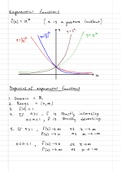
● Exponential Growth: Assumes the population increases by a constant percentage,
leading to rapid growth over time. This is more realistic in most natural population growth
scenarios.
5. Terminologies: Forecasting, Projection, Estimation
● Cross-sectional: This refers to data collected at a single point in time from a population
or sample. It provides a snapshot of the subject at one moment.
● Longitudinal: Data collected over a long period to observe changes or developments
over time (e.g., a study tracking the same group of people over years).
● Panel: A specific type of longitudinal study where the same individuals or units are
surveyed at multiple points in time. It focuses on the same sample but usually more
frequently.
● Cohort: Similar to a panel study, but the focus is on a specific group (cohort) that shares
a common characteristic (e.g., year of birth, geographical location).
2. Census Data: Homeownership Ratio vs. Occupancy Ratio
● Homeownership Ratio: The percentage of homes in a given area that are owned by
residents, often used as an indicator of economic stability.
● Occupancy Ratio: The proportion of occupied housing units relative to the total number
of housing units in an area, reflecting vacancy rates and residential stability.
3. Population Pyramid
A population pyramid is a graphical representation of the age and sex distribution of a
population. It helps to identify:
● Young population: Broad base, suggesting high birth rates.
● Aging population: Narrow base, indicating lower birth rates.
● Gender distribution: Males and females are typically represented on opposite sides.
4. Population Projection Methods: Linear vs. Exponential Growth
● Linear Growth: Assumes the population increases by a constant amount over time
(e.g., adding the same number each year).
● Exponential Growth: Assumes the population increases by a constant percentage,
leading to rapid growth over time. This is more realistic in most natural population growth
scenarios.
5. Terminologies: Forecasting, Projection, Estimation