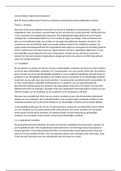
NURS 615 ADVANCED
PHARMACOTHERAPEUTICS
ASSIGNMENT
FOR (Nervous System) CNS CASE STUDY
MARY VILLE UNIVERSITY.
, Nervous System Case Study
Selective serotonin reuptake inhibitors (SSRIs) are used as one of the first-line treatment
options for the treatment of depression. Several SSRIs could be used as first-line treatment;
however, sertraline (Zoloft) is commonly prescribed as the first medication for treating
depression and anxiety. Other SSRIs, such as citalopram and escitalopram, can cause QTc
prolongation and have a higher potential to interact with other medications; therefore, sertraline
is considered a safer choice (Kendrick et al., 2019).
Drug Pharmacodynamics and Pharmacokinetics
Sertraline (Zoloft) works by inhibiting the CNS neuronal uptake of serotonin (5HT),
therefore enhancing the amount of chemical in the brain (FDA, 2016). Most medications used to
treat anxiety and depression enhance the amount of serotonin in the brain to help stabilize
moods. Sertraline is used to treat major depressive disorder, obsessive-compulsive disorder,
panic disorder, post-traumatic stress disorder, and social and generalized anxiety disorder (Woo
& Robinson, 2020, p. 226). Sertraline is an oral medication absorbed through the gastrointestinal
tract and is 98% bound to plasma proteins (FDA, 2016). Sertraline also undergoes a significant
first-pass effect in the liver. Although sertraline takes 4-6 weeks to reach its full effect, once it is
consistently taken, it achieves a half-life of 26 hours and reaches its peak at 4.5-8 hours (Woo &
Robinson, 2020, p. 223).
Adverse effects, Contraindications/Precautions, & Interactions
Sertraline has less adverse effects than most other antidepressant medications. The most
reported adverse effects are mild, including headache, nausea, insomnia, and diarrhea (National
Health Service, 2022). most of the side effects associated with sertraline will decrease once the
drug is taken for several weeks, and many of them can be avoided through general dosing
PHARMACOTHERAPEUTICS
ASSIGNMENT
FOR (Nervous System) CNS CASE STUDY
MARY VILLE UNIVERSITY.
, Nervous System Case Study
Selective serotonin reuptake inhibitors (SSRIs) are used as one of the first-line treatment
options for the treatment of depression. Several SSRIs could be used as first-line treatment;
however, sertraline (Zoloft) is commonly prescribed as the first medication for treating
depression and anxiety. Other SSRIs, such as citalopram and escitalopram, can cause QTc
prolongation and have a higher potential to interact with other medications; therefore, sertraline
is considered a safer choice (Kendrick et al., 2019).
Drug Pharmacodynamics and Pharmacokinetics
Sertraline (Zoloft) works by inhibiting the CNS neuronal uptake of serotonin (5HT),
therefore enhancing the amount of chemical in the brain (FDA, 2016). Most medications used to
treat anxiety and depression enhance the amount of serotonin in the brain to help stabilize
moods. Sertraline is used to treat major depressive disorder, obsessive-compulsive disorder,
panic disorder, post-traumatic stress disorder, and social and generalized anxiety disorder (Woo
& Robinson, 2020, p. 226). Sertraline is an oral medication absorbed through the gastrointestinal
tract and is 98% bound to plasma proteins (FDA, 2016). Sertraline also undergoes a significant
first-pass effect in the liver. Although sertraline takes 4-6 weeks to reach its full effect, once it is
consistently taken, it achieves a half-life of 26 hours and reaches its peak at 4.5-8 hours (Woo &
Robinson, 2020, p. 223).
Adverse effects, Contraindications/Precautions, & Interactions
Sertraline has less adverse effects than most other antidepressant medications. The most
reported adverse effects are mild, including headache, nausea, insomnia, and diarrhea (National
Health Service, 2022). most of the side effects associated with sertraline will decrease once the
drug is taken for several weeks, and many of them can be avoided through general dosing