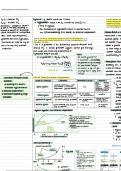
Immune
Response to Infections cytokines
-
Distinguishes btun self+ nonself (PRRs) ·
TNF-2 = potent vasodila
MHC and TCRs helps adaptive system to distinguish btwn self cell+honself Cimpt in showe, sepsis
·
immune
IL-1B pyrogenic best
& ·
=
Distinguishes btwn intracellular and extracellular (PRRs)
·
TLRs on surface extracell (
·
TLRs intracell = intracell
pathogen (viruses)
told
bacteria ,
fungi , protazoins can be intracell. Or extracell but if not extracell .
·
, ten
and small (worms, extracell +
Distinguishes btwn
large large
BACTERIA =
① 1st line of defense
behavioural barriers).
(physical , chemical
INNATE
② Bacteria interact W/
complement ssoluble)/ammatia
on
memotaxis
a
Calternative) a
FMCP, C3a
,
(Sa-chemotactic
BD
O
factors
③ macrophages (Mx)
a
sazinamma
follow chemotactic factors
FCMP 239 , 15 a
, > complement system
)
- contributes to
W
as
convertase inflammation by
① macrophage H20
23 36 stimulatingMAST
contacts bacteria
c3b (innate)
N cell)
coated in C36
⑪
Histamine
>
-
>
-
and antibody
.
-antibody (adaptive
-
·
> leukotrienes
S
-
W
·
C36 binds CR1 &
-
1⑭
Fc) binds IgG
water
·
endothelial
MO
7-
·
TLRS cells
↳ TLR5 stimulated by Y
PLE
=
flagellum ↑-
↳ o
↳ TLR4 stimulated
by gram 11-1B
=
S
⑤ TLRS Signal
·
scavenger receptors
nF-kB >
:
-
pro-1L-1B
15in -
CXCL-S
NLRs signal and activate Inflammasome > caspase- > cleares
pro 1L-IBE /L-1B
-
⑥ IL-1B picked up by 11-1BR on neighbouring macrophages which signals turn both
NF-kB and MAPK MAPK which leads to activation of other transcription
-
↓
PMNS such
Drink
.
factors AP-1 which is a dimer of Jun Fos etc
-
, ,
⑦ understimulation of IL-1B MO will make other inflamm .
cytokines adhe
a
IL-1B ,
/L-6 , TNF-2 , CX(L-8 (11-8) , adveshion molecules
,
PGEs, leukotheres, etc
.
-
neu
pas
⑧ The more My stimulated the more
prointiam . mediators are stimulated end
up w
of 12-1 11-b,
a
gradient ,
11-8, TNFX, CSa, C3a
·
⑨ the PMNs influx
, monocytes enter and gettransformed into macrophages, Mostly neutrophits LIVER
↓
stimulated receptiv for c3a and C5a
The endothelial cells are also by
cytokines . Mast cells, have
that will respond u/ histamine and other mediatio . Table setfor inflamm- response.
⑩ under the control IL-1 SIL-6 and other mediativ endotretian cells
of .
express selecting Acute phase
reactants
and
integrins (especially under TNF-2); LFAL/CDIL/A · make
capillaries adhesive
·
integrins expressed on endofulial cells +
neutrophils Lmpomo
t
TNF-2 dreaces that eduma; +
·
common in cause uses ma
⑪TNF-L
+
trigg
causes vasodilation
leading to blood flow speed Is and PMNs sticking
MASP1/MASP
disrupts adheres junctions
-
selections and until bind TNF2 +
to
rolling integrins .
cleares C4 , 2
allows for diapedests
+ activato
⑫ PMNs follow gradient of CJa, C3a, CX2L8 to the bacteria PMN bind the 23b in
leat path
.
coated bacteria via CR1 and initiate and use NADRA Oxidace
phagocytists ↓
oxygen radicals) to
-
C + thus will bartena ↑ lysis
⑬ neutrophils and bacteria die +
·
if DAMp lear out via necrosis =
alarming + & inflammation even more.
Response to Infections cytokines
-
Distinguishes btun self+ nonself (PRRs) ·
TNF-2 = potent vasodila
MHC and TCRs helps adaptive system to distinguish btwn self cell+honself Cimpt in showe, sepsis
·
immune
IL-1B pyrogenic best
& ·
=
Distinguishes btwn intracellular and extracellular (PRRs)
·
TLRs on surface extracell (
·
TLRs intracell = intracell
pathogen (viruses)
told
bacteria ,
fungi , protazoins can be intracell. Or extracell but if not extracell .
·
, ten
and small (worms, extracell +
Distinguishes btwn
large large
BACTERIA =
① 1st line of defense
behavioural barriers).
(physical , chemical
INNATE
② Bacteria interact W/
complement ssoluble)/ammatia
on
memotaxis
a
Calternative) a
FMCP, C3a
,
(Sa-chemotactic
BD
O
factors
③ macrophages (Mx)
a
sazinamma
follow chemotactic factors
FCMP 239 , 15 a
, > complement system
)
- contributes to
W
as
convertase inflammation by
① macrophage H20
23 36 stimulatingMAST
contacts bacteria
c3b (innate)
N cell)
coated in C36
⑪
Histamine
>
-
>
-
and antibody
.
-antibody (adaptive
-
·
> leukotrienes
S
-
W
·
C36 binds CR1 &
-
1⑭
Fc) binds IgG
water
·
endothelial
MO
7-
·
TLRS cells
↳ TLR5 stimulated by Y
PLE
=
flagellum ↑-
↳ o
↳ TLR4 stimulated
by gram 11-1B
=
S
⑤ TLRS Signal
·
scavenger receptors
nF-kB >
:
-
pro-1L-1B
15in -
CXCL-S
NLRs signal and activate Inflammasome > caspase- > cleares
pro 1L-IBE /L-1B
-
⑥ IL-1B picked up by 11-1BR on neighbouring macrophages which signals turn both
NF-kB and MAPK MAPK which leads to activation of other transcription
-
↓
PMNS such
Drink
.
factors AP-1 which is a dimer of Jun Fos etc
-
, ,
⑦ understimulation of IL-1B MO will make other inflamm .
cytokines adhe
a
IL-1B ,
/L-6 , TNF-2 , CX(L-8 (11-8) , adveshion molecules
,
PGEs, leukotheres, etc
.
-
neu
pas
⑧ The more My stimulated the more
prointiam . mediators are stimulated end
up w
of 12-1 11-b,
a
gradient ,
11-8, TNFX, CSa, C3a
·
⑨ the PMNs influx
, monocytes enter and gettransformed into macrophages, Mostly neutrophits LIVER
↓
stimulated receptiv for c3a and C5a
The endothelial cells are also by
cytokines . Mast cells, have
that will respond u/ histamine and other mediatio . Table setfor inflamm- response.
⑩ under the control IL-1 SIL-6 and other mediativ endotretian cells
of .
express selecting Acute phase
reactants
and
integrins (especially under TNF-2); LFAL/CDIL/A · make
capillaries adhesive
·
integrins expressed on endofulial cells +
neutrophils Lmpomo
t
TNF-2 dreaces that eduma; +
·
common in cause uses ma
⑪TNF-L
+
trigg
causes vasodilation
leading to blood flow speed Is and PMNs sticking
MASP1/MASP
disrupts adheres junctions
-
selections and until bind TNF2 +
to
rolling integrins .
cleares C4 , 2
allows for diapedests
+ activato
⑫ PMNs follow gradient of CJa, C3a, CX2L8 to the bacteria PMN bind the 23b in
leat path
.
coated bacteria via CR1 and initiate and use NADRA Oxidace
phagocytists ↓
oxygen radicals) to
-
C + thus will bartena ↑ lysis
⑬ neutrophils and bacteria die +
·
if DAMp lear out via necrosis =
alarming + & inflammation even more.