Chapter 11 2025
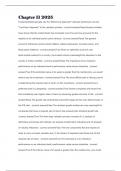
Fundamentalists typically use the "Bottom-Up Approach" whereas technicians use the
"Top-Down Approach" to the valuation process. -(correct answer)False Empirical studies
have shown that the market factor has increased over time and now accounts for the
majority of an individual stock's price variance. -(correct answer)False The general
economic influences would include inflation, political upheavals, monetary policy, and
fiscal policy initiatives. -(correct answer)True Given an optimistic economic and
stock-market outlook for a country, the investor should underweight the allocation to this
country in his/her portfolio. -(correct answer)False The importance of an industry's
performance on an individual stock's performance varies across industries. -(correct
answer)True If the estimated value of an asset is greater than the market price, you would
want to buy the investment. -(correct answer)True The most difficult part of valuing a bond
is determining the required rate of return on this investment. -(correct answer)True A
preferred stock is a perpetuity. -(correct answer)True Growth companies are those firms
that consistently earn higher rates of return by assuming greater amounts of risk. -(correct
answer)False The growth rate of dividends and profit margin are the main determinants of
the P/E ratio. -(correct answer)False The dividend growth models are only meaningful for
companies that have a required rate of return that exceeds their dividend growth rate.
-(correct answer)True The three step valuation process consists of (1) analysis of
alternative economies and markets, (2) analysis of alternative industries and (3) analysis
of industry influences. -(correct answer)False The two components that are required in
order to carry out asset valuation are (1) the stream of expected cash flows and (2) the
required rate of return. -(correct answer)True The importance of an industry's
performance on an individual stock's performance varies across industries. -(correct
answer)True If the intrinsic value of an asset is greater than the market price, you would
, want to buy the investment. -(correct answer)True The required rate of return is
determined by (1) the real risk free rate, (2) the expected rate of inflation and (3) liquidity
risk. -(correct answer)False The price of a bond can be calculated by discounting future
coupons over the bonds life by the yield to maturity. -(correct answer)False An example of
a relative valuation technique is the Price/Cash Flow ratio. -(correct answer)True
Discounted cash flow techniques for equity valuation may use one of the following: (1)
dividends, (2) Free cash flow or (3) coupons. -(correct answer)False In dividend discount
models (DDM) with supernormal growth, supernormal growth may continue indefinitely.
-(correct answer)False The real risk free rate depends on the real growth in the economy
and can be affected for short time periods by temporary tightness or ease in the capital
markets. -(correct answer)True The risk premium is impacted by business risk, financial
risk, and liquidity risk. -(correct answer)True A bond typically pays interest payments
every six months equal to the coupon rate times the face value of the bond. -(correct
answer)False The value of preferred stock can be calculated by dividing its dividend by
the required rate of return. -(correct answer)True A relative valuation technique is
appropriate to consider when you have a good set of comparable entities. -(correct
answer)True The infinite period dividend discount model (DDM) can be used to value a
supernormal growth company. -(correct answer)False The growth rate in equity without
any external financing is determined by multiplying the payout ratio times the return on
equity (ROE). -(correct answer)False The dividend discount model (DDM) can be used to
value preferred stock by simply using a growth rate of zero in the DDM model. -(correct
answer)True An equity investor's required rate of return is influenced by the economy's
real risk-free rate, the expected rate of inflation, and a risk premium. -(correct answer)True
Which of the following is not a consideration in the three-step valuation process? a.
Analysis of alternative economies b. Analysis of security markets c. Analysis of alternative
Fundamentalists typically use the "Bottom-Up Approach" whereas technicians use the
"Top-Down Approach" to the valuation process. -(correct answer)False Empirical studies
have shown that the market factor has increased over time and now accounts for the
majority of an individual stock's price variance. -(correct answer)False The general
economic influences would include inflation, political upheavals, monetary policy, and
fiscal policy initiatives. -(correct answer)True Given an optimistic economic and
stock-market outlook for a country, the investor should underweight the allocation to this
country in his/her portfolio. -(correct answer)False The importance of an industry's
performance on an individual stock's performance varies across industries. -(correct
answer)True If the estimated value of an asset is greater than the market price, you would
want to buy the investment. -(correct answer)True The most difficult part of valuing a bond
is determining the required rate of return on this investment. -(correct answer)True A
preferred stock is a perpetuity. -(correct answer)True Growth companies are those firms
that consistently earn higher rates of return by assuming greater amounts of risk. -(correct
answer)False The growth rate of dividends and profit margin are the main determinants of
the P/E ratio. -(correct answer)False The dividend growth models are only meaningful for
companies that have a required rate of return that exceeds their dividend growth rate.
-(correct answer)True The three step valuation process consists of (1) analysis of
alternative economies and markets, (2) analysis of alternative industries and (3) analysis
of industry influences. -(correct answer)False The two components that are required in
order to carry out asset valuation are (1) the stream of expected cash flows and (2) the
required rate of return. -(correct answer)True The importance of an industry's
performance on an individual stock's performance varies across industries. -(correct
answer)True If the intrinsic value of an asset is greater than the market price, you would
, want to buy the investment. -(correct answer)True The required rate of return is
determined by (1) the real risk free rate, (2) the expected rate of inflation and (3) liquidity
risk. -(correct answer)False The price of a bond can be calculated by discounting future
coupons over the bonds life by the yield to maturity. -(correct answer)False An example of
a relative valuation technique is the Price/Cash Flow ratio. -(correct answer)True
Discounted cash flow techniques for equity valuation may use one of the following: (1)
dividends, (2) Free cash flow or (3) coupons. -(correct answer)False In dividend discount
models (DDM) with supernormal growth, supernormal growth may continue indefinitely.
-(correct answer)False The real risk free rate depends on the real growth in the economy
and can be affected for short time periods by temporary tightness or ease in the capital
markets. -(correct answer)True The risk premium is impacted by business risk, financial
risk, and liquidity risk. -(correct answer)True A bond typically pays interest payments
every six months equal to the coupon rate times the face value of the bond. -(correct
answer)False The value of preferred stock can be calculated by dividing its dividend by
the required rate of return. -(correct answer)True A relative valuation technique is
appropriate to consider when you have a good set of comparable entities. -(correct
answer)True The infinite period dividend discount model (DDM) can be used to value a
supernormal growth company. -(correct answer)False The growth rate in equity without
any external financing is determined by multiplying the payout ratio times the return on
equity (ROE). -(correct answer)False The dividend discount model (DDM) can be used to
value preferred stock by simply using a growth rate of zero in the DDM model. -(correct
answer)True An equity investor's required rate of return is influenced by the economy's
real risk-free rate, the expected rate of inflation, and a risk premium. -(correct answer)True
Which of the following is not a consideration in the three-step valuation process? a.
Analysis of alternative economies b. Analysis of security markets c. Analysis of alternative